
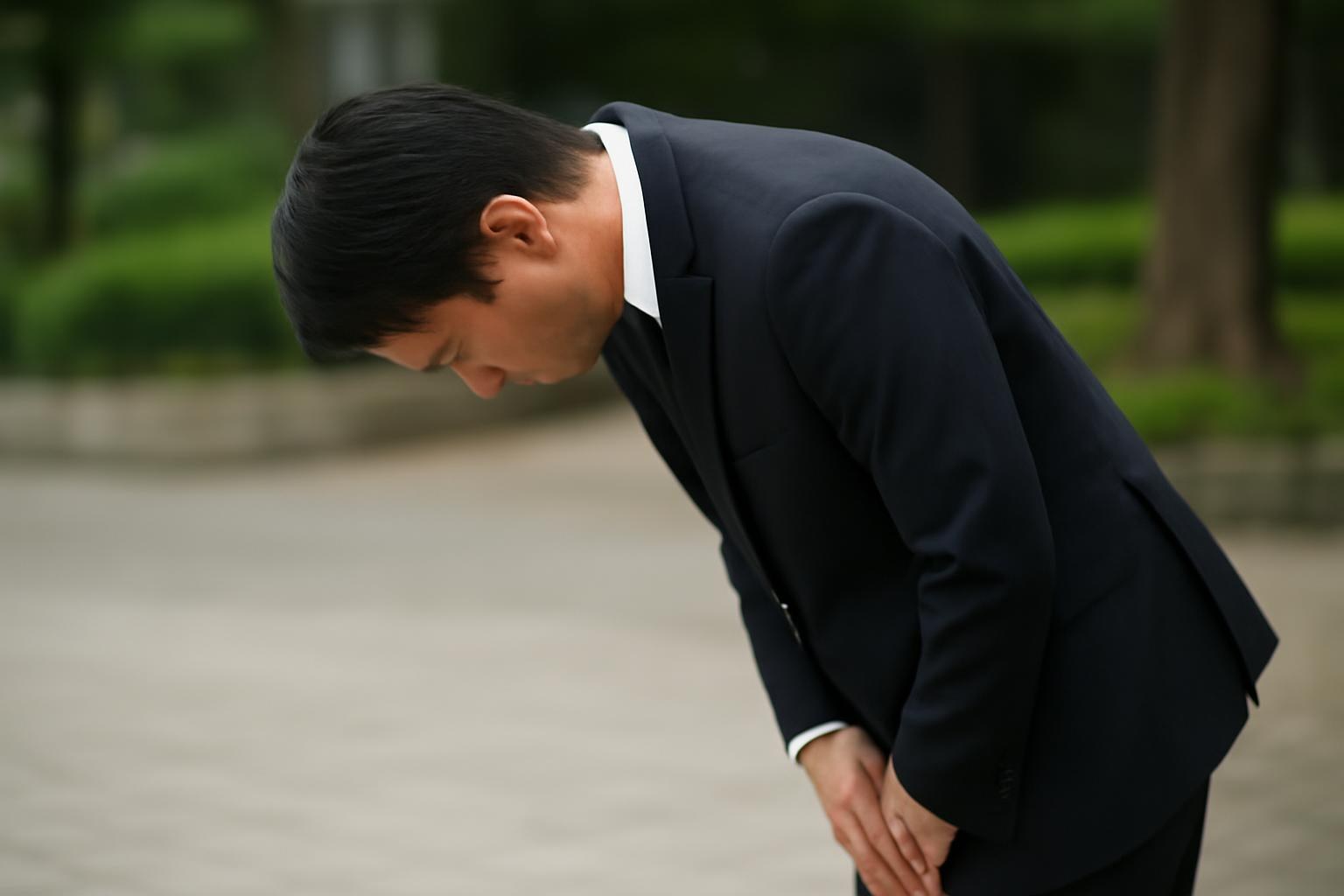
Visitors to Japan often notice that people bow in many different situations. A bow may appear when someone says hello, thanks another person, apologizes, or begins a formal meeting. For travelers, the movement can seem simple, but its meaning depends on the situation and the relationship between the people. It is a form of communication that uses the body as well as words.
The angle and length of a bow can show different levels of respect. A small nod may be enough between friends or in a casual setting. A deeper bow usually suggests a more formal greeting, serious thanks, or an apology. People do not always measure the angle carefully in daily life, but they learn suitable behavior through family, school, and work.
Historically, bowing developed from customs connected with status and social order. Lowering the upper body could show that a person was not trying to appear threatening and was willing to show respect. Modern Japan is more equal in many ways, yet the old idea of recognizing another person’s position still influences business and public manners. This is especially clear in hotels, shops, offices, and ceremonies.
Bowing also helps people manage moments that may feel uncomfortable. When someone says sorry, a bow can show that the apology is sincere. When a customer thanks a worker, a short bow adds warmth without requiring a long conversation. In crowded places, people may bow quickly while using polite language, because the action communicates respect in only a few seconds.
Travelers do not need to copy every bow perfectly. A friendly smile, a small nod, and polite words are usually enough in ordinary interactions. It is more important to understand that bowing is not simply a performance or a sign that everyone feels the same way. People use it differently according to age, workplace, region, and personal style. Watching the context helps visitors respond naturally and avoid treating a complex custom as a fixed rule.