
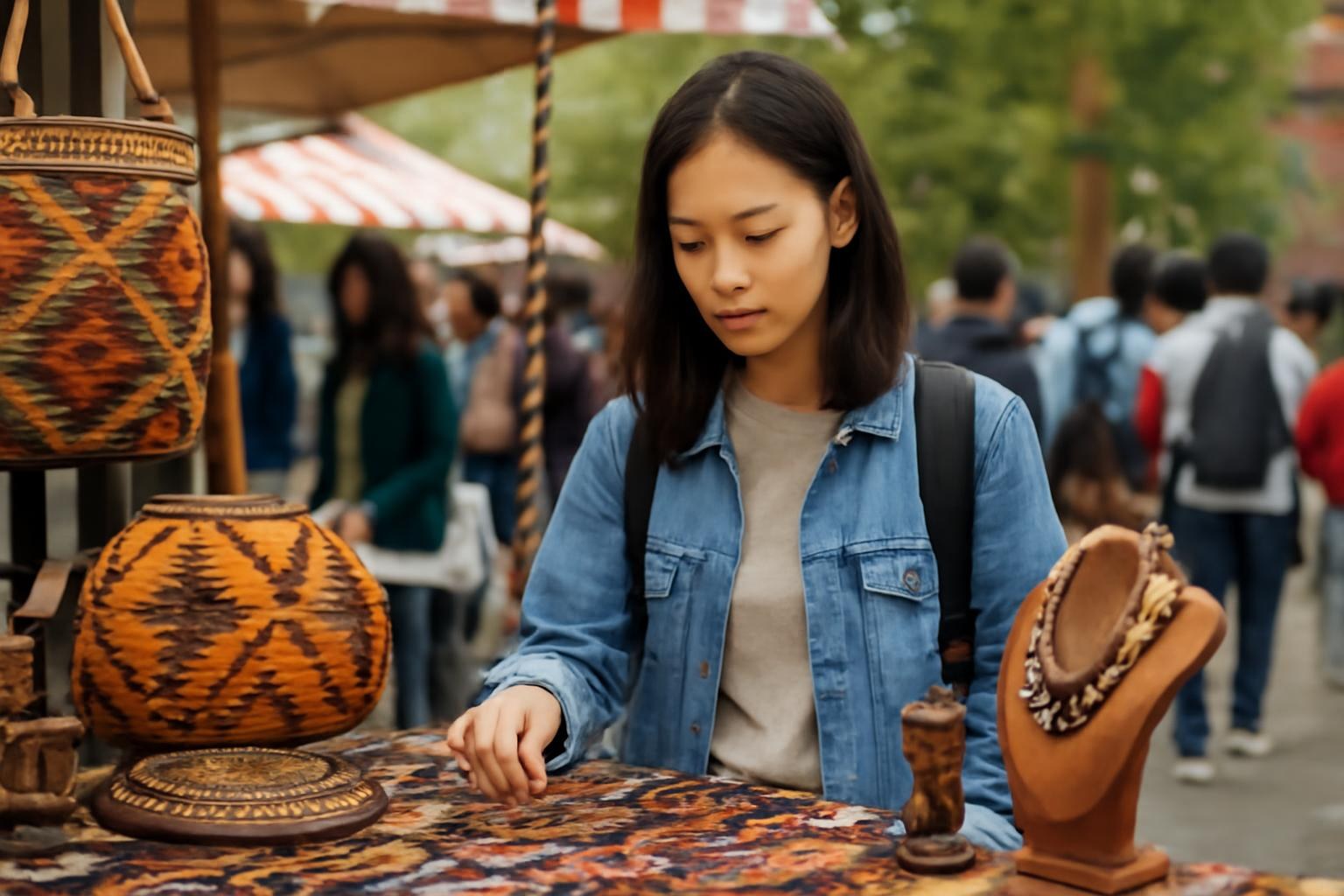
Every spring, Lin Wei's school opens its gates for a large cultural fair. Students from every category of club set up booths in the school yard, and the entry to the main hall is always decorated with colorful flags. This year, one booth reminded her of an African marketplace she had read about, with bright cloth and handmade goods on display. The crowd that gathered there was extremely large for a Tuesday afternoon.
Lin Wei belonged to the Art Club, which had contributed a traditional painting exhibition to the fair. She had planned to break off early and go home to hit the books, since her history exam was only two days away. However, she changed her mind when she noticed a jewelry booth in the latter section of the hall. She was confident she could get a good deal on the handmade bracelets, which suited her style perfectly.
A sign at the booth explained that the club employed student artists and used the money to support their creative work. This matched her belief that talent and effort should be recognized. She had faith in the students behind the booth and was willing to buy more than planned. By doing so, she felt she was contributing to something more meaningful than a simple purchase.
The experience was complex to put into words. She felt a wave of emotion when she realized how much care had gone into each item. The limit of her budget had been reached, but she did not reject the idea of coming back next year. The appearance of even the most basic booth showed true dedication and skill.
As she walked out, Lin Wei reached a conclusion: school life offered far more than just exams. She still needed to study until she fully understood every topic before the test, but the fair had shown her a new way to think about learning. The tradition of holding such events each year was something she now truly valued, and she felt proud to belong to a school that celebrated student creativity.