
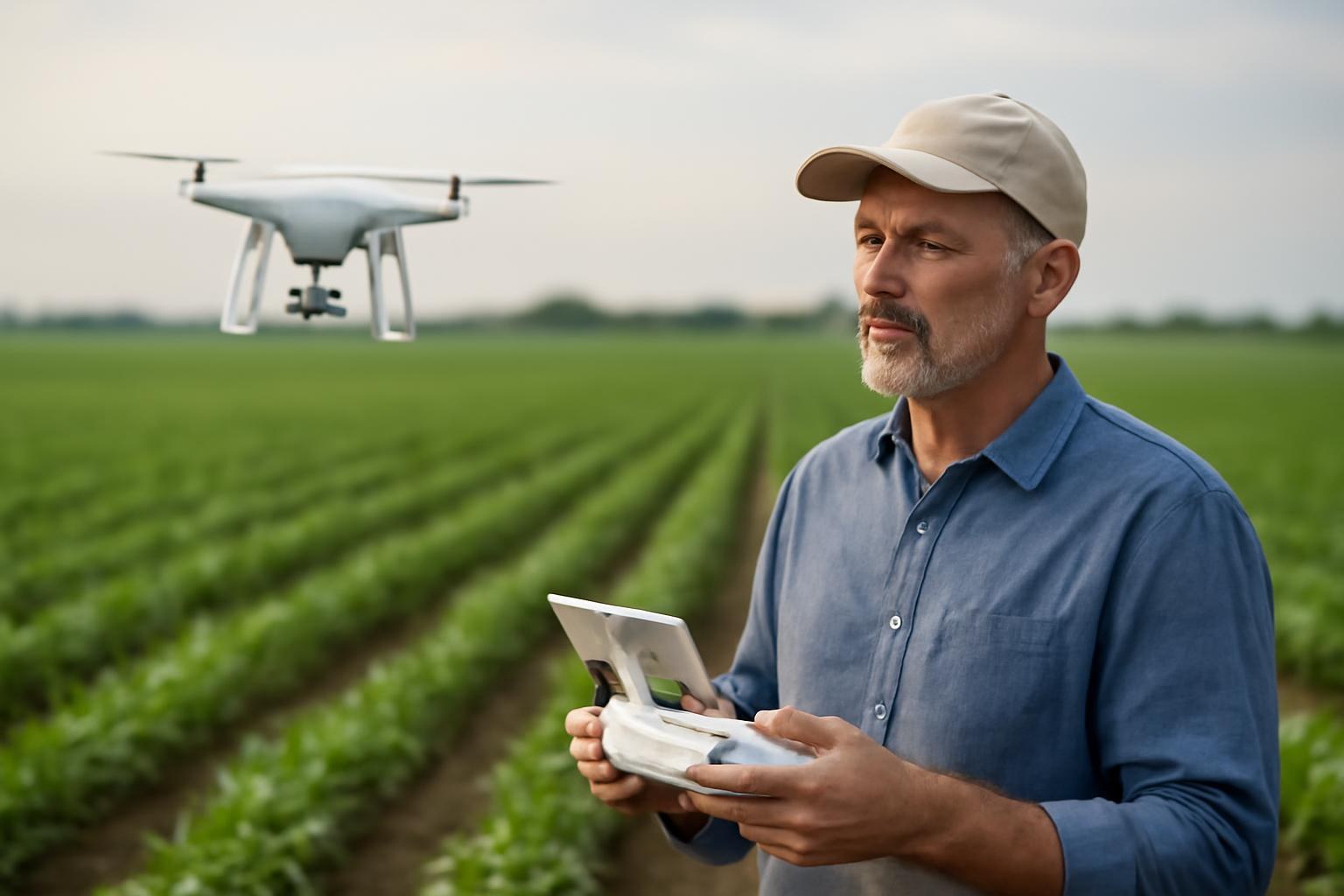
Farming has always depended on careful observation. In the past, farmers walked through their fields to check the condition of crops. This method is still useful, but it takes a great deal of time, especially on a large farm. Today, drones are helping farmers look at their land in a faster way.
A drone is a small flying machine controlled from the ground. It can take photographs of a field from above and send the pictures to a computer or phone. From these images, farmers can see which parts of a field are growing well and which parts may have a problem.
Some drones use special cameras that show more than the human eye can see. The images may help farmers find dry soil, plant disease, or areas where crops are growing slowly. If a farmer notices a problem early, it may be possible to act before the problem spreads across the whole field.
Drones can also help farmers use water and fertilizer more carefully. Instead of treating every plant in the same way, farmers can focus on the areas that need help. This can reduce waste and lower costs. It may also protect nearby rivers and soil from receiving too many chemicals.
There are still limits to this technology. A drone can be expensive, and a farmer must learn how to control it and understand its data. Bad weather, a weak battery, or local rules may prevent a flight. A photograph also cannot explain everything about a crop, so farmers still need to check the plants directly.
The best results come when technology and experience work together. A farmer can use drone images to ask better questions, then visit the field to make a final decision. As drones become easier to use, they may help small farms as well as large ones. This change could make farming more efficient while using fewer natural resources.