
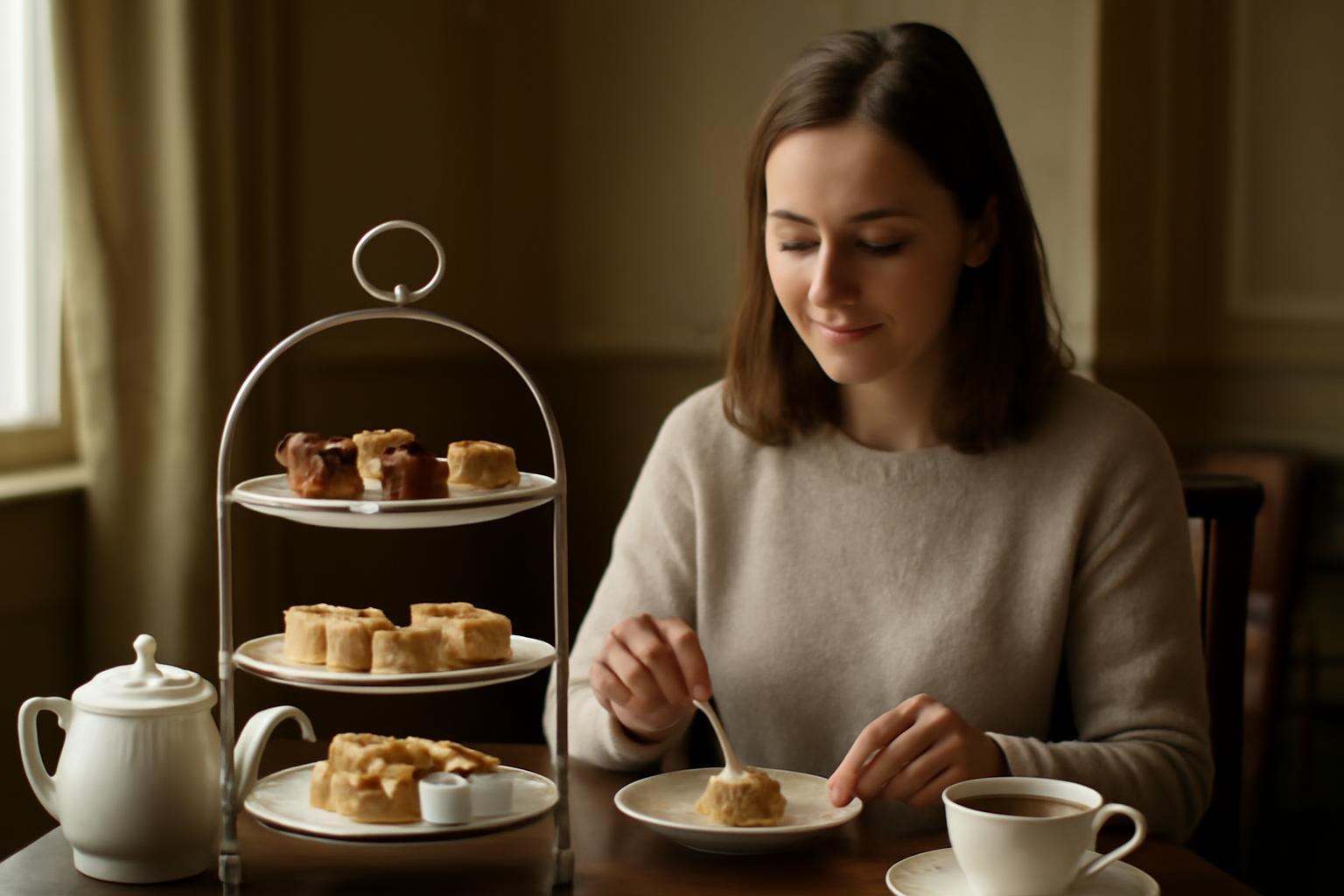
Although afternoon tea is now marketed worldwide as an elegant British experience, its origins are more practical than theatrical. The custom traces its origins to the early nineteenth century, when Anna, the Duchess of Bedford, reportedly requested tea and light refreshments between lunch and dinner. At that time, fashionable households often ate dinner relatively late, leaving a noticeable gap in the afternoon. What began as a private solution gradually developed into a social ritual that invited conversation, hospitality, and carefully observed manners.
It is important to distinguish afternoon tea from the substantial evening meal sometimes called high tea. Afternoon tea traditionally consists of a pot of tea, delicate sandwiches, scones, clotted cream, and preserves, whereas high tea was historically a more filling meal associated with the working classes. The word “high” refers to the height of the dining table, not to social prestige. Confusing these two customs may seem harmless, but it can produce an inaccurate picture of British culinary history.
A formal afternoon tea is usually served on a tiered stand, which gives the table both structure and visual appeal. Savoury sandwiches are generally placed on the lowest tier, scones occupy the middle, and miniature cakes or pastries appear at the top. Traditional fillings include cucumber, smoked salmon, and egg mayonnaise, although contemporary venues may introduce seasonal or regional ingredients. The arrangement is not merely decorative but also reflects an expected progression from savoury food to sweet treats.
The scone remains the most debated element of the experience, particularly because people disagree about whether cream or jam should be added first. In Devon, cream is commonly spread before jam, while in Cornwall, the order is often reversed. Neither method is universally correct, and the disagreement is best understood as a regional preference rather than an absolute rule. A visitor can avoid unnecessary controversy by appreciating both traditions and allowing the host to set the tone.
Tea selection also carries cultural significance. Earl Grey, English Breakfast, and Darjeeling are familiar choices, yet a well-curated menu may include green tea, herbal infusions, or rare single-estate varieties. A host may ask whether guests prefer milk, lemon, or no addition at all, and accepting a refill is generally a sign that the gathering is proceeding comfortably. Nevertheless, etiquette calls for moderation: one should stir quietly, avoid clinking the spoon against the cup, and hold the handle without extending the little finger.
Modern afternoon tea venues often balance historical references with contemporary expectations. Some hotels maintain traditional silverware, linen napkins, and formal service, while independent cafés offer vegan, gluten-free, or alcohol-free alternatives. These adaptations do not necessarily weaken the custom; instead, they demonstrate how a living tradition can remain relevant. In many settings, the event is now associated with birthdays, bridal celebrations, business networking, or simply a leisurely weekend treat.
Conversation is as central to afternoon tea as the food itself. Guests are expected to make a distinction between relaxed sociability and excessive informality, especially in an upscale hotel. Speaking at a moderate volume, including everyone in the discussion, and avoiding intrusive personal questions are small but meaningful signs of consideration. The occasion calls for guests to take their time, since rushing through the courses undermines the sense of calm that the ritual is designed to create.
Ultimately, British afternoon tea should not be reduced to a decorative performance for tourists. It embodies a balance between culinary pleasure, social connection, and the deliberate use of time. Learning its history makes the ceremony more intelligible, while observing its etiquette allows visitors to participate respectfully rather than imitate it superficially. Whether enjoyed in a grand hotel or a neighbourhood tearoom, afternoon tea remains a graceful example of how ordinary refreshments can become a lasting cultural tradition.