
Last spring, a research team traveled to Belgium to visit one of Europe's most advanced automated warehouses. As they stepped through the arched entrance, the scale of the operation began to unfold before their eyes. Rows of robotic arms moved with lightning speed, picking and sorting packages without a single human worker in sight. The sight was both impressive and, for some visitors, deeply unsettling.
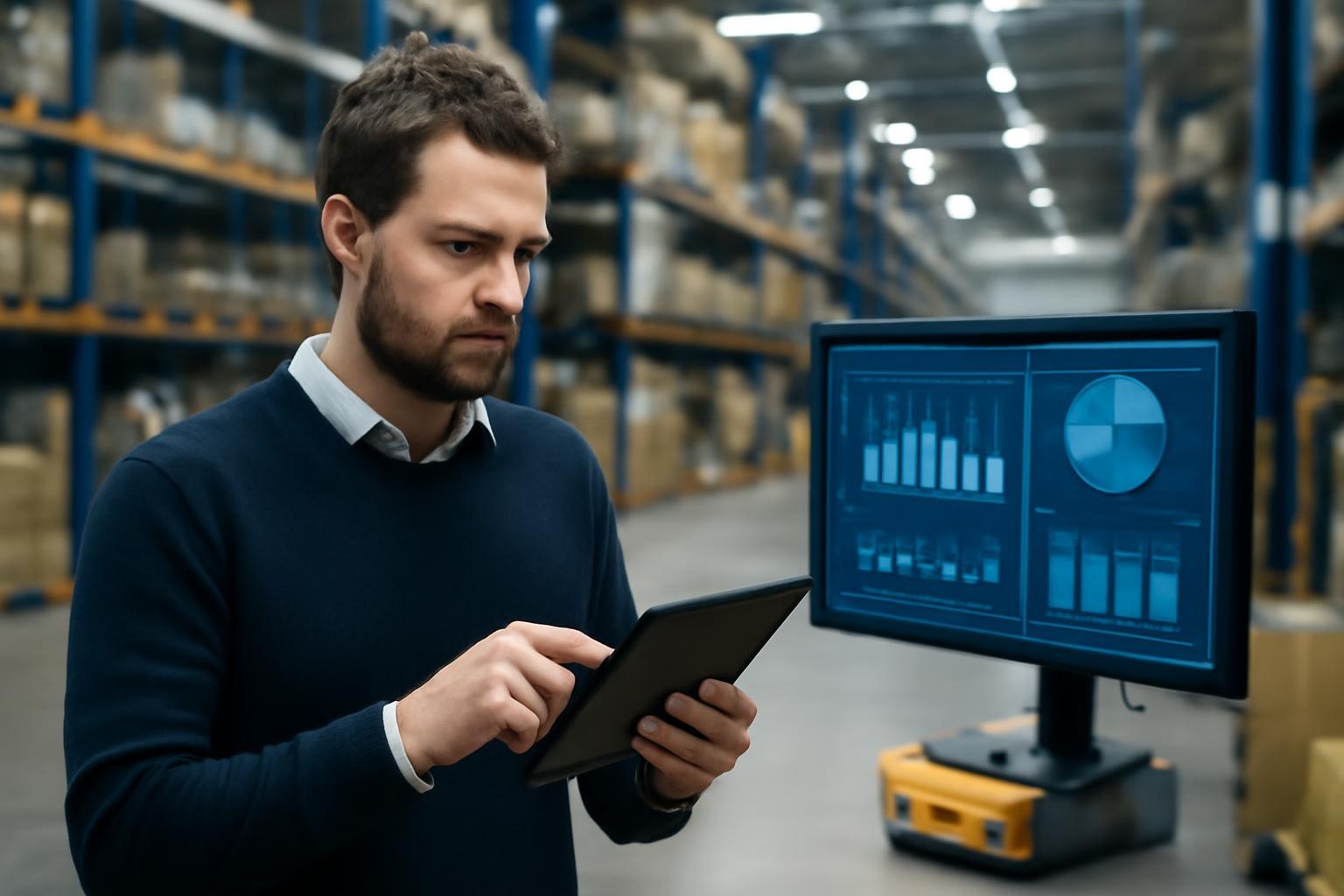
The entire system had been built from scratch by a team of software engineers over several years. Instead of relying on a crowded floor of human workers, the company now uses artificial intelligence to harvest data from thousands of sensors placed throughout the building. A large graph on the main display shows the movement of every package in real time, making the entire operation visible at a glance and allowing managers to respond to problems within seconds.
The convenience that this technology provides is remarkable. Managers no longer need to manually check every shelf or track shipments by hand. In contrast to traditional warehouses, where errors were common and progress was slow, this facility runs in near-perfect harmony with very few mistakes. The AI predicts shortages before they occur and places orders automatically, ensuring that shelves are always stocked.
However, not everyone welcomes these changes without caution. Critics argue that the growing aggression of AI in the workplace raises serious concerns about employment. Many workers dislike the idea of being replaced by machines, and their frustration is understandable. A librarian at a nearby university who studies technology and society pointed out that this shift is particularly challenging for older workers who find it difficult to adapt to new digital tools. She urged companies to invest in retraining programs rather than simply cutting jobs.
One of the lead engineers, a tall man with a short beard, showed the team the 3D printing room. "We produce replacement parts on demand," he said, standing beneath a wide steel arch at the entrance to the workshop. "Early versions of our printers would sometimes spit out defective pieces, but the system has improved dramatically over the past two years." The facility also enforces a strict no-smoking policy inside all buildings, reflecting its strong commitment to both safety and air quality. He added that it is beneficial to combine human judgment with machine precision, rather than relying entirely on either one alone.
Many professionals take a day off just to observe how this kind of facility operates. Visitors are encouraged to get up early and arrive before nine in the morning, since the warehouse becomes extremely busy as the day progresses. The research team noticed that a small group of human supervisors worked alongside the machines, stepping in whenever the AI encountered an unusual situation that fell outside its programmed responses.
As the visit drew to a close, the team concluded that technologies like this, while challenging to develop and implement, represent a meaningful step toward a more efficient future. Their goal, they emphasized, is not to let machines replace human beings entirely, but to use them as tools that help people work smarter, solve problems faster, and ultimately shape a world that runs in harmony with both human values and technological progress.