
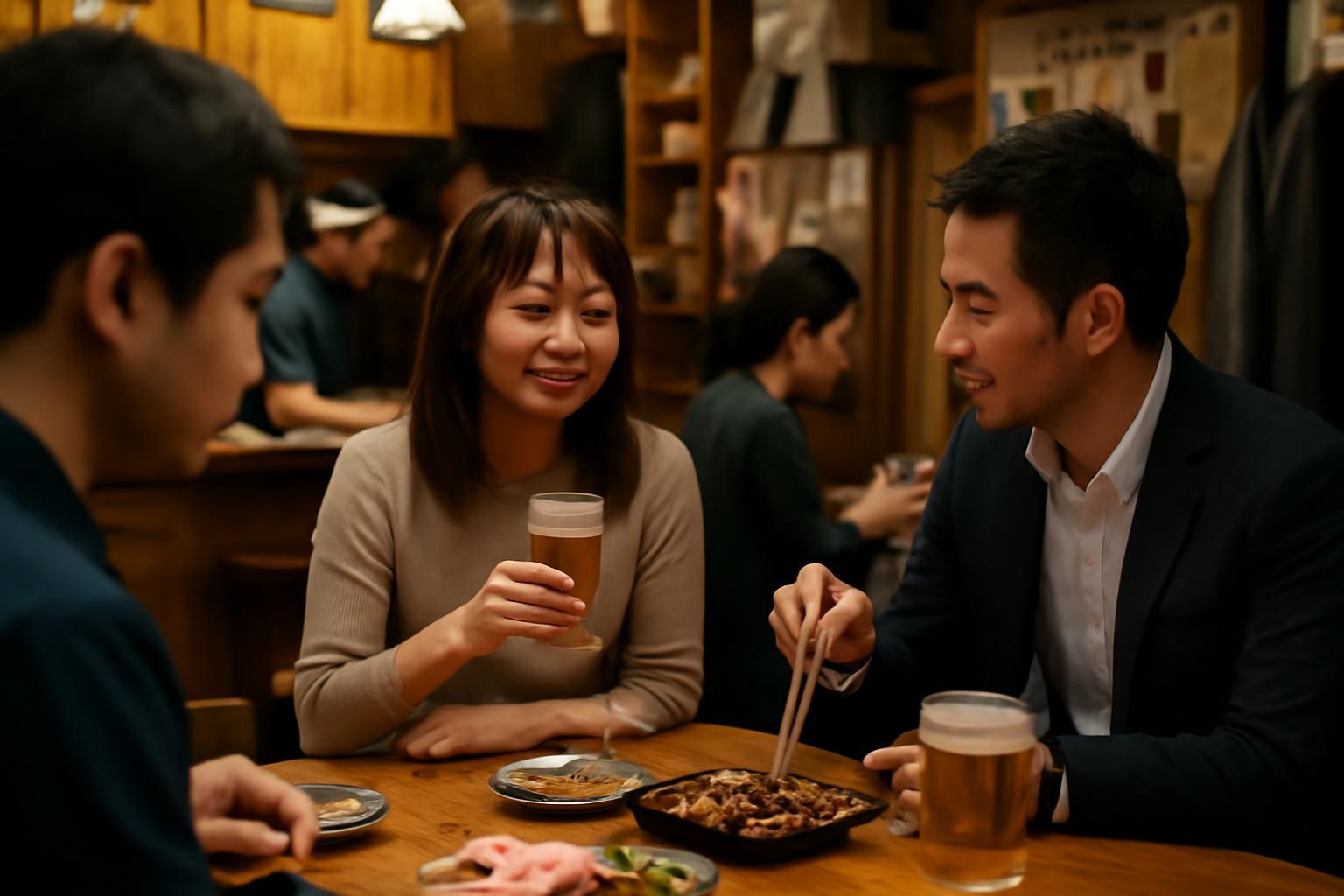
An izakaya is often translated as a Japanese pub, but the word does not describe the whole experience. It is a place where people order drinks, share small dishes, and spend time together after work or in the evening. Some izakayas are bright and modern, while others are small, quiet, and hidden on a side street. The atmosphere depends greatly on the owner, the neighborhood, and the customers.
Food is an important part of the culture. Instead of ordering one large meal, guests often choose several smaller dishes for the table. They may share grilled chicken, tofu, vegetables, fish, or a bowl of noodles. This style allows everyone to try different flavors and makes conversation easier because people are not focused on finishing a single dish.
Drinks are also central, although not every visitor drinks alcohol. Beer, sake, highballs, tea, and soft drinks are common choices. In some places, a small appetizer arrives soon after guests sit down, even if they did not order it. This item may be included as a table charge, so a traveler can politely ask the staff about it if the system is unclear.
The ordering process can feel flexible. Guests may call a server, use a small menu, or order through a screen. There may be no formal course, and dishes can arrive at different times. People usually eat slowly, talk, and order another item when they want it. Because of this, an izakaya is less about speed and more about sharing an evening.
Izakayas can reveal changes in Japanese working life. For some office workers, a meal with colleagues is a way to relax and build relationships after a demanding day. For others, the evening may be a private meeting with friends or a simple meal alone. Visitors should remember that each place has its own rules about smoking, payment, and seating. By observing the room and asking politely, travelers can enjoy the social warmth without assuming that every izakaya is the same.