
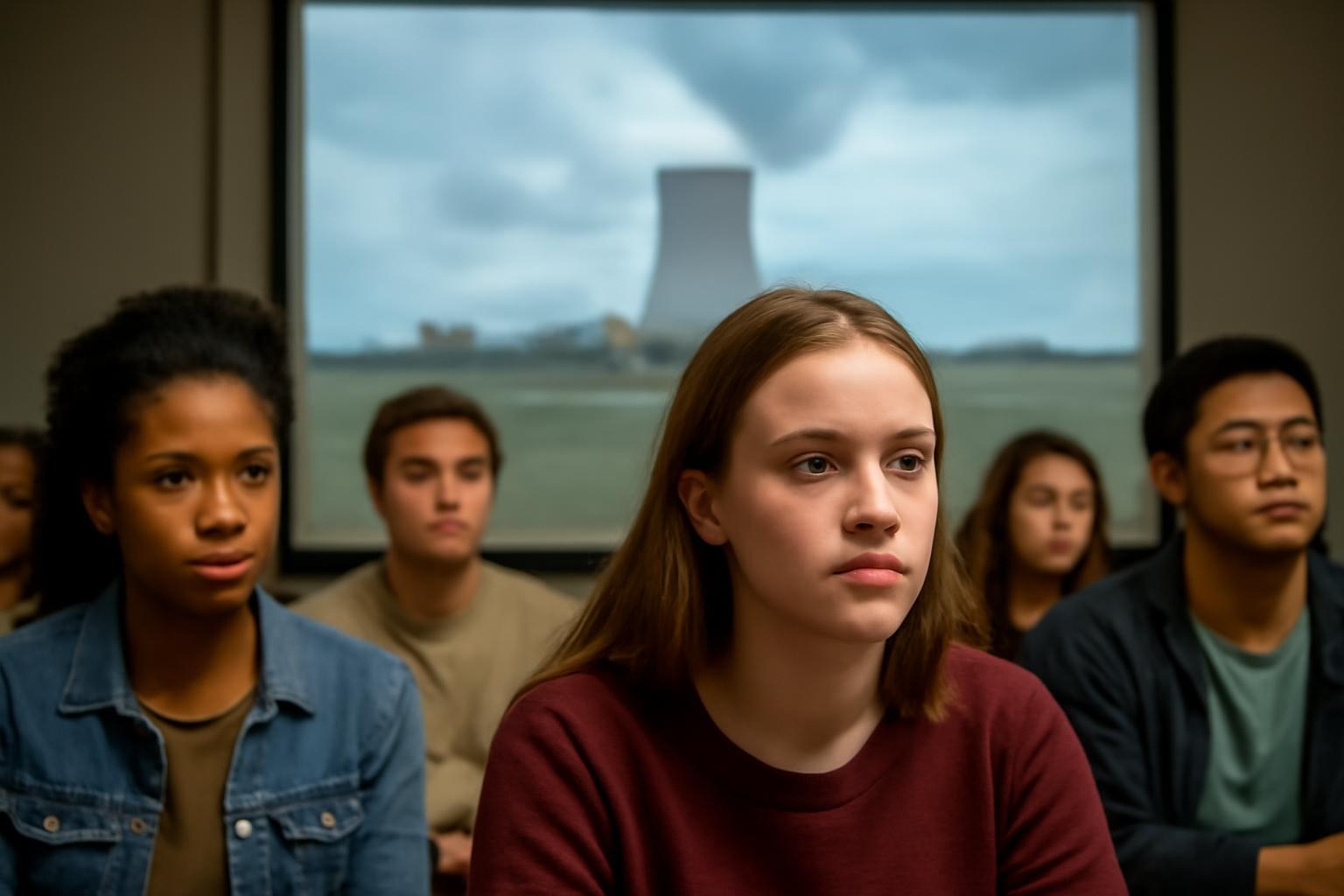
Last Friday evening, over three hundred students gathered in the school cafeteria to attend a special preview of a documentary titled Silent Prairie. The film focuses on a radioactive catastrophe caused by an aging offshore nuclear power station located near a vast prairie along the northern coastline. As organizers asked everyone to fasten their seatbelts for an emotional journey, no one could have predicted just how deeply the film would move them.
The documentary follows a learned environmental scientist, Dr. Sarah Chen, and her comrades as they investigate the long-term effects of radioactive waste on both mankind and wildlife. The film opens with wide shots of the once-beautiful prairie, now blanketed in frost and stripped of life. Cameras capture mutated pests scurrying across the barren land while rare birds disappear from the sky. A preview of the film had already gone viral online, which was why the school arranged this special screening.
One of the most powerful segments covers the story of a local family who lived near the offshore facility. Their teenage daughter, still in her adolescence, took the crew outdoors to show what her family had discovered: radioactive traces on everyday items, including clothing and even underwear. Her elderly grandmother, who wore a necklace with a photo of their old home, wept quietly as she described how she and her comrades were forced to leave their village with almost nothing.
The documentary also reveals how a burglar accidentally uncovered classified documents while breaking into the facility's management office. He was shocked to learn what the papers contained: the facility's canteen water had tested positive for radioactive contamination for over a decade. With this evidence coming to light, scientists began to make progress in building a legal case against the company. A razor-sharp investigation by the press corps followed, drawing national attention.
During the screening, a guest professor of environmental health rose to give a warning to the audience. She explained what continued radioactive exposure could do to future generations and noted that the community had struggled to make progress in cleaning up the site. Soil contamination near the lavatory facilities and underground pipes, she said, remained dangerously high. Many students began to sob quietly as a wave of sadness came over the room.
After the film, students asked the professor what scientists recommend as the next step to protect affected communities. Others shared their hopes that young people could still make a real difference. It became clear to everyone present that environmental awareness must begin during adolescence, before habits and values are fully formed. One student said she had never felt so connected to a global issue before that evening.
With the documentary raising global awareness, communities near offshore nuclear facilities are finally receiving the attention they deserve. Students left the cafeteria feeling both troubled and inspired. Whether acting alone or alongside their comrades, what each person chooses to do next may determine what kind of world mankind will inherit. For these students, the preview was not just a film—it was a call to action.