
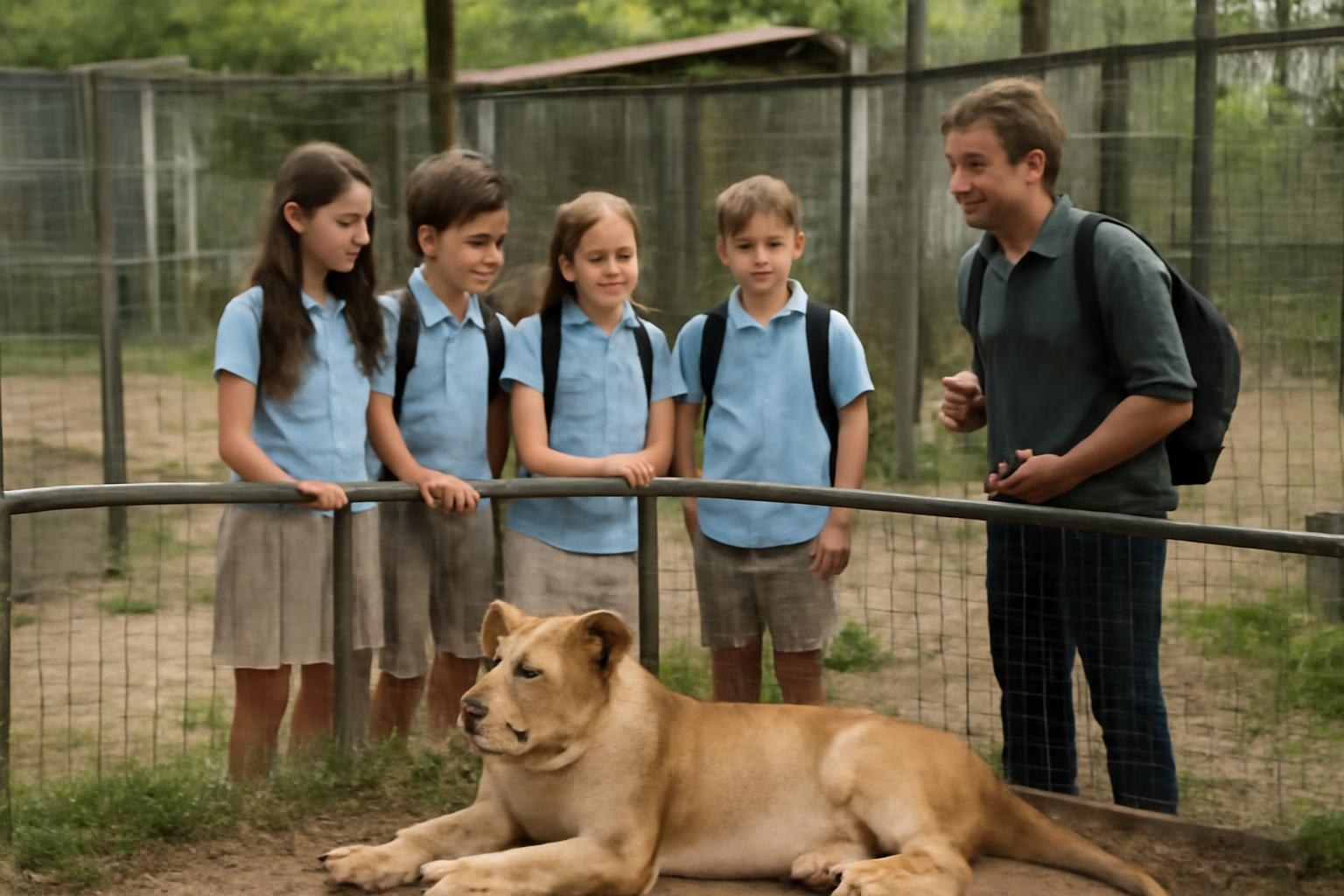
Last Friday, our class visited a wildlife rescue center near our city. We all traveled there by a large vehicle, and the trip took about one hour. When we arrived, the sight of so many wild animals made all of us very happy and excited. We saw deer, foxes, and many kinds of birds. We also saw some tiny baby animals, like small baby birds and young rabbits. They were so small and cute that everyone wanted to take pictures.
The chief of the center, Dr. Lin, met us at the gate and gave us a warm welcome. He introduced the head guard, a kind man named Mr. Wang, who watches over all the animals day and night. A reporter from a local TV station was also there. She wanted to observe the center and then deliver the story to the public. We watched workers carefully feed the animals one by one. Some sick animals needed time to settle in the center before they could go back to the wild.
Dr. Lin also told us about some serious problems. "We cannot simply ignore what is happening to animals," he said. He showed us the link between the loss of forests and the decrease of wild animals. Due to illegal hunting, many animals were taken away from their homes in nature. Some hunters even went to prison because they broke the law. Dr. Lin's belief is that justice is important for all living things, not only for people. This belief has driven his work for many years.
Many guests and volunteers come to help the center every week. They contribute their time and money to support the animals. The center also earns some income by selling plant products. A local farmer who grows grapes for wine also donates part of his money each year to help the center. Sometimes, the team even needs to take a flight to another city to deliver an injured animal safely to the center.
A guest speaker named Ms. Chen talked to us about what average students like us can do. "Do not think that merely watching is enough," she said with a smile. "Just be willing to help, and you can already make a big difference." We all settled down and listened to her words very carefully. For once, we all chose to ignore our phones and pay full attention to her talk.
At the end of the day, we gathered together and talked about what we had learned. Our conclusion was simple but clear: every person can contribute to the protection of wild animals. We can observe and report, guard and protect, or just deliver food and feed animals in need. This visit changed our beliefs about what young people can do. We all want to do more—not merely for the animals, but for the whole world we share.