
The Pulse of Change: How Art and Activism Are Reshaping Modern Cities

发布日期:2026-09-05 高中英文篇 Level 3
The Pulse of Change: How Art and Activism Are Reshaping Modern Cities
01

About This Article

关于这篇文章
背景
Social movements have always shaped the cities we live in. From murals on walls to sculptures in public parks, art tells the story of a society's values and struggles. In recent years, a wave of youth-led activism has emerged across Latin America and beyond, using creative expression to challenge inequality and demand meaningful change. This article explores how art, activism, and everyday people are working together to spark real transformation.
  • Cities as centers of social and cultural change
  • Art and monuments reflecting political ideas
  • Youth activism and creative expression
  • Challenges faced by modern activists
  • The global spread of grassroots movements
02

Listen First

先听文章
00:00 / 00:00
03

Reading

阅读文章
English

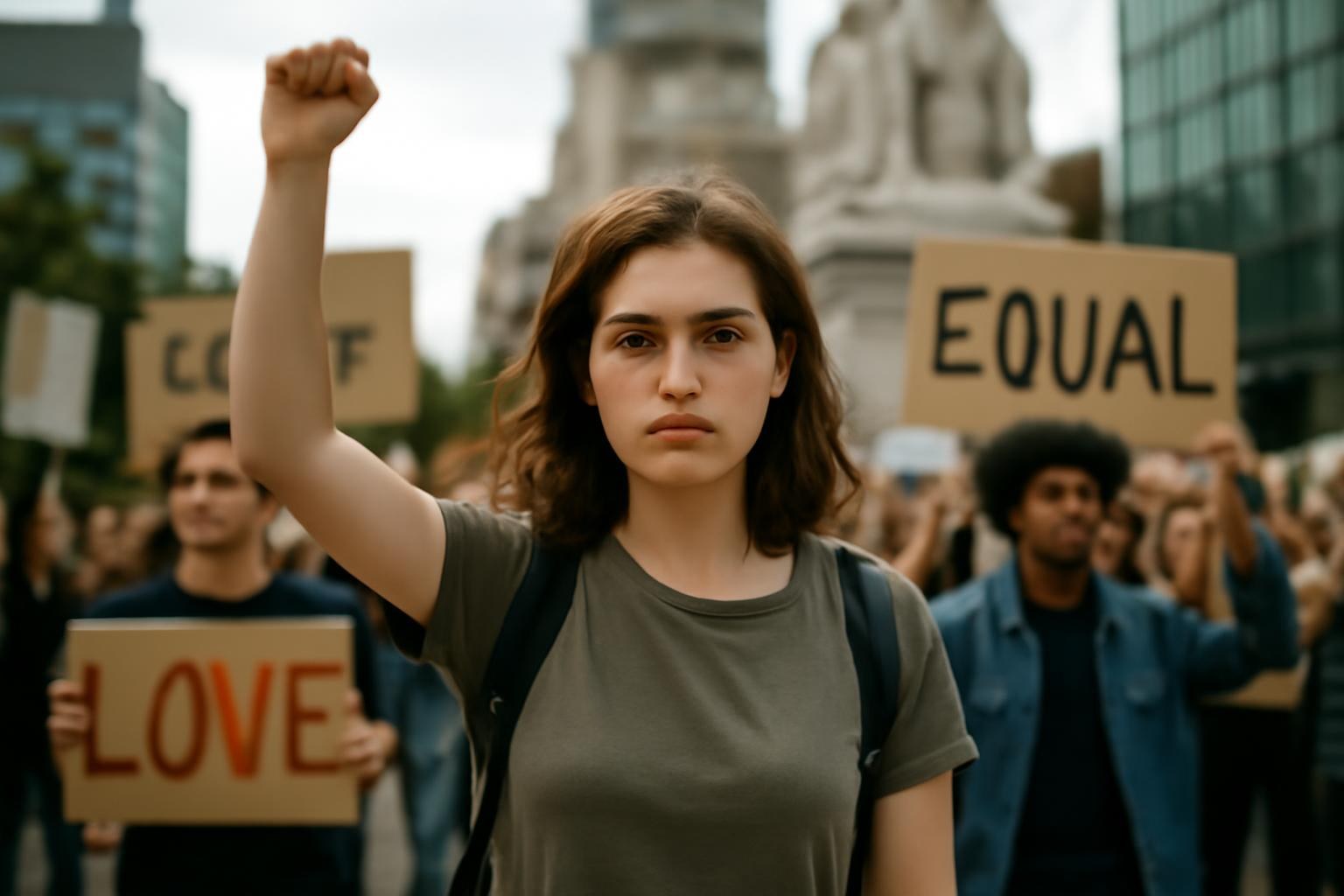
Lately, cities around the world have become the pulse of social and cultural change. In countries like Mexico, enthusiastic young activists are using art and public spaces to challenge traditional power structures. A monument in the city center, once seen as a symbol of colonial history, has recently been taken over by protesters who transformed it into a colorful display of local identity. Nowadays, such acts of creative resistance are happening on every continent.

The ideas of socialism — the belief that wealth and resources should be shared among all people — have gained new attention among young people who feel that the gap between rich and poor is growing too wide. They argue that affection for one's community should go beyond shallow gestures and extend to real, lasting change. A single cartoon posted online can reach millions of people, sparking conversations that were once limited to small meeting rooms and a quiet lounge.

One artist, wearing a safety helmet and a paint-stained collar shirt, climbed a ladder to reach the highest section of a wall in downtown Mexico City. She was putting together a massive mural that told the story of working-class families. "People think art is worthwhile only when it's in a museum," she said in a calm tone from a nearby café, "but the street is where real life happens." Later, sitting by a small stove in her studio, she explained how every pin and every brushstroke was a form of quiet protest against injustice.

But change is not always easy. Many activists tremble at the thought of confronting powerful institutions. A young protester, pulling up his sock after a long march through the city, said the movement is like climbing a ladder — slow, sometimes terrifying, but necessary. The shallow criticism from those in power can be a puzzle to young people who simply want a better future. Yet they remain enthusiastic, finding strength in community, shared stories, and mutual support.

The movement has spread far beyond Mexico. Artists and activists are putting together networks across Latin America and the globe, inspired by the pulse of grassroots democracy. Even a simple cartoon can carry a powerful message — one that travels through social media and reaches millions. Wearing a collar of solidarity, people from all walks of life are joining these movements, driven by affection for their communities and a deep belief that change is worthwhile.

So what does the future hold? Lately, international media has been paying closer attention to these movements, recognizing that the energy in the streets is a sign of a society rethinking itself. From a small stove cooking food for protesters to a grand monument covered in community art, the message is clear: the people are not shallow. They are ready to take over their own story — and to write it on every wall, in every city, for the whole world to see.

中文翻译

近来,世界各地的城市已成为社会与文化变革的脉动内核。在墨西哥等国家,热情的年轻社运人士正利用艺术与公共空间挑战传统的权力结构。市中心的一座纪念碑,曾被视为殖民历史的象征,近期被抗议者接管,并改造成充满在地认同色彩的展示场域。如今,这样的创意抵抗行动正在世界每个角落发生。

社会主义的理念——即财富与资源应由所有人共享的信念——在年轻世代中重新获得关注,他们感受到贫富差距日益扩大。他们主张,对社群的情感不应流于肤浅的表面姿态,而应化为真实、持久的改变。一张粘贴网络的卡通漫画,可以触及数百万人,引发过去仅限于小型会议室或安静休息厅中的对话。

一位艺术家戴着安全帽、穿着沾满油漆的领口衬衫,爬上梯子攀至墨西哥市中心一面墙的最高处。她正在拼凑一幅巨大的壁画,诉说着劳工家庭的故事。「人们认为艺术只有在博物馆里才值得,」她在附近的咖啡馆以平静的语气说,「但街道才是真实生活发生的地方。」后来,坐在工作室的小炉旁,她解释说,每一根图钉、每一道笔触,都是一种对抗不公义的无声抗议。

然而,改变并非易事。许多社运人士一想到要对抗强大的体制就不禁颤抖。一位年轻的抗议者在长途游行后拉起松掉的袜子,说这场运动就像爬梯子——缓慢、有时令人恐惧,但却是必要的。来自当权者的肤浅批评,对那些只是渴望更美好未来的年轻人而言,实在是个难解的谜。然而他们依然充满热忱,从社群、共同的故事与彼此的支持中汲取力量。

这场运动已远远扩散到墨西哥以外。艺术家和社运人士正在拉丁美洲及全球各地共同搭建网络,受到基层民主脉动的感召。即便是一幅简单的卡通漫画,也能传递强而有力的消息,通过社群媒体传播,触及数百万人。人们穿上团结的「衣领」,来自各行各业的人们正加入这些运动,以对社群的深厚情感以及对改变的坚定信念为驱动力。

那么,未来将走向何方?近来,国际媒体正愈加关注这些运动,认识到街头的能量是一个社会重新思考自身的迹象。从为抗议者烹煮食物的小炉,到覆盖社群艺术的宏伟纪念碑,消息已经清晰:人民并不肤浅。他们已准备好接管属于自己的故事——并将它书写在每一面墙上、每一座城市中,让全世界看见。

04

Key Words

重点词汇词组
15 个
05

Expressions

惯用句
5 则
06

Practice

课后测验
8 题 +讨论 2 题
0 /0 题

1 According to the article, what happened to the monument in the city center?
答对了! 答错了,正确答案以绿色标示。
2 What does the artist quoted in the article believe about where art truly belongs?
答对了! 答错了,正确答案以绿色标示。
3 What does the student protester compare the social movement to in the article?
答对了! 答错了,正确答案以绿色标示。
4 Which of the following best describes the meaning of 'affection' as it is used in the article?
答对了! 答错了,正确答案以绿色标示。
5 "People think art is only when it's in a museum," the artist said, "but the street is where real life happens."
答对了! 答错了,正确答案以绿色标示。
6 One artist climbed a to reach the highest section of a wall in downtown Mexico City, where she was painting a massive mural.
答对了! 答错了,正确答案以绿色标示。
7 Complete the sentence using the correct words to form a 'so...that' structure: The gap between rich and poor is so wide many young people have decided to take action.
答对了! 答错了,正确答案以绿色标示。
8 Rewrite the sentence using a V-ing participial phrase to begin the sentence: She wore a safety helmet and a paint-stained collar shirt, and she climbed the ladder. → a safety helmet and a paint-stained collar shirt, she climbed the ladder.
答对了! 答错了,正确答案以绿色标示。

Discussion

问题与讨论
2 题

以下问题没有标准答案,请试着用英文说出自己的想法,一题讲三到五句话。

  1. 1 The article describes activists who use art and public spaces to challenge inequality and demand change. Why do you think creative expression — such as murals, cartoons, or street art — can be an effective tool for social movements? Give at least one reason and support it with examples from the article or your own experience.
  2. 2 The article says that many activists tremble at the thought of confronting powerful institutions, yet they remain enthusiastic and believe that change is worthwhile. Do you think it is worth taking risks to participate in social movements? What motivates people to keep going even when progress is slow and uncertain?