
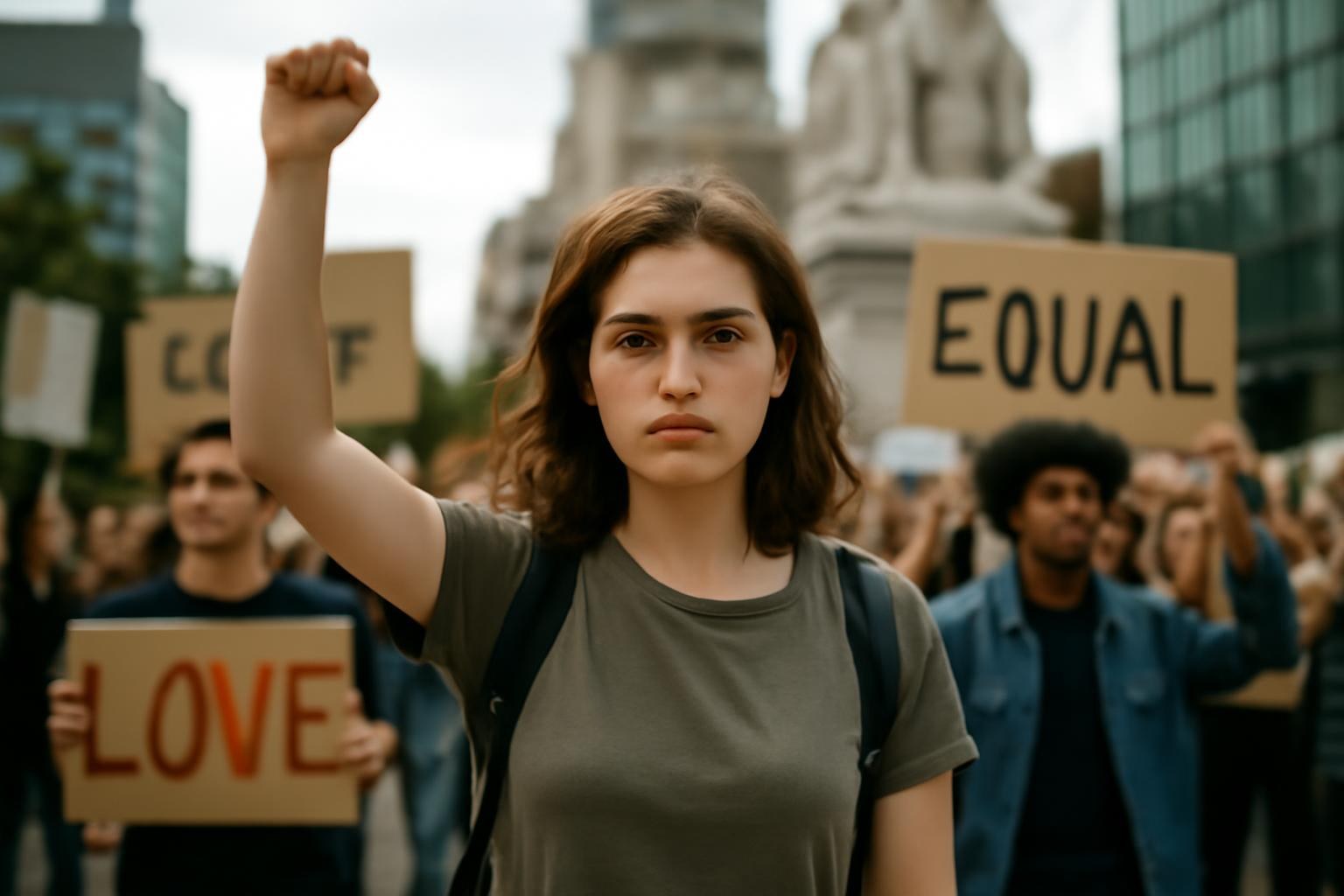
Lately, cities around the world have become the pulse of social and cultural change. In countries like Mexico, enthusiastic young activists are using art and public spaces to challenge traditional power structures. A monument in the city center, once seen as a symbol of colonial history, has recently been taken over by protesters who transformed it into a colorful display of local identity. Nowadays, such acts of creative resistance are happening on every continent.
The ideas of socialism — the belief that wealth and resources should be shared among all people — have gained new attention among young people who feel that the gap between rich and poor is growing too wide. They argue that affection for one's community should go beyond shallow gestures and extend to real, lasting change. A single cartoon posted online can reach millions of people, sparking conversations that were once limited to small meeting rooms and a quiet lounge.
One artist, wearing a safety helmet and a paint-stained collar shirt, climbed a ladder to reach the highest section of a wall in downtown Mexico City. She was putting together a massive mural that told the story of working-class families. "People think art is worthwhile only when it's in a museum," she said in a calm tone from a nearby café, "but the street is where real life happens." Later, sitting by a small stove in her studio, she explained how every pin and every brushstroke was a form of quiet protest against injustice.
But change is not always easy. Many activists tremble at the thought of confronting powerful institutions. A young protester, pulling up his sock after a long march through the city, said the movement is like climbing a ladder — slow, sometimes terrifying, but necessary. The shallow criticism from those in power can be a puzzle to young people who simply want a better future. Yet they remain enthusiastic, finding strength in community, shared stories, and mutual support.
The movement has spread far beyond Mexico. Artists and activists are putting together networks across Latin America and the globe, inspired by the pulse of grassroots democracy. Even a simple cartoon can carry a powerful message — one that travels through social media and reaches millions. Wearing a collar of solidarity, people from all walks of life are joining these movements, driven by affection for their communities and a deep belief that change is worthwhile.
So what does the future hold? Lately, international media has been paying closer attention to these movements, recognizing that the energy in the streets is a sign of a society rethinking itself. From a small stove cooking food for protesters to a grand monument covered in community art, the message is clear: the people are not shallow. They are ready to take over their own story — and to write it on every wall, in every city, for the whole world to see.