
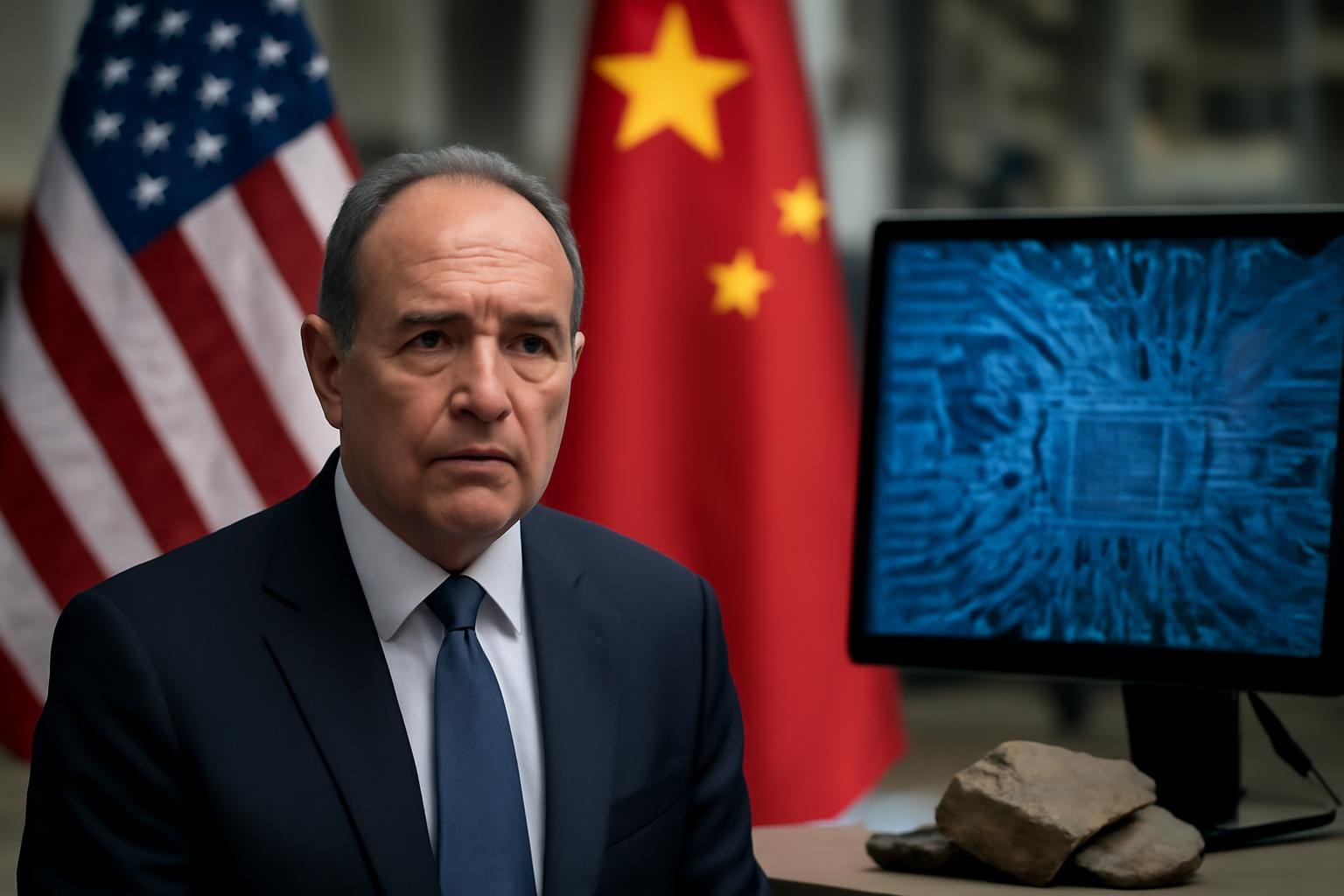
The rivalry between the United States and China is no longer limited to tariffs or traditional military power. It increasingly involves advanced technology, computer chips, artificial intelligence, and rare earth materials. These areas are important because they influence both economic growth and national security.
The United States has placed controls on the export of some advanced chips and chip-making equipment to China. Washington says the measures are designed to slow the development of technologies that could strengthen the Chinese military. American officials also want to protect a lead in industries that may shape future communications, transportation, and defense systems.
China has criticized these restrictions as an attempt to contain its development. In response, Beijing has strengthened support for domestic semiconductor companies and increased attention to important minerals. China remains a major processor of many rare earth elements, even though these materials are mined in several countries.
Rare earths are a group of metals used in products such as electric vehicles, wind turbines, smartphones, radar systems, and precision weapons. They are not always rare in the ground, but separating and processing them is technically difficult. Building new supply chains can take years because companies need investment, skilled workers, environmental permits, and reliable customers.
Both governments are encouraging companies to reduce dependence on the other side. The United States is offering financial support for chip factories and seeking closer partnerships with allies in Europe and Asia. China is investing in research, domestic production, and alternative suppliers while trying to protect its position in global manufacturing.
Businesses face a complicated environment as a result. They must consider not only price and efficiency but also export rules, political risk, and the possibility of sudden shortages. Some companies are adopting a “China plus one” strategy, keeping operations in China while developing additional facilities in countries such as Vietnam, India, or Mexico.
The competition may produce useful investment, but it also carries serious risks. Separate technology systems could raise costs and slow international research, while resource restrictions might harm industries far from the original dispute. Cooperation will remain difficult, yet agreements on scientific exchange, environmental standards, and crisis communication could prevent rivalry from becoming a wider economic conflict.