
At sunrise, our documentary team climbed the hillside above a quiet coastal village. From that altitude, we could see an old bungalow at the edge of town, a tractor working in the fields, and a cyclist riding along the shore path. Our director, a self-made millionaire in the tech industry, believed that digital tools should be energetic forces for good — accessible to everyone and essentially harmless to society. He asked us all to subscribe to this idea from day one.
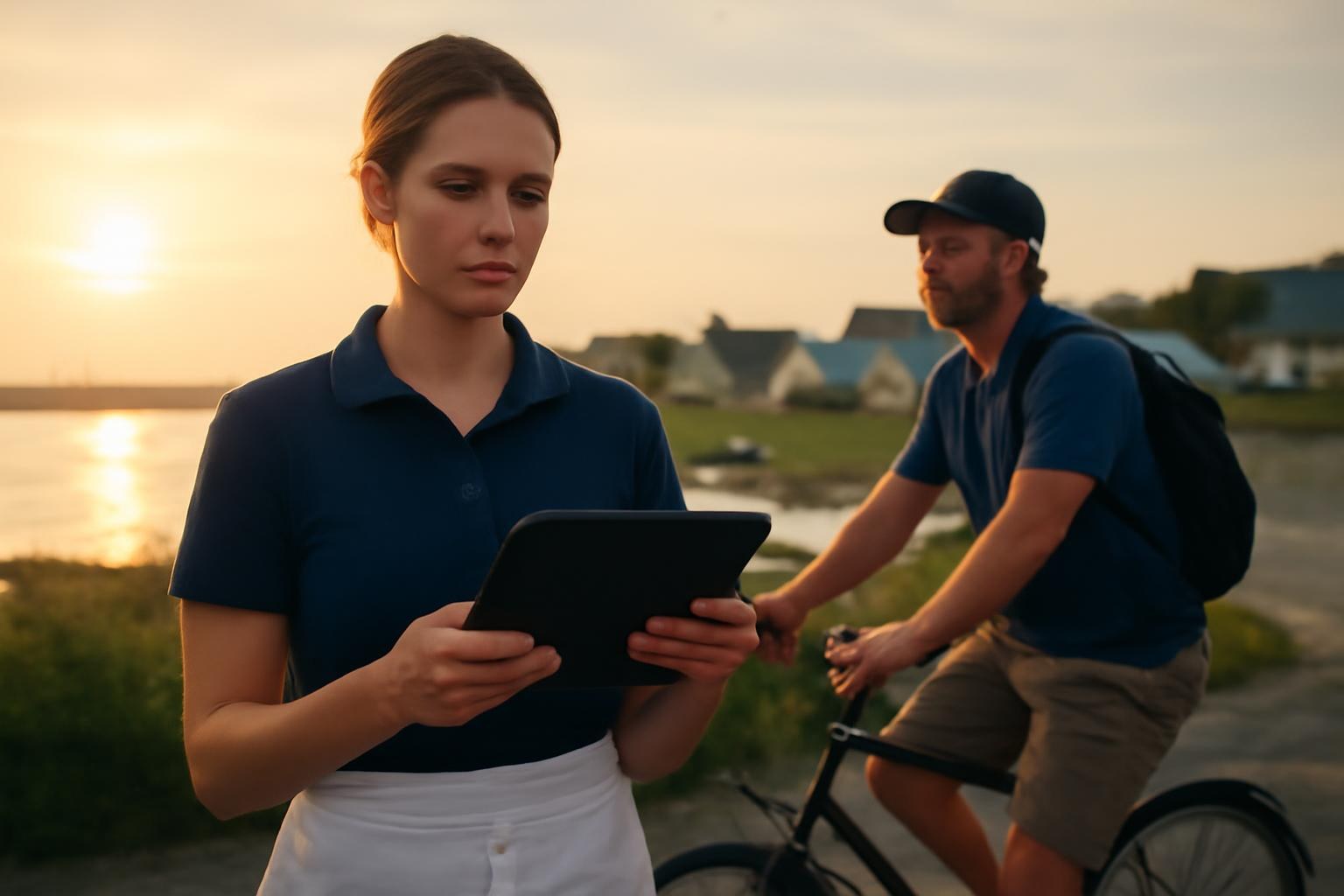
The first person we interviewed was a waitress at a hilltop café who had recently adopted a digital ordering system. Despite being sceptical at first, she soon admitted that the app had cut her workload in half. Nearby, a seaman who had just docked his boat described in spoken English how a GPS weather app had helped him get over a dangerous storm the previous winter. Along with these encouraging stories, we also met a cyclist whose smart helmet measured altitude changes on mountain trails and sent real-time data to a fitness app on his phone.
Our translator helped us communicate with villagers who did not speak our language, turning spoken conversations into written notes. One stop was a small bookshop whose elderly owner held contradictory views about technology: he loved the digital translator that helped foreign tourists, but feared that e-books made his physical store less relevant. Nearby, a tractor driver noted that some automated farming systems gave incorrect guidance that did not match the actual layout of his fields.
In relation to these mixed reactions, our tech expert explained that getting over resistance to new tools often requires patient demonstration. She used a flashlight app on her phone to show how a single device could replace several everyday objects. The vice president of a regional tech NGO pointed out that many incorrect assumptions about artificial intelligence stem from fear rather than fact. Despite the challenges, he remained confident that with proper education, communities could learn to use technology wisely and safely.
The most energetic voices came from a group of teenagers at the village school. Several had subscribed to online coding channels and already built their own small apps. One girl who had experience in digital translation had created a tool that helped the local seaman community read tidal forecasts in their own language. Her work showed that when young people have experience in technology, they rarely see it as a threat — to them, it is simply a harmless and useful part of everyday life.
As a sharp whistle called everyone together for a final group session, our millionaire director stood up and made a brief spoken statement. He said that technology is not a perfect answer to every social problem — its effects can be contradictory and difficult to predict. However, along with human creativity and local knowledge, digital tools can open unexpected doors. He encouraged everyone to have experience in at least one practical digital skill, whether that meant using a translator app, learning to subscribe to reliable information sources, or staying safe online.
By the time we finished filming on the hillside, the sunrise glow had faded, but the village's energy had not. In relation to our original question — can technology truly improve everyday lives? — the answer was a careful yes, so long as people remain sceptical enough to ask important questions and energetic enough to keep learning. Like a sunrise, technology brings light — and with light comes the chance for something better.