
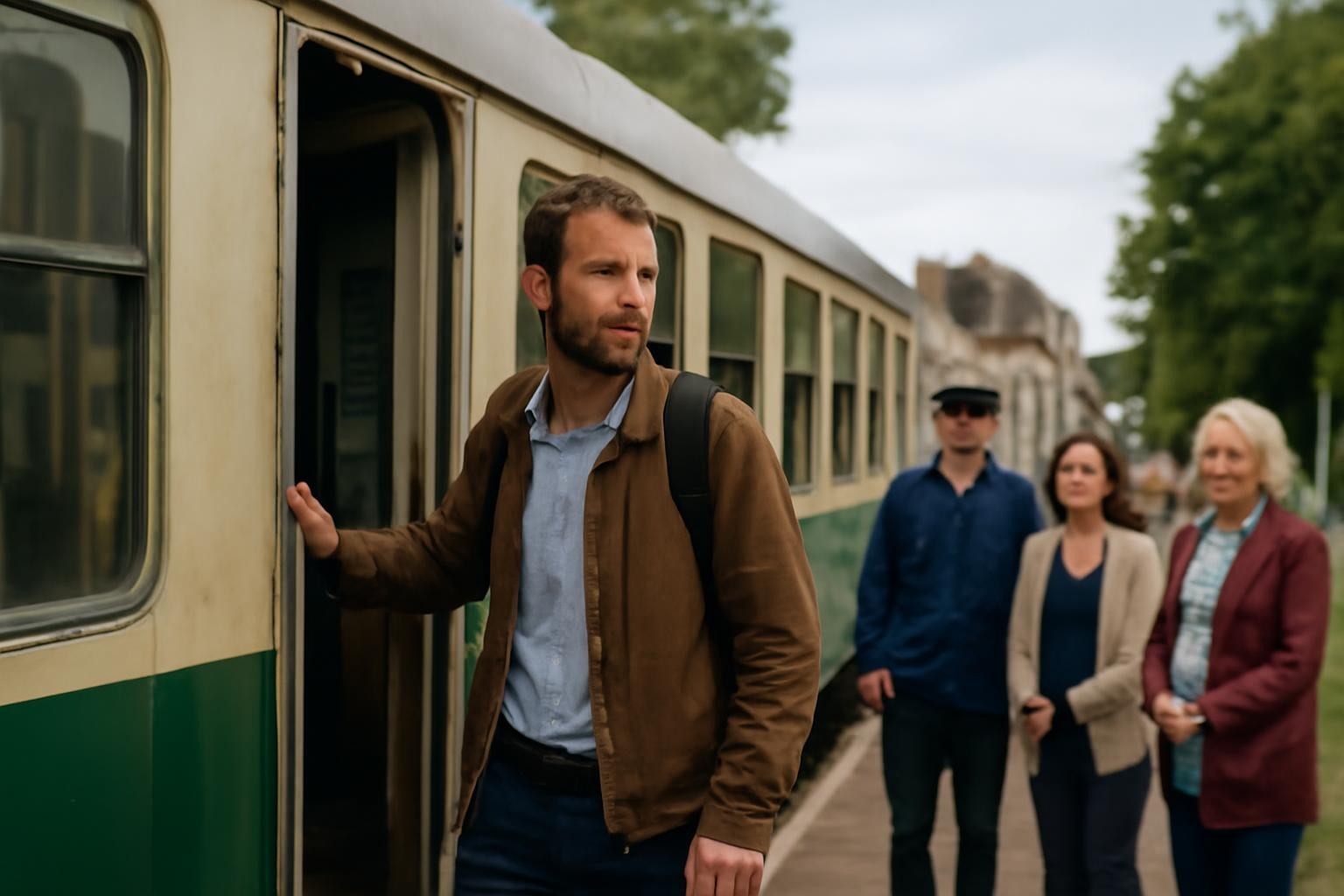
Last summer, Mia joined an unusual train journey across the northern part of her country. It was not a regular train, because it did not follow a fixed schedule or stop only at large stations. Instead, the train traveled slowly through small towns and invited local people to share their stories with passengers.
Mia first heard about the journey from a poster at her university. The poster said that the train would take three days to reach the coast, although the trip normally took only six hours. Mia thought the idea sounded strange, but she wanted to see places that tourists usually missed.
On the first morning, the train stopped beside a quiet village. A farmer came aboard and explained how his family had grown vegetables there for more than fifty years. He also gave each passenger a small bag of fresh tomatoes. Mia was surprised that a simple stop could become such a friendly meeting.
Later that day, the train stopped near an old bridge. A retired engineer showed the passengers photographs of the bridge when it was being built. He explained that the bridge had connected several villages and helped young people find jobs in nearby towns. His story helped Mia understand why the railway was important to local families.
Every evening, passengers and residents ate together in a different station. They shared music, local dishes, and memories about the area. Mia met a student from another city, a baker, and an elderly woman who had taken the same train to school when she was young.
When the train finally reached the coast, Mia felt that she had traveled through more than a beautiful landscape. She had learned how transportation could connect people and protect local history. The journey was slow and sometimes uncomfortable, but it gave everyone time to listen, talk, and make new friends.