
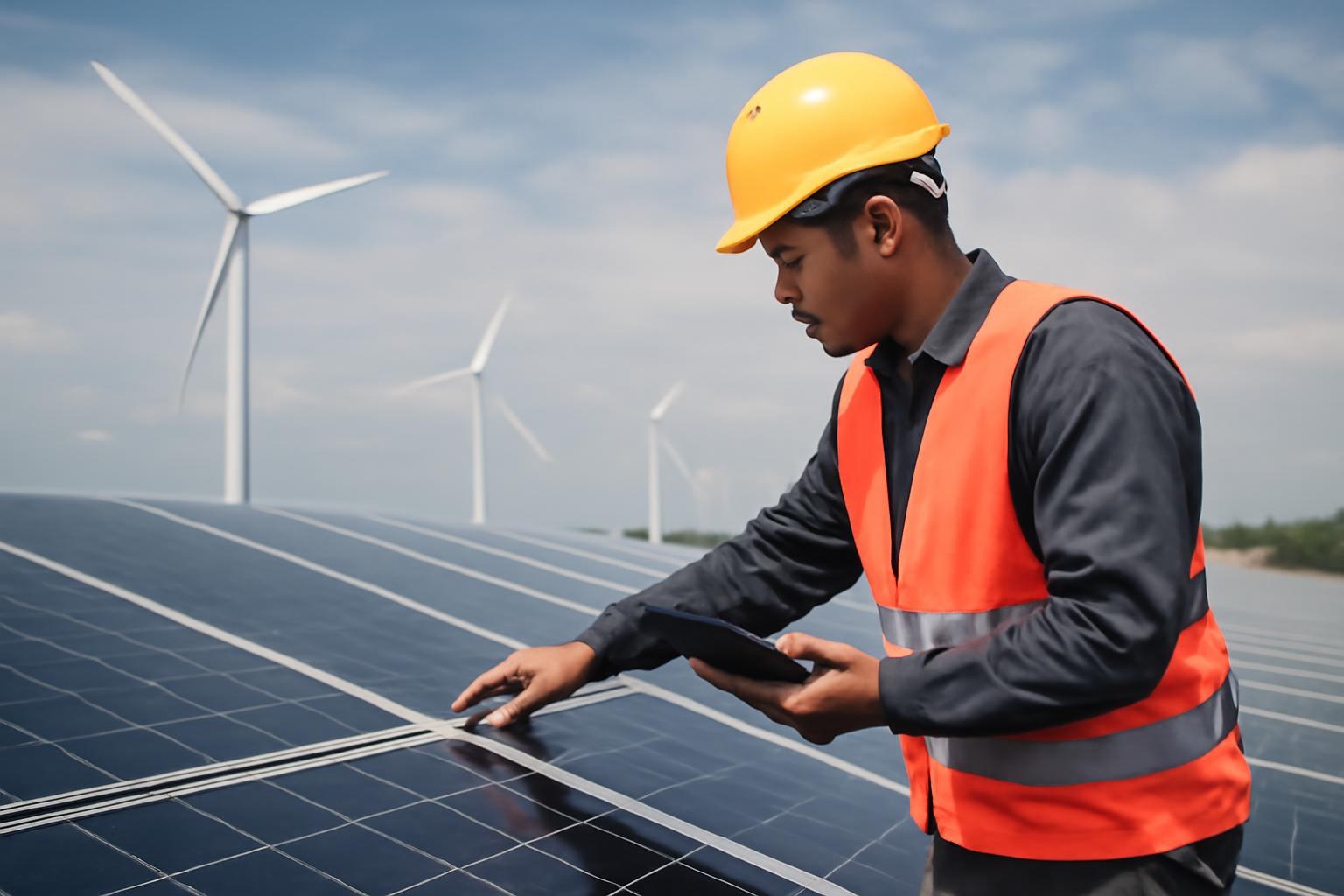
Asia’s energy landscape is changing under pressure from both climate commitments and recurring energy shocks. Sudden increases in the cost of imported coal, oil, and gas have reminded governments that affordability can depend on events thousands of kilometers away. As a result, renewable energy is increasingly discussed not only as an environmental priority but also as a form of strategic insurance.
Solar power has expanded particularly quickly because panels can be installed at many scales, from household rooftops to utility-sized projects. Several Asian economies have used auctions, tax incentives, and streamlined permitting to attract investment. Falling technology costs have strengthened the economic case, although land constraints, local opposition, and supply-chain concentration continue to complicate development.
Wind power is also gaining ground, especially along coastlines and in areas with consistent seasonal patterns. Offshore projects can generate electricity near densely populated industrial centers, where demand is substantial. However, construction requires specialized vessels, strong transmission links, and careful assessment of marine ecosystems, so a favorable resource does not automatically guarantee rapid deployment.
The transition is not simply a matter of building more generation capacity. Solar and wind output varies with weather, while electricity demand may peak at different times. Grid operators therefore need transmission upgrades, battery storage, demand-response programs, and forecasting systems that can coordinate millions of devices without compromising reliability.
Manufacturing capacity has become another strategic consideration. Asia dominates much of the production of solar modules, batteries, and other clean-energy components, but excessive dependence on a limited number of suppliers can create a new vulnerability. Governments are consequently encouraging domestic production and regional partnerships, even when doing so raises short-term costs.
Progress is uneven across the region. Wealthier economies may have greater access to capital and advanced grid technology, whereas developing countries often face financing constraints, weak infrastructure, or pressure to prioritize immediate economic growth. A fair transition will require concessional finance, technical assistance, and policies that prevent higher energy costs from falling disproportionately on low-income households.
The energy crisis has not eliminated the role of fossil fuels, and most analysts expect them to remain part of Asia’s mix during the transition. Nevertheless, repeated disruptions have changed the calculation: imported fuels carry geopolitical and financial risks that are difficult to capture in a simple price comparison. If governments combine renewable generation with efficient grids, storage, and social protection, Asia can turn an emergency response into a more secure and sustainable development strategy.