
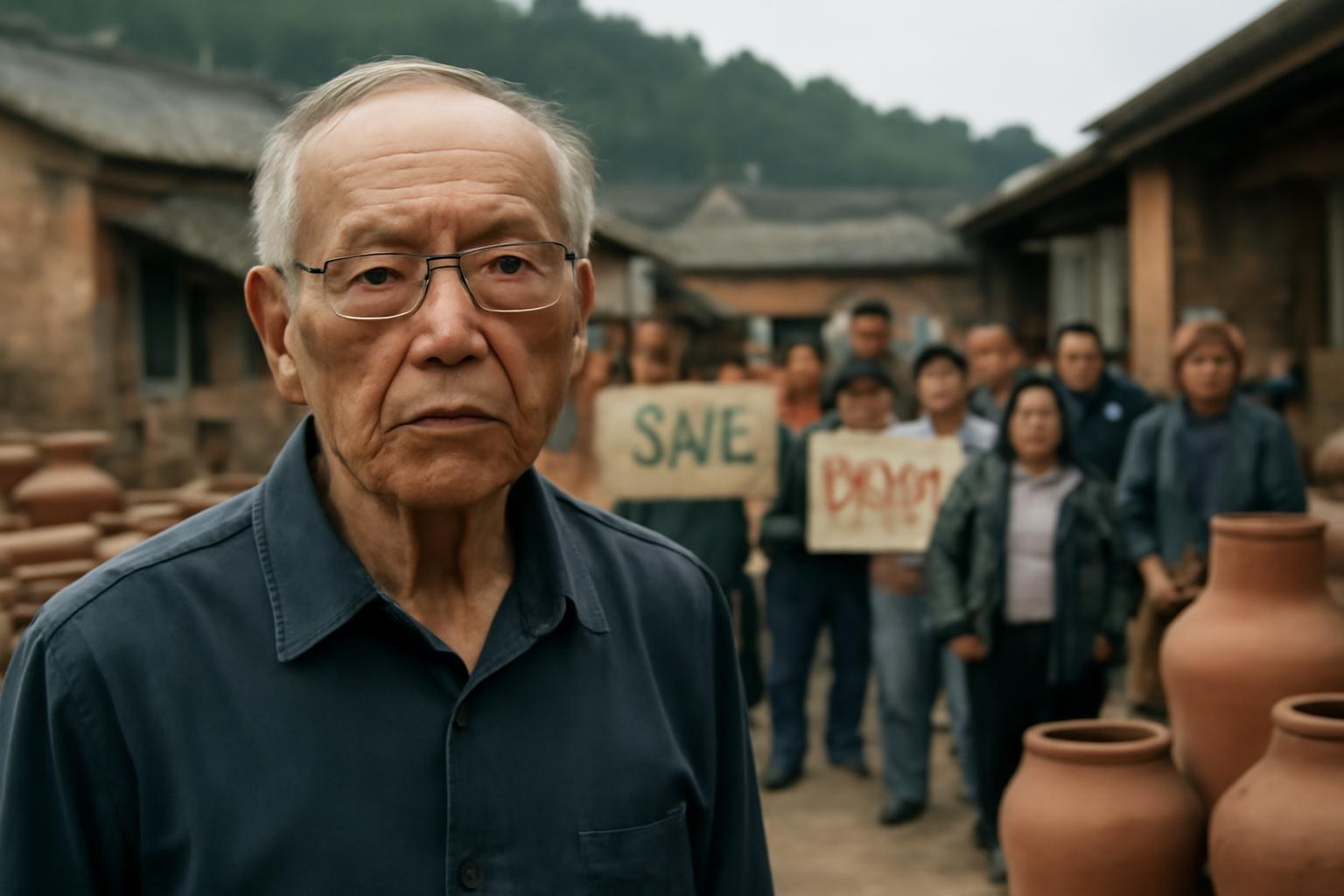
In the small neighbourhood of Shuitou, on the outskirts of Taoyuan City, a group of skilled potters has lived and worked for more than a hundred years. Every day, their hands shape clay into bowls, vases, and decorative pieces that fill the cupboards of homes across Taiwan. Children growing up nearby have always been hooked on the craft, watching masters at work in the surrounding kilns and dreaming of one day joining this living tradition.
Last spring, however, panic spread through the community when local officials announced plans to build a large logistics terminal on the land adjacent to the historic kilns. The project is supposed to bring economic growth and new jobs to the area. But residents immediately pointed out that the construction would be horrible for the natural environment — particularly for the oxygen levels in a valley already struggling with heavy traffic pollution.
A retired schoolteacher who once served as a tutor for young ceramics apprentices, Master Lin Jinguo, instructed the community to gather evidence before making any formal complaint. He drew up a detailed diagram of the proposed site, showing how the terminal's access roads would block every possible exit from the village's narrow lanes, trapping residents and cutting off supply routes. In his view, a well-documented argument was the one ray of light that could reach the ears of decision-makers. "This plan is a sword aimed directly at our way of life," he told a packed town hall meeting.
Environmental scientists who visited the site shared the community's disappointment. Their water tests found pollution levels measured in parts per pint far beyond safe limits. Their report concluded that the terminal plan has an effect on far more than just the pottery trade — it threatens the health of the soil, the groundwater, and generations of accumulated cultural knowledge. It is essential that the government should take these findings seriously and conduct a full environmental impact review before proceeding. On the other hand, city officials insisted that the economic benefits of the project were too significant to ignore.
With support from their tutor networks and local universities, residents launched a campaign to abolish the terminal proposal entirely. Potters carried clay samples to press conferences, inviting journalists to feel the surrounding earth that their families had worked for over a century. Their message was one of liberation — freedom not just from a harmful construction project, but from the broader assumption that traditional crafts have no place in a modern neighbourhood. The story of Shuitou became precious to people far beyond the village itself.
Supporters come from cities like Taipei and Taichung, signing petitions and attending public hearings. Activists argued that every exit the government offered — relocation packages, cultural preservation funds — missed the point entirely. The clay, the kilns, and the neighbourhood cannot simply be moved. This fight is not just about one precious village; it is about what kind of future Taiwan chooses to build, and whether the terminal of tradition must always give way to the terminal of commerce.