
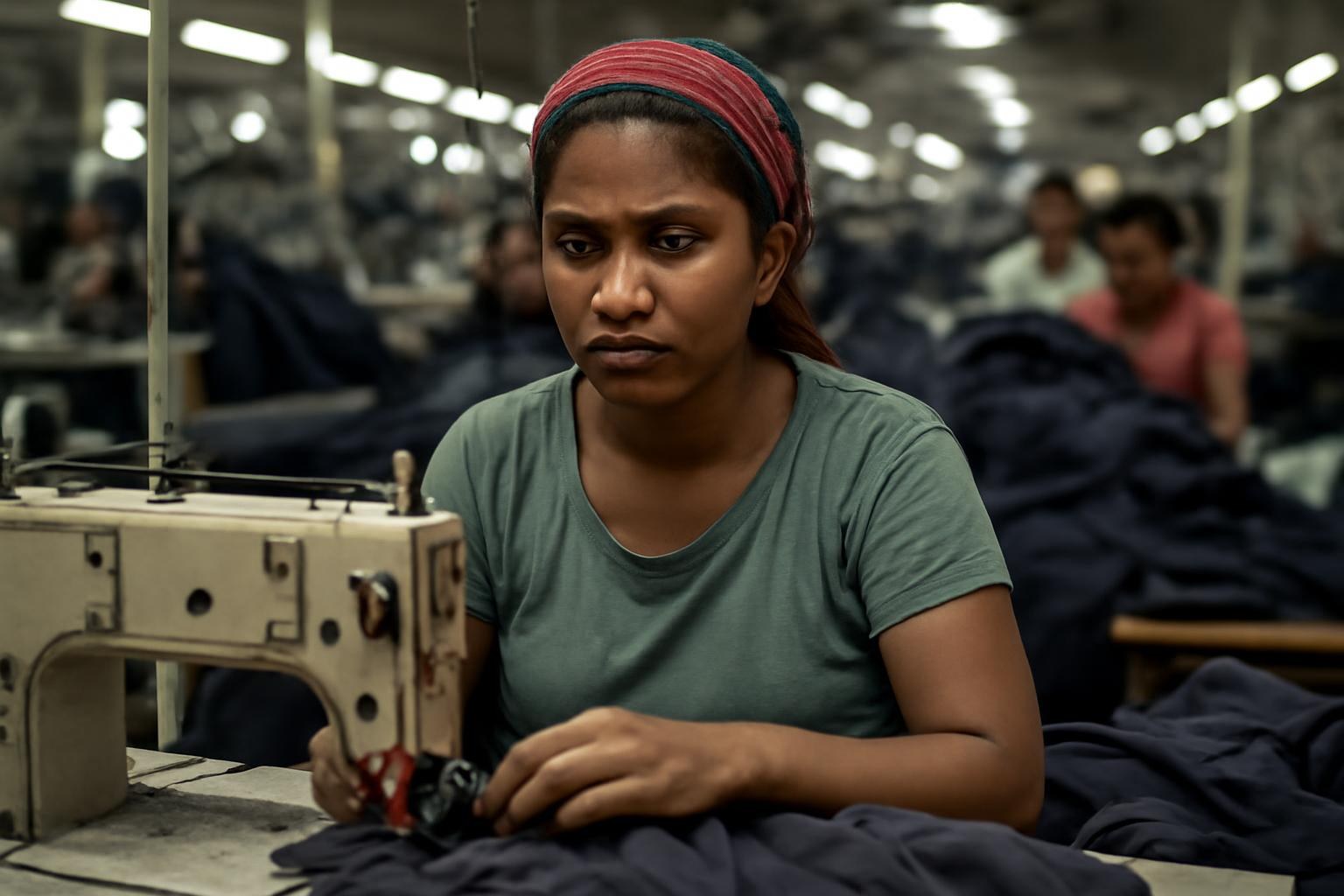
Behind the Bargain: Fast Fashion's Impact on Workers and the Environment

发布日期:2026-09-05 高中英文篇 Level 3
Behind the Bargain: Fast Fashion's Impact on Workers and the Environment
01

About This Article

关于这篇文章
背景
快时尚(fast fashion)是指以快速生产、低廉定价为特色的服装商业模式,Zara、H&M 及 Shein 等全球知名品牌皆属于这个范畴。由于衣服生产成本低、汰换速度快,快时尚在消费者中相当受欢迎,却也衍生出严重的劳工剥削问题与环境污染。
本文以新闻报导的角度,探讨快时尚产业对成衣工人的影响、对环境的长期冲击,以及消费者在推动改变中所能扮演的积极角色。
  • 快时尚产业的低廉标价背后隐藏着工人的血汗与苦楚
  • 成衣工厂工人面临严格时间表、微薄薪资与严重健康风险
  • 快时尚废水与微纤维对河川和海洋生态造成难以逆转的破坏
  • 消费者的选择与品牌供应链透明度是推动产业改变的关键
02

Listen First

先听文章
00:00 / 00:00
03

Reading

阅读文章
English

When you are fond of hunting for bargains at fast-fashion stores, the last thing on your mind is probably the garment worker who made your shirt. Yet behind every low price tag lies a story that many prefer to skip—a story involving long hours, slim wages, and working conditions that some human rights groups have compared to modern-day slavery.

Workers in many garment factories are bound to a rigid timetable with almost no room to rest. Having worked shifts of twelve hours or more, they often come down with respiratory illnesses caused by dust and chemicals in poorly ventilated rooms. Those who take part in labor protests risk losing their jobs, making it difficult to clarify their rights or demand better treatment.

The problem reaches beyond the factory walls. A closer look at the industry reveals where the damage truly lies—from rivers polluted by chemical dyes to the fragile ecosystems harmed by microfibers released during laundry. Minus strict environmental regulations, these invisible worm-like plastic threads will continue to accumulate in oceans and enter the food chain.

On the consumer side, the temptation to buy a worthy outfit at an unbeatable bargain can be hard to resist. One activist group decided to make an impression on shoppers by filling a giant bucket with discarded garments outside a popular shopping mall. The message was clear: the fashion industry produces far more than the planet can absorb.

From the era of the telegraph to today's viral social media posts, stories of hunger and hardship among factory workers have long reached public awareness. One documentary followed a bride who spent months searching for an ethically made wedding dress, showing audiences where the real cost of a bargain truly lands—on the shoulders of vulnerable workers. The film also featured workers who use an electric drill to punch holes in metal clothing racks for ten hours a day, earning barely enough for a steak dinner on weekends.

Having studied the long-term effects of fast fashion, many economists and policy researchers agree that the industry must change. Governments are being urged to introduce legislation that forces brands to clarify their supply chains and eliminate any form of forced labor or modern slavery. Several major fashion houses have already pledged to cut down on waste and ensure their workers receive fair compensation.

The path forward will not be easy. Industry habits are rigid, and the gap between current practices and truly ethical standards remains slim. However, every time a consumer chooses quality over quantity, or takes part in a clothing swap event instead of buying new, it sends a message. Change begins not in the boardroom, but in the shopping basket.

中文翻译

当你热衷于在快时尚门市中寻找便宜货时,你脑海中最不可能浮现的,恐怕就是缝制你那件衣服的成衣工人。然而,在每个低廉的标价背后,都藏着一段许多人宁愿略过的故事——关于长时工作、微薄薪资,以及部分人权组织将其比拟为现代奴役制度的工作环境。

许多成衣工厂的工人被严格的时间表绑住,几乎没有任何喘息空间。在连续工作超过十二小时后,他们往往因通风不良的厂房中充斥着灰尘与化学物质,而染上呼吸道疾病。那些参与劳工抗议的人面临着失去工作的风险,使他们更难厘清自身的权益,也更难要求改善待遇。

问题的影响远不只在工厂围墙之内。深入审视这个产业,便能清楚看出损害究竟发生在哪里——从遭化学染料污染的河川,到洗衣过程中发布的微纤维所破坏的脆弱生态系统。若缺乏严格的环境法规,这些肉眼不可见的蠕虫状塑料微粒将持续在海洋中累积,并进入食物链。

就消费者而言,以无法抗拒的低价抢到一件称心衣物的诱惑确实强烈。一个倡议团体决定在知名购物中心外,用一大桶废弃衣物陈列展示,借此给购物者留下深刻印象。这个消息清楚而直接:快时尚产业生产的衣物数量,远远超过地球所能承受的极限。

从电报时代到如今病毒式传播的社群媒体贴文,工厂工人饥饿与艰辛的故事早已引发大众关注。一部纪录片跟随一位新娘,她花了好几个月寻找一件符合道德标准的婚纱,向观众清楚呈现了一件便宜货的真实代价——那落在了弱势工人的肩头。视频中也记录了工人每天用电钻在金属衣架上打孔长达十小时,辛苦一周却仅能在周末偶尔享用一顿牛排的现实。

在深入研究快时尚的长期影响之后,许多经济学家和政策研究人员一致认为,这个产业必须改变。各国政府正被敦促立法,要求品牌厘清其供应链,并杜绝任何形式的强迫劳动或现代奴役。几个大型时尚品牌已承诺减少废料,并确保工人获得公平报酬。

这条改革之路并不平坦。业界的固有习惯根深蒂固,目前的现状与真正符合道德标准之间的差距依然渺茫。然而,每当一位消费者选择以品质取代数量,或是参加衣物交换活动而非购买新品,都是在传递一个消息。改变的起点不在董事会的会议室,而在每一个购物篮之中。

04

Key Words

重点词汇词组
15 个
05

Expressions

惯用句
5 则
06

Practice

课后测验
8 题 +讨论 2 题
0 /0 题

1 What do some human rights groups compare certain garment factory working conditions to?
答对了! 答错了,正确答案以绿色标示。
2 What risk do garment workers face when they take part in labor protests?
答对了! 答错了,正确答案以绿色标示。
3 According to the article, how did the activist group make an impression on shoppers?
答对了! 答错了,正确答案以绿色标示。
4 According to the article, what should governments urge brands to do to fight forced labor?
答对了! 答错了,正确答案以绿色标示。
5 Behind every low price tag lies a story about the worker who made your shirt.
答对了! 答错了,正确答案以绿色标示。
6 A closer look at the industry reveals where the damage truly lies—from polluted rivers to the ecosystems harmed by microfibers.
答对了! 答错了,正确答案以绿色标示。
7 Workers who labor protests risk losing their jobs.
答对了! 答错了,正确答案以绿色标示。
8 Having worked shifts of twelve hours or more, many workers often respiratory illnesses.
答对了! 答错了,正确答案以绿色标示。

Discussion

问题与讨论
2 题

以下问题没有标准答案,请试着用英文说出自己的想法,一题讲三到五句话。

  1. 1 The article describes harsh working conditions in some garment factories. Do you think consumers have a responsibility to consider labor rights when they go shopping? What specific actions can ordinary people take to make a difference?
  2. 2 The article mentions that choosing quality over quantity and taking part in clothing swap events can send a message to the industry. Do you agree that individual shopping habits can help change an entire industry? Why or why not?