
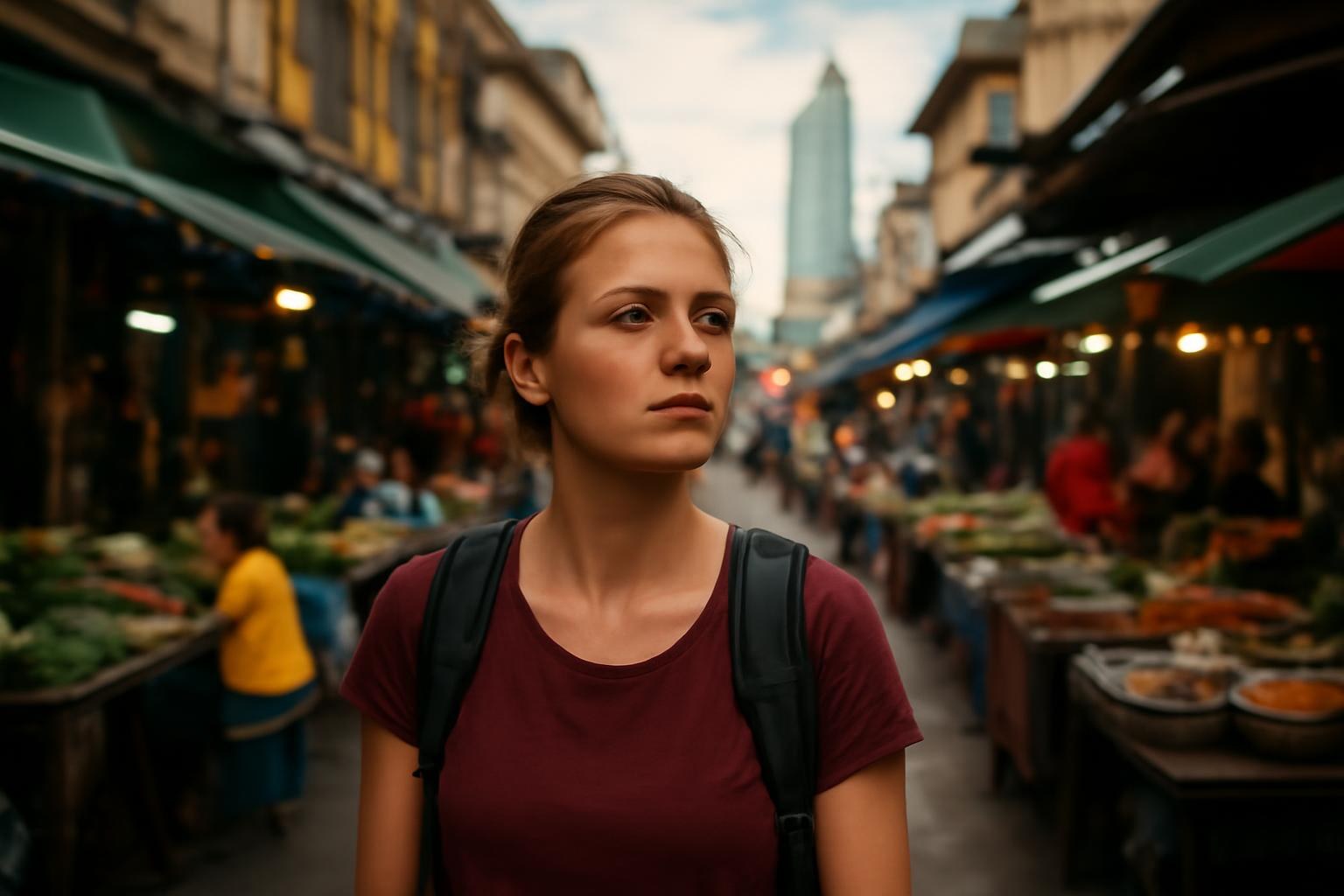
Traveling alone for the first time is not simple arithmetic. Grace had spent weeks preparing for her solo trip to Southeast Asia—calculating budgets, studying maps, and reading travel blogs. Many of the stories she had heard beforehand turned out to be completely untrue, and the reality was both more challenging and more rewarding than she had ever imagined.
On her first morning, Grace walked northwards from her guesthouse, guided by her phone's GPS. The app tried to redirect her through crowded side streets several times, and she was briefly mistaken about which corner to turn at. However, the moment she spotted a gleaming skyscraper rising above the rooftops, she used it as a landmark and confidently made her way to the city center.
The local market was a celebration of flavors. Grace bought a steamed bun filled with red bean paste and a thick slice of melon, then took a grateful mouthful of a warm cocoa drink that the vendor served on a small saucer. A kind local explained a regional idiom to her: "slow feet find the best food," meaning that those who rush through a place miss the most delicious discoveries.
The city's cultural richness impressed Grace deeply. Buddhism had long shaped the design of golden temples throughout the old town, while Moslem communities ran welcoming restaurants along the riverside market. Unlike Iceland, where the culture is far more uniform, this city was a living mosaic of beliefs, languages, and traditions coexisting in remarkable harmony.
Grace's guesthouse was affordable but had a few issues. After a night of heavy rainfall, the corridors turned smelly and the air felt damp and heavy. Someone had left a full dustbin right beside the staircase, and the bathtub in her room drained slowly after every use. She laughed these problems off, telling herself that backpacking was never meant to be perfectly comfortable.
On the third afternoon, Grace rented a motorbike to explore the villages beyond the city. Before setting off, she stopped at a currency exchange booth. "I'd like to exchange three thousand Taiwan dollars into local currency," she told the clerk with a smile. He processed the request efficiently and said, "Bingo! Here's your change." Grace was delighted—it was the first time she had heard that cheerful idiom used so naturally outside a classroom.
By the time she boarded her flight home, Grace understood why solo travel makes sense only when you let go of the need for control. She had also learned to look after herself in unfamiliar places—watching her belongings and trusting her instincts. Above all, she discovered that asking "Is it within walking distance?" could save a traveler both money and unnecessary stress, and she planned to use it on every adventure from that day forward.