
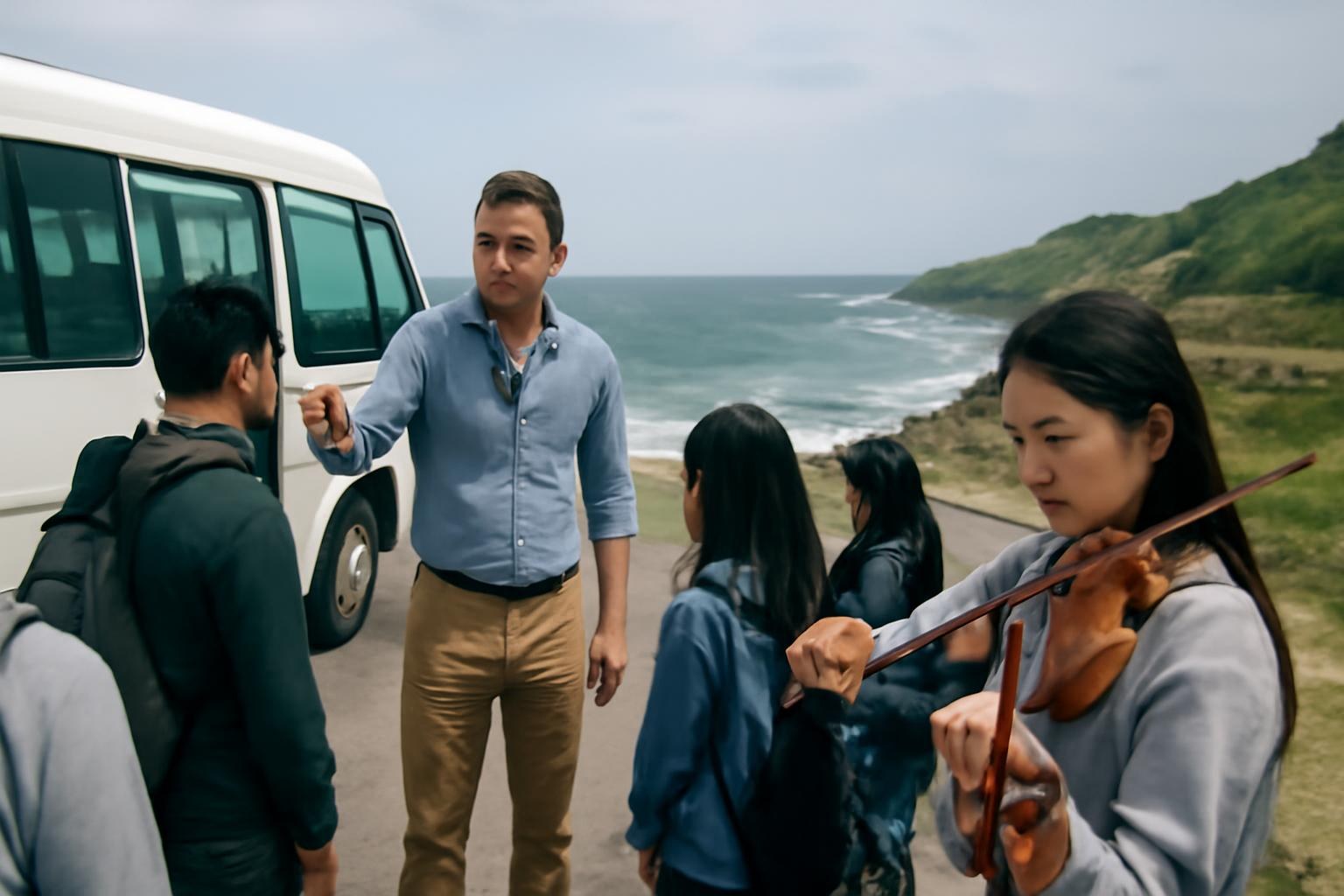
東北沿岸への校外学習

公開日:2026-09-05 高中英文篇 Level 3
東北沿岸への校外学習
01

About This Article

この記事について
背景
校外学習は台湾の高校生にとって重要な学習体験であり、教室を離れて自然や文化に触れる機会となります。この記事は、東北海岸沿岸を訪れた高校生のクラスの旅を軸に、外国人教師との交流を通じて、日常の場面で英語の語彙がどのように自然に使われるかを描いています。生態観察、環境問題、芸術鑑賞などのテーマを取り上げ、実用的な語彙を広げながら、英語が生活の中でいきいきと使われている様子を感じることができます。
  • 生徒たちはミニバスで東へ向かい、年間校外学習のために東北海岸沿岸へ
  • 外国人教師コリンズ先生がカモメ、スズメ、バッタなどの生態観察を指導
  • コリンズ先生はスモッグが視力に与える影響を説明し、南極の環境について語る
  • 音楽部のバイオリニストが海辺で演奏し、忘れられない野外音楽体験を残す
  • 旅は生徒たちに教室を飛び出し、実生活での英語の活用を実感させる
02

Listen First

まず聞く
00:00 / 00:00
03

Reading

記事を読む
English

Last Friday, our class boarded a minibus and headed eastwards to the northeastern coast for our annual field trip. The morning sky was foggy, and a thin layer of smog still hung over Taipei as we drove away. Our science teacher, a warm and humorous westerner named Mr. Collins, greeted everyone with a wide smile. Almost immediately, he began to break the ice by sharing a funny story about his very first week living in Taiwan, and the whole bus burst into laughter.

Mr. Collins carried an old walkman in his bag and said he still preferred it to modern music players. One student pointed out that cordless earphones were far more practical these days, which made everyone laugh again. He had also brought a thermos full of herbal tea that his wife had brewed in a teapot that morning. "It keeps my throat warm on cool days," he explained with a smile. On the contrary, most students had brought cold sodas and packaged snacks from convenience stores. One girl sighed that her store-bought sandwich was completely tasteless and tossed it aside after the first bite.

When we arrived at the beach, the fog had lifted and the scenery was breathtaking. A flock of seagulls glided gracefully above the waves, while a tiny sparrow hopped along the sand near our feet, searching for crumbs. Mr. Collins knelt down and pointed to a locust resting quietly on a grass blade. He explained that massive locust swarms could sweep across farmland and destroy entire crops before they even had a chance to ripen, making them one of the most feared insects in agricultural regions around the world.

After our walk, Mr. Collins set up a cordless microphone near the shore and gave a short environmental talk. He explained how prolonged exposure to smog could gradually damage a person's eyesight and lead to serious respiratory problems. He even mentioned that researchers stationed in Antarctica had recorded some of the cleanest air on Earth, completely untouched by industrial pollution. "If you think algebra is hard," he joked, "imagine spending a winter there running outdoor experiments!" One student groaned, "Ouch — that sounds absolutely freezing!" He also noted that strict airspace regulations over coastal nature reserves help reduce noise that disturbs local wildlife.

During the lunch break, a talented violinist from our school music club performed right on the beach. It was the most memorable live music we had ever experienced in such a wide, open setting. Everyone sat quietly on the sand and listened. Mr. Collins later said that just as correct punctuation gives writing its rhythm and clarity, music gives emotion its truest shape. Both, he added, are skills that reward years of patient, devoted practice.

As we packed up to leave, Mr. Collins admitted he had a sweet tooth and asked if anyone could point him to a good local dessert. A student recommended a nearby stall famous for fresh mango sorbet, as the mangoes in the area had just fully ripened and were at their sweetest. On the drive home, our minibus passed beneath a busy airspace zone, and everyone craned their necks to watch a large cargo plane rumble overhead. "I want to visit Antarctica someday!" someone shouted from the back seats, and the whole bus cheered.

By the time we returned to school, everyone agreed the trip had given us far more than a day away from class. We had observed real ecosystems, discussed global environmental challenges, and been moved by live music under an open sky. On the contrary to our usual classroom routine, that day reminded us that some of the most powerful lessons happen when you step outside and engage with the world around you.

日本語訳

先週の金曜日、私たちのクラスはミニバスに乗り込み、年に一度の校外学習のために東の東北沿岸へと向かいました。台北を出発した時、朝の空は霧がかかっており、街の上空にはまだ薄いスモッグが漂っていました。私たちの科学の先生であるコリンズ先生は、温かく陽気な西洋人で、満面の笑みで全員を出迎えてくれました。先生はほぼすぐに、台湾に来た最初の一週間のおかしなエピソードを話して場を和ませ、バス全体が笑いに包まれました。

コリンズ先生はカバンの中に古いウォークマンを持っており、今でも現代の音楽プレーヤーよりも気に入っていると言いました。ある生徒がコードレスイヤホンの方が今日ずっと実用的だと指摘し、再び笑いを誘いました。先生はまた、その朝、奥さんがティーポットで淹れたハーブティーを満たした魔法瓶も持参していました。「涼しい日に喉を温めてくれるんだ」と彼は微笑みながら説明しました。それとは対照的に、ほとんどの生徒はコンビニから冷たいソーダやパッケージのスナックを持ってきていました。ある女の子は、コンビニで買ったサンドイッチが全く味がないとため息をつき、一口食べた後で放り投げてしまいました。

海岸に到着すると、霧は晴れており、景色は息をのむほど美しいものでした。カモメの群れが波の上を優雅に舞い、小さなスズメが私たちの足元近くで砂浜をぴょんぴょん跳ね回り、食べかすを探していました。コリンズ先生はしゃがみ込み、草の葉の上で静かに休んでいるバッタを指さしました。先生は、大規模なバッタの群れが農地を一気に席巻し、農作物が熟す前に全滅させてしまうことがあり、世界中の農業地帯で最も恐れられている害虫の一つだと説明しました。

散歩の後、コリンズ先生は岸辺にコードレスマイクをセットアップし、短い環境についての話をしてくれました。スモッグに長期間さらされると、人の視力が徐々に損なわれ、深刻な呼吸器疾患につながる可能性があることを説明しました。南極に駐在する研究者たちが、工業汚染に全く触れていない地球上で最もきれいな空気を記録したとも述べました。「代数が難しいと思うなら」と彼は冗談を言いました。「そこで冬を過ごして野外実験をすることを想像してみてください!」ある生徒が「うわあ、それは絶対に凍えそう!」とうめきました。また、沿岸の自然保護区上空の厳格な空域規制が、地域の野生動物を乱す騒音を減らすのに役立つとも述べました。

昼休みには、学校の音楽部から才能あるバイオリニストが海岸でそのまま演奏しました。それは、私たちがこれほど広い開放的な場所で体験した中で、最も忘れられない生演奏でした。みんなは砂浜に静かに座って聴き入りました。コリンズ先生は後で、正しい句読点が文章にリズムと明瞭さを与えるように、音楽も感情に最も真実の形を与えると言いました。また、両方とも長年の忍耐強く、献身的な練習によって報われるスキルだと付け加えました。

帰る準備をしているとき、コリンズ先生は自分が甘いものが好きだと打ち明け、地元の美味しいデザートを教えてくれる人はいないかと尋ねました。ある生徒は、近くにある新鮮なマンゴーシャーベットで有名な屋台を勧めました。その地域のマンゴーがちょうど完全に熟しており、最も甘い時期だということでした。帰り道、ミニバスは賑やかな空域地帯の下を通り過ぎ、大きな貨物機がゴロゴロと頭上を通過するのを見ようとみんなが首を伸ばしました。「いつか南極に行きたい!」と誰かが後部座席から叫び、バス全体が歓声を上げました。

学校に戻る頃には、みんな一致して、この旅は授業を離れた一日以上のものを与えてくれたと感じていました。私たちは本物の生態系を観察し、地球規模の環境問題を議論し、開放的な空の下での生演奏に心を動かされました。普段の教室での日課とは正反対に、あの日は、最も力強い教訓のいくつかは、外に踏み出して周りの世界と真剣に向き合うときに訪れるのだということを思い出させてくれました。

04

Key Words

重要単語・フレーズ
15 件
05

Expressions

慣用表現
4 件
06

Practice

理解度テスト
8 問 +ディスカッション 2 問
0 /0 問

1 How did Mr. Collins make everyone feel comfortable at the beginning of the trip?
正解です。 不正解です。正解は緑色で示しています。
2 Why did Mr. Collins bring a thermos on the field trip?
正解です。 不正解です。正解は緑色で示しています。
3 According to Mr. Collins, what is one serious health risk of prolonged smog exposure?
正解です。 不正解です。正解は緑色で示しています。
4 What did Mr. Collins compare music to when he spoke after the violinist's performance?
正解です。 不正解です。正解は緑色で示しています。
5 A flock of glided gracefully above the waves when we arrived at the beach.
正解です。 不正解です。正解は緑色で示しています。
6 Locust swarms could destroy entire crops before they had a chance to .
正解です。 不正解です。正解は緑色で示しています。
7 He set up a microphone near the shore and gave a short environmental talk.
正解です。 不正解です。正解は緑色で示しています。
8 He began to by sharing a funny story about his very first week living in Taiwan.
正解です。 不正解です。正解は緑色で示しています。

Discussion

質問とディスカッション
2 問

以下の問いに正解はありません。英語で自分の考えを、1 問につき 3〜5 文で話してみましょう。

  1. 1 The field trip gave the students many valuable experiences they could not get from textbooks. Can you describe a time when you learned something important outside of school? What did you learn, and how did it affect your thinking or behaviour?
  2. 2 Mr. Collins warned that smog can seriously damage eyesight and harm overall health. What do you think high school students can do in their daily lives to help reduce air pollution in Taiwan? Please share at least two specific actions and explain why they matter.