
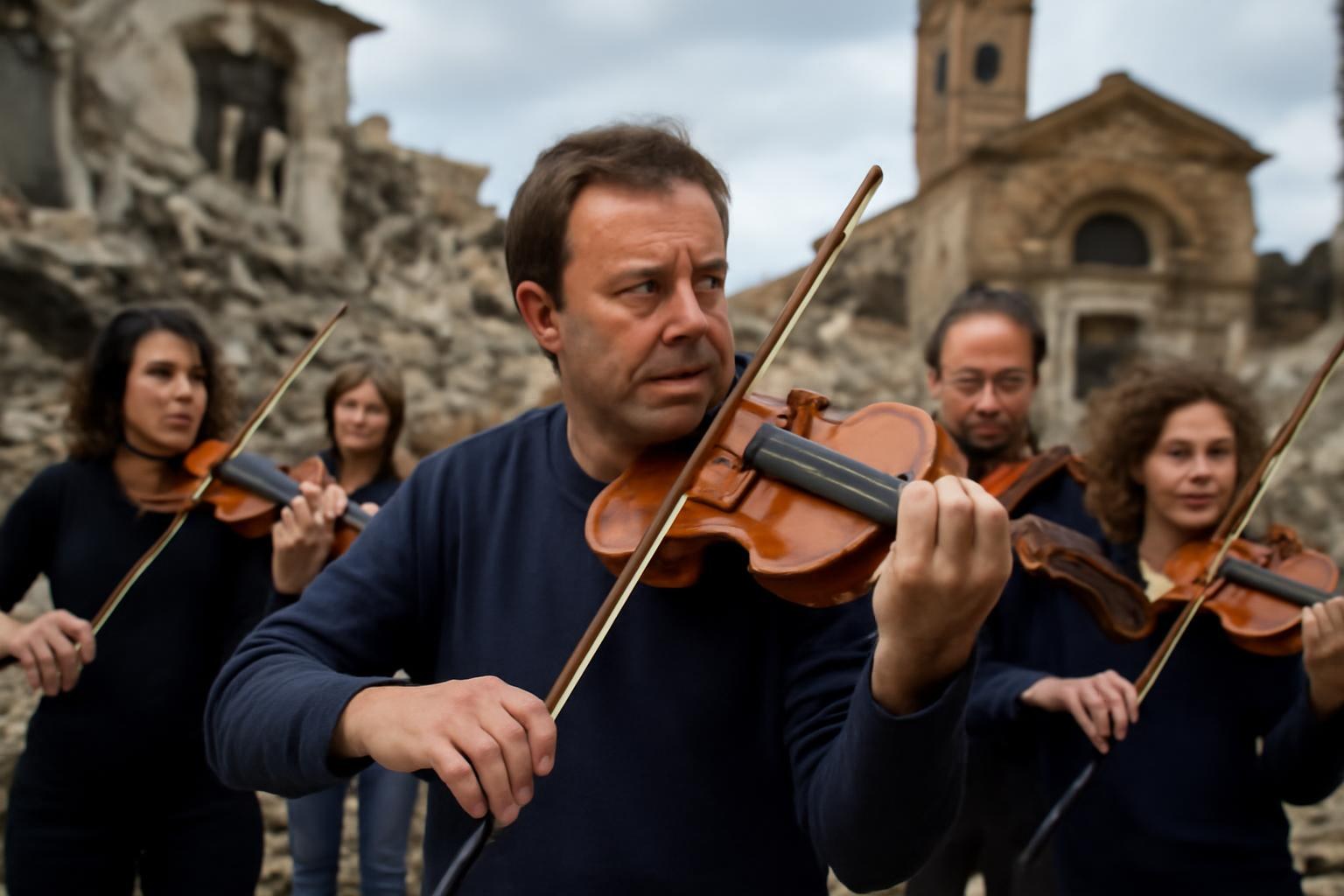
A string of devastating earthquakes struck southern Italy approximately two years ago, leaving thousands of families without shelter and forcing many to bury their most treasured possessions under layers of rubble. The disaster transformed quiet villages into scenes of grief and loss, and conventional relief efforts alone seemed insufficient to heal the deep wounds left behind.
A local bishop, known for his holy mission to assist the most vulnerable, chose to view the situation from a different angle. Rather than relying solely on financial aid, he inspired a group of musicians to launch a voluntary community program. Instead of following the conventional approach of simply providing donations, the project encouraged survivors to take part in a creative recovery initiative built around the power of music.
The program began with a small string ensemble and grew to include approximately eighty members within its first year. Many participants had lost nearly every possession they owned, yet they found joy in the pure act of creating music together. A professional therapist was brought in to analyze the emotional progress of the group, and the results were striking. Even those who showed only a slight interest at first soon found themselves fully engaged.
The organizers worked hard to bend government restrictions that limited the use of public spaces. They argued that the arrival of such voluntary cultural programs was essential for long-term healing. By collaborating with local officials, they managed to transform a damaged town square into a vibrant outdoor performance venue. Their first concert drew Italian artists and community leaders from across the region.
The group later released a collaborative album to raise funds and share their remarkable journey with a broader audience. The album was intended to inspire other communities facing similar hardships. Only when people truly take part in the recovery process do they realize the extraordinary power of collective effort. The success of the album allowed the project to expand its reach to neighboring towns still struggling to rebuild.
Many participants said they would rather rebuild their lives through art than bury themselves in despair and grief. The more they practiced together, the stronger their bonds became. Organizers also encouraged members to turn off their electronic devices during rehearsals, creating a space focused entirely on human connection and shared purpose.
Today, the Italian project stands as a model for disaster recovery that goes beyond material assistance. By approaching the healing process from a cultural angle rather than a purely economic one, the program has demonstrated that pure human connection can be as powerful as any financial aid package. The story continues to inspire communities around the world to find creative paths forward in the aftermath of tragedy.