
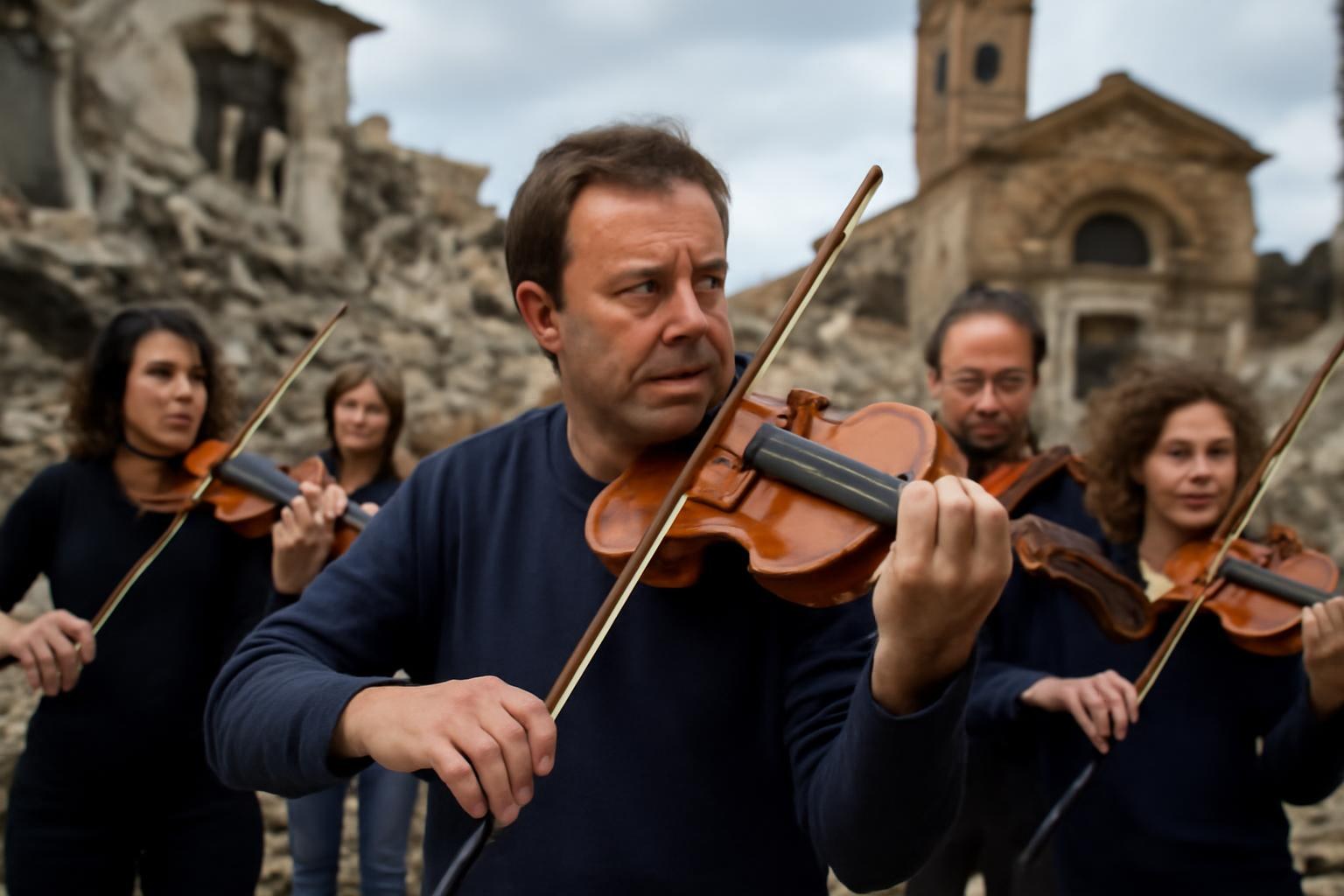
災害から調和へ:コミュニティ復興のイタリア・モデル

公開日:2026-09-05 高中英文篇 Level 3
災害から調和へ:コミュニティ復興のイタリア・モデル
01

About This Article

この記事について
背景
イタリアは地震が頻繁に発生しており、近年の複数の地震で深刻な人的・物的被害が生じている。物質的な支援に加え、心理的・コミュニティ的な復興も同様に重要であるが、しばしば見過ごされがちだ。本記事はイタリア南部のある地震被災地を舞台に、地元の司教が主導し、音楽で生存者をつなぐ自発的なプログラムを紹介する。記事の難易度はTOEIC 600〜795点の中上級レベルに相当し、時事報道の読解や市民社会に関連する語彙を学ぶのに適している。
  • イタリアの地震後、従来の救援活動では生存者の心理的傷を癒やすことが難しかった
  • 司教は異なる視点から、音楽を核とした自発的なコミュニティプログラムを立ち上げた
  • 生存者が弦楽団に参加し、音楽の中に癒やしと互いの絆を見出した
  • 主催者が規制を柔軟に運用し、被災した広場を演奏会場へと改修することに成功した
  • コラボレーションアルバムがより多くのコミュニティを鼓舞し、プロジェクトは影響力を広げ続けている
02

Listen First

まず聞く
00:00 / 00:00
03

Reading

記事を読む
English

A string of devastating earthquakes struck southern Italy approximately two years ago, leaving thousands of families without shelter and forcing many to bury their most treasured possessions under layers of rubble. The disaster transformed quiet villages into scenes of grief and loss, and conventional relief efforts alone seemed insufficient to heal the deep wounds left behind.

A local bishop, known for his holy mission to assist the most vulnerable, chose to view the situation from a different angle. Rather than relying solely on financial aid, he inspired a group of musicians to launch a voluntary community program. Instead of following the conventional approach of simply providing donations, the project encouraged survivors to take part in a creative recovery initiative built around the power of music.

The program began with a small string ensemble and grew to include approximately eighty members within its first year. Many participants had lost nearly every possession they owned, yet they found joy in the pure act of creating music together. A professional therapist was brought in to analyze the emotional progress of the group, and the results were striking. Even those who showed only a slight interest at first soon found themselves fully engaged.

The organizers worked hard to bend government restrictions that limited the use of public spaces. They argued that the arrival of such voluntary cultural programs was essential for long-term healing. By collaborating with local officials, they managed to transform a damaged town square into a vibrant outdoor performance venue. Their first concert drew Italian artists and community leaders from across the region.

The group later released a collaborative album to raise funds and share their remarkable journey with a broader audience. The album was intended to inspire other communities facing similar hardships. Only when people truly take part in the recovery process do they realize the extraordinary power of collective effort. The success of the album allowed the project to expand its reach to neighboring towns still struggling to rebuild.

Many participants said they would rather rebuild their lives through art than bury themselves in despair and grief. The more they practiced together, the stronger their bonds became. Organizers also encouraged members to turn off their electronic devices during rehearsals, creating a space focused entirely on human connection and shared purpose.

Today, the Italian project stands as a model for disaster recovery that goes beyond material assistance. By approaching the healing process from a cultural angle rather than a purely economic one, the program has demonstrated that pure human connection can be as powerful as any financial aid package. The story continues to inspire communities around the world to find creative paths forward in the aftermath of tragedy.

日本語訳

約2年前、イタリア南部を一連の壊滅的な地震が襲い、数千の家族が家を失い、多くの人が最も大切な財産を瓦礫の下に埋もれさせることを余儀なくされた。この災害は静かな村々を悲嘆と喪失の場へと変え、従来の救援活動だけでは残された深い傷を癒やすには不十分に思われた。

最も弱い立場にある人々を支援する神聖な使命で知られる地元の司教は、この状況を別の角度から捉えることを選んだ。財政的支援のみに頼るのではなく、一群の音楽家たちを鼓舞して自発的なコミュニティプログラムを立ち上げた。単純に寄付をするという従来のアプローチを踏襲するのではなく、このプロジェクトは音楽の力を核とした創造的な復興活動への参加を生存者に促した。

プログラムは小さな弦楽アンサンブルから始まり、初年度だけで約80名のメンバーを擁するまでに成長した。多くの参加者はほぼすべての財産を失っていたにもかかわらず、ともに音楽を創る純粋な行為の中に喜びを見出した。専門のセラピストが招かれてグループの感情的な進歩を分析し、その結果は目を見張るものだった。最初はわずかな関心しか示さなかった人たちでさえ、やがて完全に没頭するようになった。

主催者たちは、公共スペースの使用を制限する政府の規制を柔軟に適用してもらえるよう懸命に働きかけた。彼らは、このような自発的な文化プログラムの到来が長期的な癒やしに不可欠だと主張した。地元の当局と協力することで、被災した町の広場を活気あふれる野外公演会場へと変えることに成功した。最初のコンサートには、イタリア各地からアーティストやコミュニティのリーダーたちが集まった。

グループはその後、資金調達と彼らの驚くべき旅路をより多くの聴衆と共有するために、コラボレーションアルバムをリリースした。このアルバムは、同様の困難に直面している他のコミュニティを鼓舞することを目的としていた。人々が復興プロセスに真に参加して初めて、集団的な努力の非凡な力を実感できる。アルバムの成功により、プロジェクトはいまだ再建に苦闘している隣接する町々へと活動を広げることができた。

多くの参加者は、絶望と悲嘆に身を埋めるよりも、芸術を通じて人生を再建したいと語った。一緒に練習すればするほど、絆はより強固になっていった。主催者はまた、リハーサル中に電子機器の電源を切るようメンバーに促し、人と人とのつながりと共通の目的に完全に集中できる空間を作り出した。

今日、このイタリアのプロジェクトは、物質的な支援を超えた災害復興のモデルとして立っている。純粋に経済的な観点からではなく、文化的な角度から癒やしのプロセスにアプローチすることで、このプログラムは純粋な人間のつながりが、いかなる財政援助パッケージにも劣らない力を持ち得ることを示した。この物語は、悲劇の後に創造的な前進の道を見つけるよう、世界中のコミュニティに感化を与え続けている。

04

Key Words

重要単語・フレーズ
15 件
05

Expressions

慣用表現
5 件
06

Practice

理解度テスト
8 問 +ディスカッション 2 問
0 /0 問

1 What did the local bishop do in response to the earthquake disaster?
正解です。 不正解です。正解は緑色で示しています。
2 How did the organizers manage to use the damaged town square as a performance venue?
正解です。 不正解です。正解は緑色で示しています。
3 What was one result of releasing the collaborative album?
正解です。 不正解です。正解は緑色で示しています。
4 He inspired musicians to launch a community program that relied on willing participants rather than hired professionals.
正解です。 不正解です。正解は緑色で示しています。
5 The program began with a small string ensemble and grew to include eighty members within its first year.
正解です。 不正解です。正解は緑色で示しています。
6 Even those who showed only a interest at first soon found themselves fully engaged in the music program.
正解です。 不正解です。正解は緑色で示しています。
7 Many participants said they would rebuild their lives through art than bury themselves in despair.
正解です。 不正解です。正解は緑色で示しています。
8 Organizers encouraged members to their electronic devices during rehearsals to focus on human connection.
正解です。 不正解です。正解は緑色で示しています。

Discussion

質問とディスカッション
2 問

以下の問いに正解はありません。英語で自分の考えを、1 問につき 3〜5 文で話してみましょう。

  1. 1 The article describes how a voluntary music program helped disaster survivors recover emotionally. Do you think creative activities like music or art can help people heal from emotional pain? Please explain your view and give examples from your own experience or things you have learned about.
  2. 2 The participants turned off their electronic devices during rehearsals to focus on connection and shared purpose. How much time do you spend on electronic devices each day, and do you think reducing screen time could improve your focus or relationships? Why or why not?