
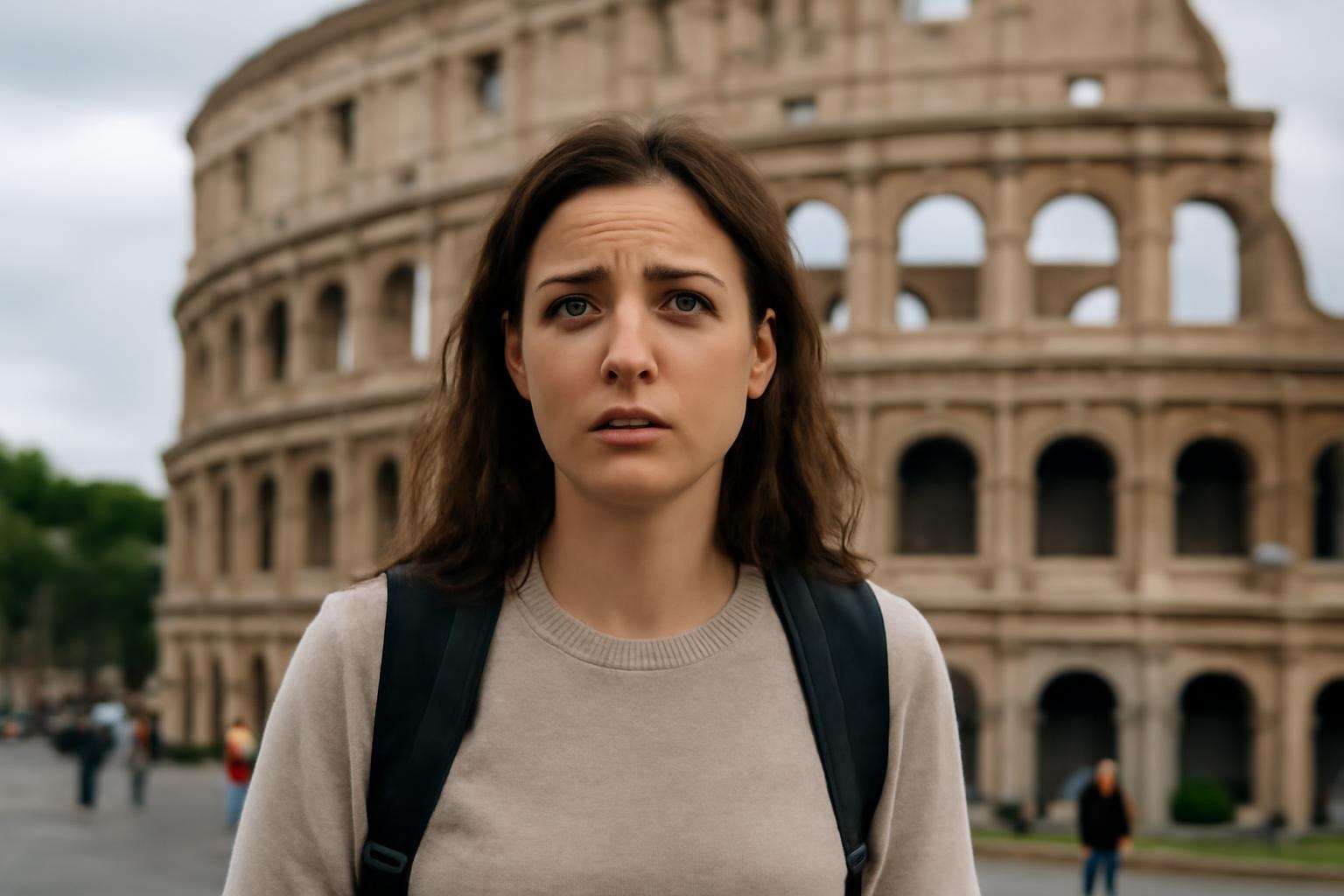
After a long voyage across the ocean, my first overseas trip began with a view I will never forget. As the plane descended over Rome, the breathtaking scenery of golden rooftops and green hills stretched endlessly below. I pressed my face against the window, feeling a mix of excitement and nervousness. This was nothing like the trips I had read about in textbooks—it was real, and it was happening now.
At the immigration desk, the officer looked up and asked, "What is the purpose of your visit?" The question seemed ambiguous to me at first. Was he asking whether I was here for work, study, or tourism? I felt embarrassed when my carefully prepared answer suddenly vanished from my mind. After a deep breath, I managed to say, "Tourism. I am here for sightseeing." He checked my baggage declaration form, stamped my passport, and waved me through without another word.
After collecting my bags, I needed to find a place to change money. I approached a local shop owner and asked, "Where can I exchange currency?" She pointed sideways down the street toward a building with an oval yellow sign above the entrance. I followed her directions and found the exchange counter easily. However, I soon discovered that the airport rate had been far worse than the rate available in the city—a gap that would have been much larger had I exchanged all my money there. For instance, every hundred dollars cost me nearly twelve euros more at the airport. The friction between competing exchange services, I learned, can be deeply confusing for first-time travelers.
At the hotel, I discovered that one piece of my luggage had been damaged during the flight. A claw-like metal latch on the side of the bag had snapped off, leaving the zipper loose and the contents messy. The hotel staff, whose kindness truly moved me, worked quickly to simplify the problem. One of them used wax to seal the broken area, then secured the bag with a strong cord so I could still use it for the rest of the trip. It was a small act of generosity, but it meant everything.
That evening, a Frenchman named Pierre led our group on a walking tour through the historic streets. He spoke with deep passion about astronomy, explaining how ancient sailors had relied on star patterns during long ocean voyages to navigate across vast seas. Among the group was a teenage girl—still a chick by any traveler's standard—who asked surprisingly insightful questions that impressed everyone. At one point, however, a tourist at the back muttered that the topic was "boring and disgusting" and had nothing to do with sightseeing. Pierre simply smiled, reached into his pocket for a handkerchief to wipe his glasses, and continued speaking with perfect calm. I realized then that sowing seeds of curiosity and patience—one careful word at a time—can turn even friction into connection.
By the end of the trip, I had learned far more than I ever expected. Travel rarely goes smoothly, but each challenge teaches you how to simplify your thinking, manage friction with strangers, and trust that things will work out. Even when situations grow worse than planned, a steady mind and an open attitude are always enough to carry you forward. The best journeys are never the ones that go perfectly—they are the ones where you grow.