
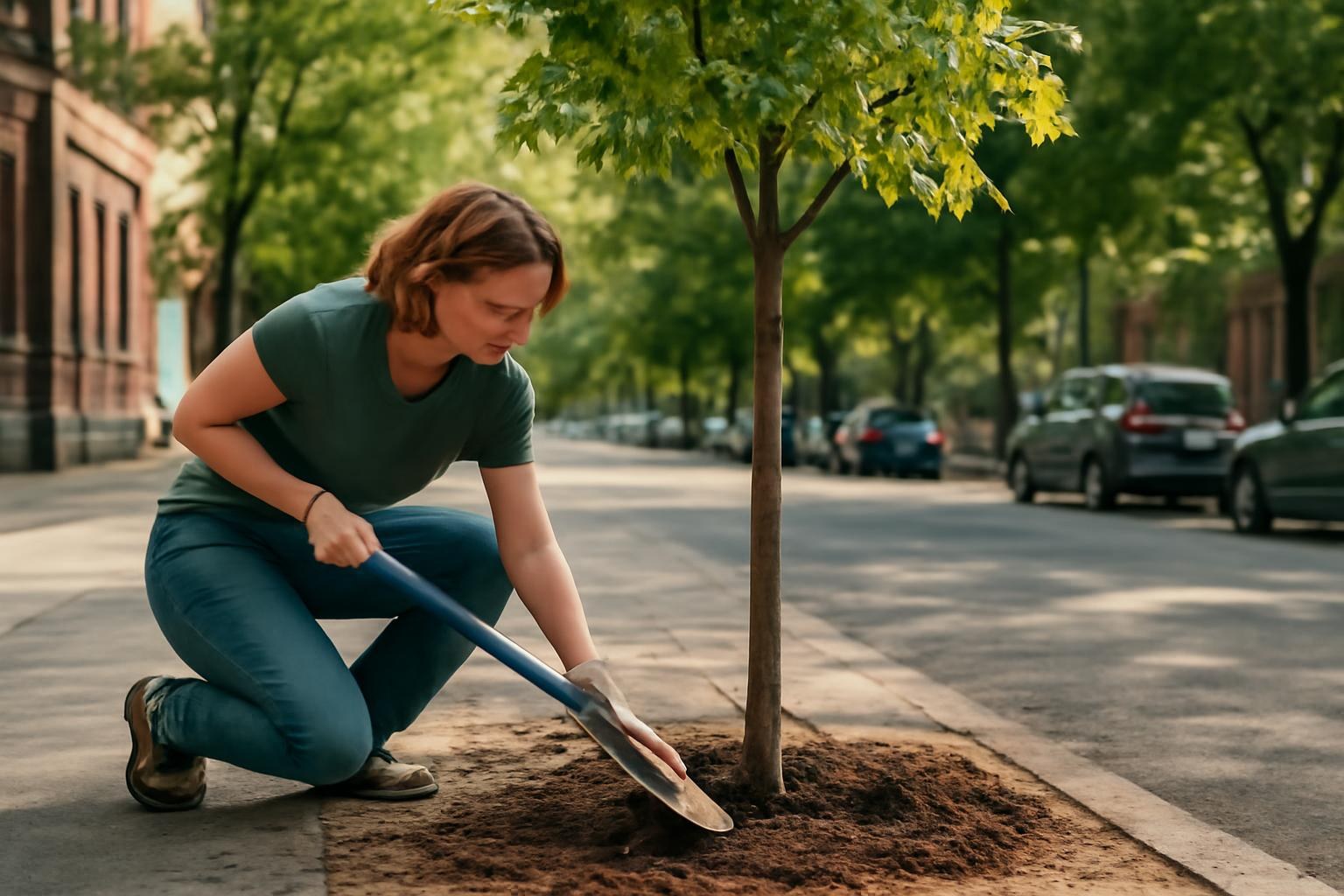
Many cities are planting more trees along streets, near schools, and in public parks. City leaders know that trees are not only beautiful. They can make neighborhoods cooler, cleaner, and more comfortable for people who live there.
On a hot day, a tree gives shade to people walking on the sidewalk. Its leaves block some sunlight, and the ground under it may stay cooler. Trees can also help lower the heat around buildings. This is important because cities often have many roads and walls that hold heat.
Trees can make the air better too. They take in a gas called carbon dioxide and give out oxygen. Their leaves can catch some dust from the air. Trees cannot remove every kind of pollution, but they can support a healthier place when they grow well.
City trees are also homes for small animals. Birds can build nests in their branches, and insects can find food near their leaves. A line of trees can give these animals a safe path through a busy city. Children may enjoy seeing birds and learning about nature there.
Planting a tree is only the beginning. Young trees need water, good soil, and protection from cars. Workers and local residents may check them after strong wind or heavy rain. If people care for the trees, the trees can grow for many years.
More trees can bring people together. Neighbors may join a planting day or help clean a small park. They can choose plants that fit the local weather and space. In this way, a greener city becomes a shared project, not only a plan made by the government.