
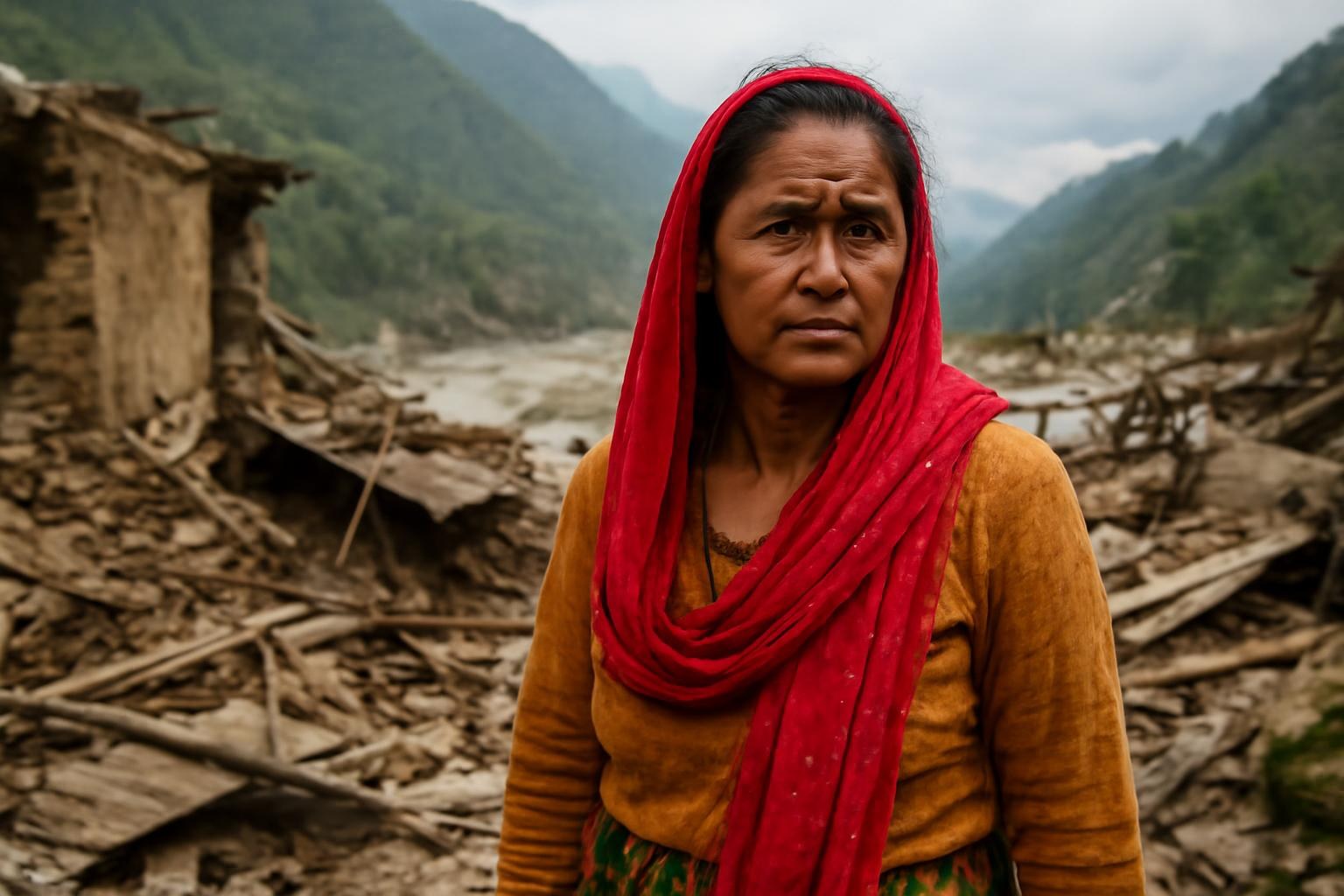
A disaster in Nepal has drawn attention to weaknesses in cross-border early-warning systems across the Himalayas. Floods and landslides may originate in one country but reach communities downstream in another within hours. This geography makes cooperation essential, yet technical capacity and political trust remain uneven among neighboring states.
An effective warning system begins with continuous observation. Rain gauges, river sensors, satellite images, and cameras can detect changes in water levels, rainfall intensity, or glacial-lake conditions. The information becomes useful only when it is transmitted quickly, interpreted accurately, and converted into a clear message that people understand.
In many remote valleys, the first obstacle is infrastructure. Sensors may be damaged by avalanches, lightning, or debris, while electricity and mobile networks can fail during severe weather. A warning center that receives incomplete data may hesitate to issue an alert, especially when a false alarm could undermine public confidence.
Cross-border coordination introduces additional complications. Countries may collect data according to different technical standards, use incompatible communication platforms, or classify risk levels differently. Officials may also be reluctant to share sensitive information, fearing political criticism or uncertainty about who would be held responsible if a warning proved inaccurate.
Timing is critical because downstream populations need more than an official announcement. They require practical instructions about when to leave, which routes remain safe, where shelters are located, and how to assist children, older adults, and people with disabilities. Messages must be issued in familiar languages and delivered through multiple channels, including radio, text alerts, sirens, and trusted local organizations.
Technology can strengthen these systems, but it cannot replace institutional preparation. Communities need evacuation maps, rehearsed procedures, trained volunteers, and authorities empowered to act without waiting for lengthy consultations. Regular drills can reveal whether alarms are audible, whether roads are passable, and whether shelters have adequate water, medicine, and emergency communications.
The Nepal disaster demonstrates that an early-warning system should be judged by the time between detection and protective action, not by the sophistication of its equipment. Regional governments could establish shared protocols, real-time data exchanges, and joint exercises while making responsibilities transparent. Cross-border warnings are ultimately a public service: their purpose is not to assign blame, but to ensure that information moves faster than the hazard itself.