
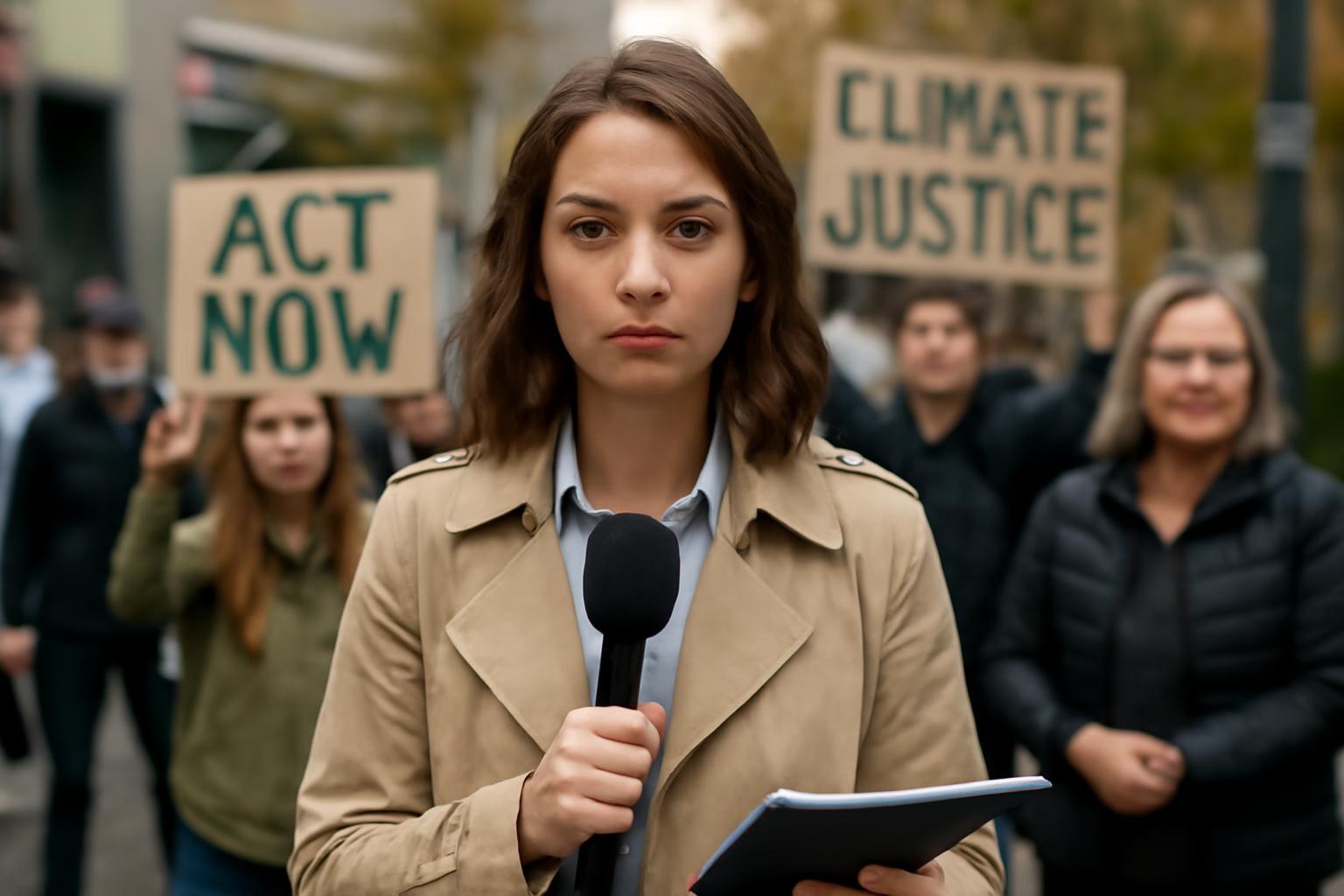
When a scholar published a warning about the vast effects of climate change on our universe, few people took it seriously at first. However, a young journalist named Alex decided to take advantage of the story and bring it to a wider audience. Through careful research and honest writing, Alex turned one simple report into a powerful series of articles.
Alex soon became a champion of environmental reporting. Via online platforms and local newspapers, the journalist worked hard to convince readers that urgent action was needed. Each published article was an achievement, and Alex's natural talent for storytelling helped attract attention from scholars and ordinary people alike.
As the reports gained attention, tension began to rise. Alex uncovered companies that were found guilty of illegal pollution and dumping waste. Several protesters who blocked a major rail line were put under arrest by police. At the same time, some governments chose to withdraw from international climate agreements, and activists went out into the streets to demand stronger action. Alex could not help feeling a deep sense of responsibility to keep reporting the truth.
At a public forum, a gay rights activist stood beside climate campaigners and shared a powerful phrase: "Justice for all." The message convinced many in the audience to rethink their choices. People began adopting a more plant-based diet, thinking twice before every purchase, and choosing rail travel over short-haul flights to reduce their carbon footprint.
Not until world leaders faced direct public pressure did real policies begin to change. As long as journalists, scholars, and ordinary citizens continue to speak up, progress remains possible. The story of our climate is still being written, and everyone has a role to play in making the universe a safer place for future generations.