
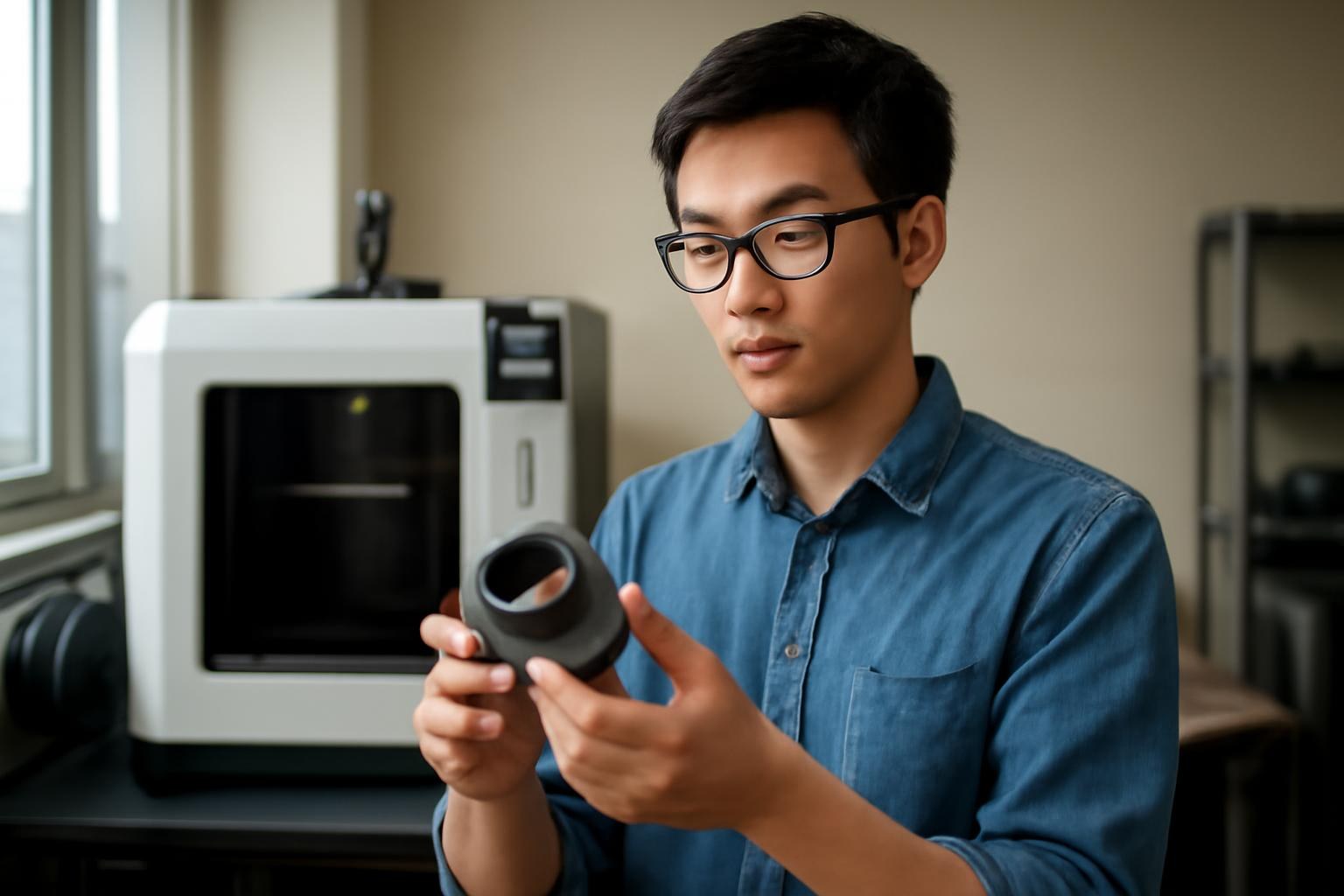
Daniel Chen is a determined young engineer and a scholarship applicant at a university near the shore of northern Taiwan. Growing up in a coastal town where fishing boats burned petrol all day, he was bound to notice the damage caused by air pollution. His ambition was simple but bold: to help civilians live and work in cleaner, healthier environments through the power of technology.
Today, Daniel devotes most of his free time to a university research lab located downtown, close to the city's main attraction—a lively innovation hub where engineers, investors, and startup founders work side by side. The lab is equipped with a cutting-edge 3D printer that uses a fine carbon powder instead of traditional metals. The parts it produces are far more reliable than older designs and can withstand extreme heat without breaking down.
The project is not without its critics. Some experts consider it controversial to exploit new composite materials before their long-term effects are fully tested. Daniel does not overlook these concerns—he takes notes at every seminar and makes a request for additional safety reviews. His team does not pine for quick success; they understand that responsible innovation takes time. His classmates who have already graduated often apply for a job at major tech firms, but Daniel prefers to stay and contribute to the lab.
What sets Daniel's research apart is how well it corresponds to the world's growing demand for clean energy. If engineers develop better materials now, future generations will not need to rely on the flame of burning petrol to power their vehicles. The carbon powder Daniel uses is produced through a chemical process that generates almost no harmful gases. Even the nuts and bolts of the machine's design have been rethought to reduce environmental impact.
There are days when success feels distant. The lab sometimes operates with the bare minimum of funding, and a few teammates have given in to frustration and moved on to other projects. But Daniel refuses to quit. He compares himself to a pine tree standing firm by the shore: patient, deeply rooted, and shaped by every storm it has faced. His flame of dedication keeps him going even when progress feels slow.
As an applicant for a two-year research scholarship, Daniel had to write a proposal explaining not just the technical details but also how his work would benefit ordinary civilians. He described the downtown communities where residents suffer from poor air quality caused by petrol-powered traffic, and how cleaner engines could improve their daily lives. The committee was impressed by his clear thinking and strong sense of social responsibility.
The true attraction of Daniel's work lies not in personal recognition but in its potential to change how people live. He does not overlook the hard road ahead, yet he sees every obstacle as a chance to grow. Whether he receives the scholarship or not, he is bound to continue building—one layer of powder at a time, one reliable solution after another—until the flame of change becomes impossible to ignore.