
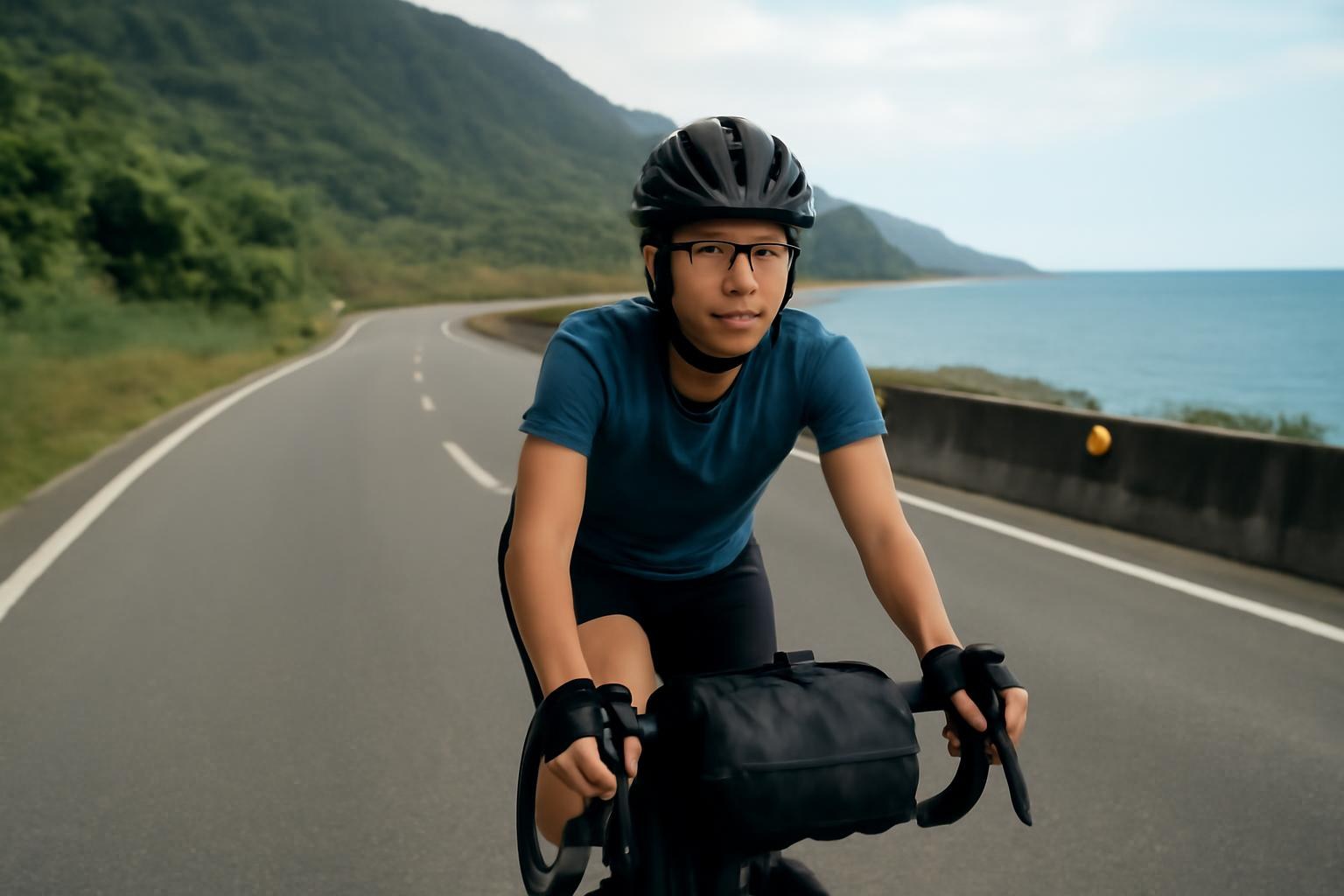
Every year, thousands of Taiwanese people ride around their island on a journey known as the Huandao. The name literally means “around the island,” and the route is nearly 1,000 kilometers long. Many people see it as a rite of passage, completing it during school years or before they begin university. Although the journey can be made by car or motorcycle, cycling offers a slower and closer view of Taiwan.
Most riders begin and end in Taipei, traveling clockwise along a route that includes many different landscapes. They pass dramatic rock formations and fishing villages in the north, the sparsely populated eastern coast, beaches near the southern tip, and busy cities in the west. Taipei-based cyclist Ethan has completed the Huandao four or five times. He says that each ride can follow a different path, allowing him to discover something new.
The idea of a national cycling journey became especially popular after the 2006 film Island Etude. In the film, a college student spends seven days riding around Taiwan, visiting historical places, hearing Indigenous songs, and meeting helpful people in rural communities. The story encouraged real students to follow a similar path and learn more about their home island. In 2015, the government officially introduced the circular route as Taiwan Cycle Route No 1.
The eastern coast often feels very different from the urban north and west. Taiwan’s central mountain range makes travel across the island difficult, while the eastern shore has less flat land and fewer large cities. As a result, Indigenous cultures have remained especially visible in this region. Mountains, the Pacific Ocean, traditional designs, local foods, and communities of Amis, Truku, and Puyuma people all show that Taiwan’s history began long before later settlers arrived.
A cyclist traveling south may also notice different layers of religious and cultural history. In the village of Heping, a church serving local Truku residents stands beneath a high mountain range, while crosses can also be seen above horseshoe-shaped tombs in Chinese cemeteries. During an 11-day journey, the writer stayed in family-run guesthouses, including a treehouse, a hut near a marble gorge, and a bed and breakfast beside a quiet shore. These stays made it possible to experience local life rather than simply pass through.
Hospitality became one of the most memorable parts of the ride. A cyclist stopped to help repair a flat tyre, and a guesthouse owner in Ruisui called other hotels when her own rooms were full. A local family then shared stir-fried noodles and pork soup with the traveler. For people planning the Huandao, spring and autumn are recommended because they avoid extreme heat and summer monsoons. Rental bicycles, convenience stores, and the route’s many roads and bike paths make the journey more practical, but the greatest reward may be the human connection found along the way.