
学校で食べ物を無駄にしないために、私たちにできることは何でしょうか?

公開日:2026-09-01 國中英語篇 Level 1
学校で食べ物を無駄にしないために、私たちにできることは何でしょうか?
01

About This Article

この記事について
背景
学校給食の食べ残しは、食べ物だけでなく、栽培・運搬・調理に使われた水やエネルギー、時間も無駄にします。学校の昼食から変えていくことで、生徒たちは資源を大切にすることと、持続可能な暮らしの大切さを学べます。
  • 生徒たちは学校で毎日たくさんの昼食が捨てられていることに気づく
  • 先生と生徒たちは食べ残しの原因を調査する
  • クラスで量を調整し、食べ物を分け合う
  • みんなで食べ物と自然資源を大切にすることを学ぶ
02

Listen First

まず聞く
00:00 / 00:00
03

Reading

記事を読む
English

Every day after lunch, the students at Green Hill Junior High see many full plates in the trash. Some students take more food than they can eat. Some do not like a certain vegetable, and some eat too quickly before class. The large amount of food waste makes the students feel worried.

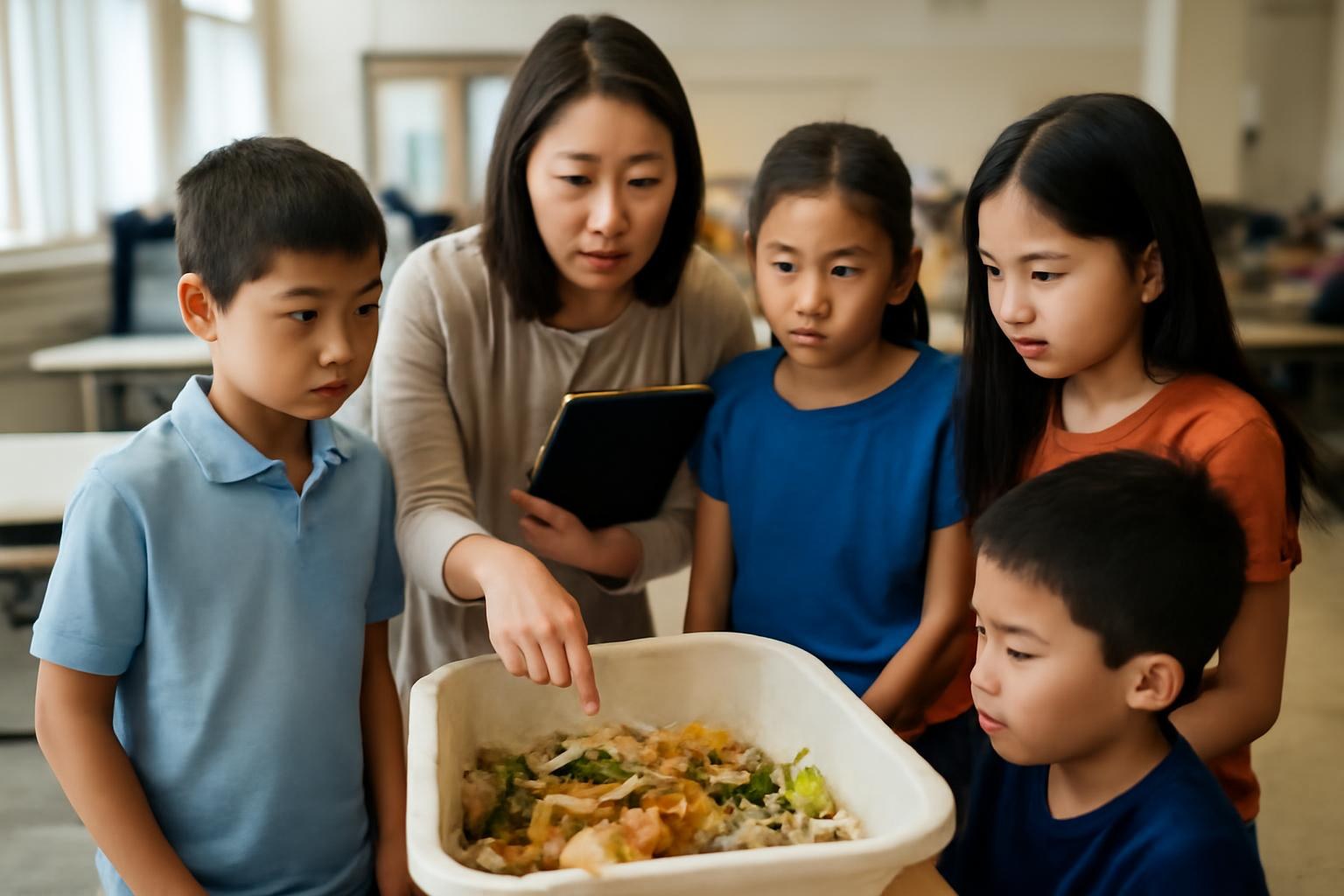
Ms. Lin asks her class to study the problem for one week. The students count the number of leftover boxes and write down the food they see. They learn that rice and vegetables are wasted most often. They also learn that food uses water, land, energy, and people’s time before it reaches the table.

Then the class makes a simple plan with the lunch staff. Students can ask for a small portion first and get more food later if they are still hungry. They can also share unopened fruit with classmates. A food chart on the wall helps everyone see how much waste the school makes each day.

After one month, the school throws away much less food. Students talk about taking only what they need and finishing their meals. They still have some leftovers, but they do not give up. By saving food at school, they save resources too and practice a better way of living.

日本語訳

毎日、昼食の後に、グリーンヒル中学校の生徒たちは、ご飯がたくさん残った皿がゴミ箱に捨てられているのを目にします。自分が食べられる量より多くの食べ物を取る生徒もいます。特定の野菜が好きではない生徒もいれば、授業に間に合うように急いで食べる生徒もいます。大量の食品廃棄に、生徒たちは心配になります。

リン先生はクラスに、1週間かけてこの問題を調べるように言います。生徒たちは食べ残しの箱の数を数え、目にした食べ物を書き留めます。そして、ご飯と野菜が最も頻繁に無駄になっていることを知ります。また、食べ物が食卓に届くまでに、水や土地、エネルギー、人々の時間が使われていることも学びます。

そこでクラスは、給食の担当者と一緒に簡単な計画を立てます。生徒たちはまず少量を頼み、まだお腹が空いていれば後からもっと食べ物をもらうことができます。また、封を開けていない果物をクラスメートと分け合うこともできます。壁に貼った食品廃棄量のグラフは、学校が毎日どれくらいの廃棄物を出しているかを、みんなが分かるようにしてくれます。

1か月後、学校が捨てる食べ物は大幅に減りました。生徒たちは、必要な分だけ取り、食事を食べ終えることについて話します。それでも食べ残しは少しありますが、彼らはあきらめません。学校で食べ物を無駄にしないことで、生徒たちは資源も節約し、よりよい暮らし方を実践しているのです。

04

Key Words

重要単語・フレーズ
5 件
05

Expressions

慣用表現
5 件
06

Practice

理解度テスト
12 問 +ディスカッション 3 問
0 /0 問

1 What do students see after lunch?
正解です。 不正解です。正解は緑色で示しています。
2 What food is wasted most often?
正解です。 不正解です。正解は緑色で示しています。
3 How long do students study the problem at first?
正解です。 不正解です。正解は緑色で示しています。
4 What can students do if they are still hungry?
正解です。 不正解です。正解は緑色で示しています。
5 What happens after one month?
正解です。 不正解です。正解は緑色で示しています。
6 The students count the number of boxes.
正解です。 不正解です。正解は緑色で示しています。
7 The large amount of food makes the students worried.
正解です。 不正解です。正解は緑色で示しています。
8 Students can ask for a small .
正解です。 不正解です。正解は緑色で示しています。
9 They practice their meals.
正解です。 不正解です。正解は緑色で示しています。
10 Students can get more food if they are still hungry.
正解です。 不正解です。正解は緑色で示しています。
11 Food uses water and energy it reaches the table.
正解です。 不正解です。正解は緑色で示しています。
12 The students do not when they still have some leftovers.
正解です。 不正解です。正解は緑色で示しています。

Discussion

質問とディスカッション
3 問

以下の問いに正解はありません。英語で自分の考えを、1 問につき 3〜5 文で話してみましょう。

  1. 1 What food is often wasted at your school, and why?
  2. 2 How can students take the right portion of food?
  3. 3 Why is saving food also a way to save resources?