
학교에서 어떻게 음식물 쓰레기를 줄일 수 있을까요?

게시일:2026-09-01 國中英語篇 Level 1
학교에서 어떻게 음식물 쓰레기를 줄일 수 있을까요?
01

About This Article

이 기사에 대하여
배경
학교 급식의 남은 음식은 음식뿐만 아니라 음식의 재배, 운송, 조리에 사용되는 물과 에너지, 시간도 낭비하게 합니다. 학교 급식에서부터 변화를 시작하면 학생들은 자원을 소중히 여기고 지속 가능한 생활을 실천하는 것의 중요성을 배울 수 있습니다.
  • 학생들이 학교에서 매일 많은 점심 음식이 버려지는 것을 발견한다
  • 교사가 학생들과 함께 남은 음식의 원인을 조사한다
  • 반에서 음식의 양을 조절하고 음식을 나누어 먹는다
  • 모두가 음식과 자연 자원을 소중히 여기는 법을 배운다
02

Listen First

먼저 듣기
00:00 / 00:00
03

Reading

기사 읽기
English

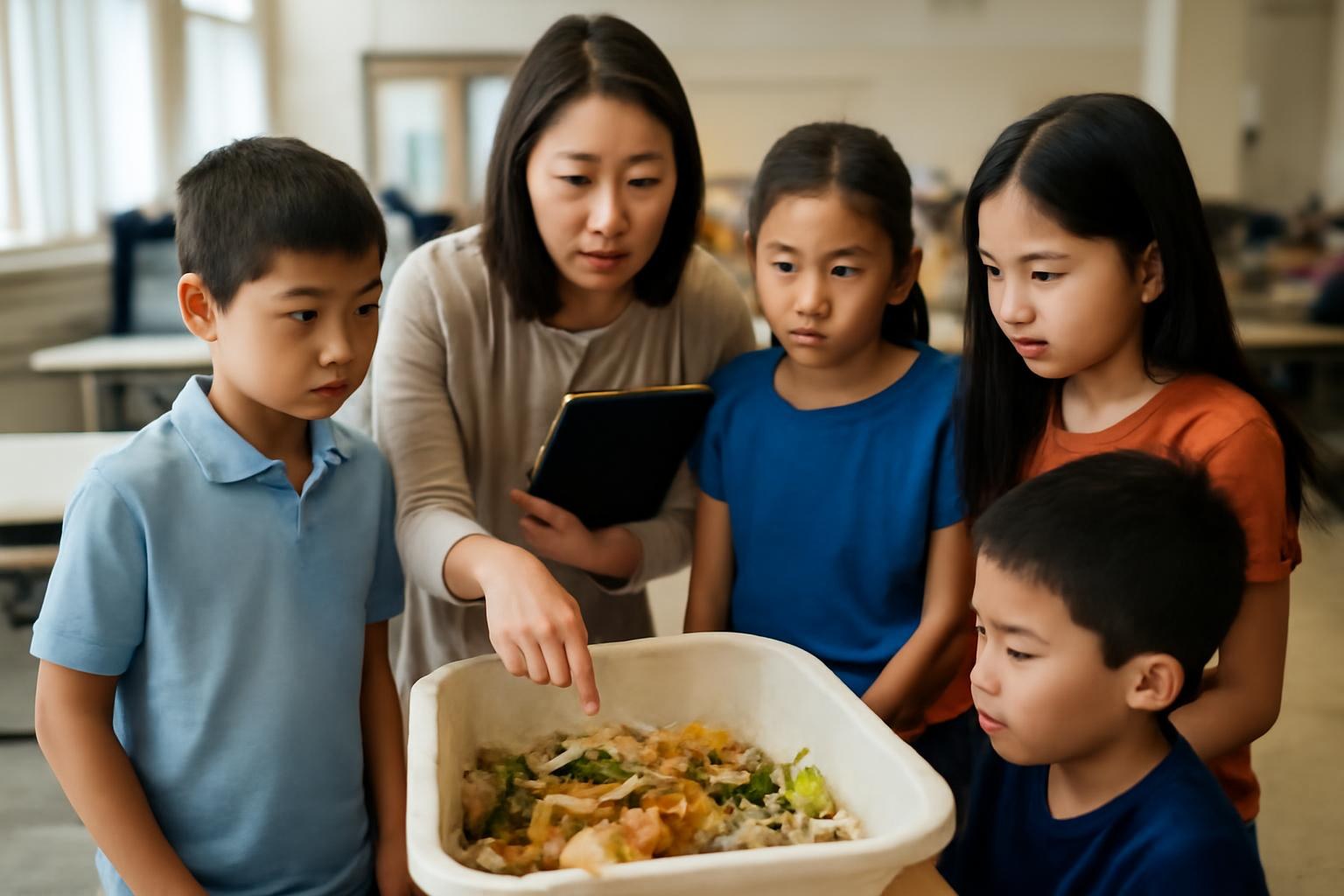
Every day after lunch, the students at Green Hill Junior High see many full plates in the trash. Some students take more food than they can eat. Some do not like a certain vegetable, and some eat too quickly before class. The large amount of food waste makes the students feel worried.

Ms. Lin asks her class to study the problem for one week. The students count the number of leftover boxes and write down the food they see. They learn that rice and vegetables are wasted most often. They also learn that food uses water, land, energy, and people’s time before it reaches the table.

Then the class makes a simple plan with the lunch staff. Students can ask for a small portion first and get more food later if they are still hungry. They can also share unopened fruit with classmates. A food chart on the wall helps everyone see how much waste the school makes each day.

After one month, the school throws away much less food. Students talk about taking only what they need and finishing their meals. They still have some leftovers, but they do not give up. By saving food at school, they save resources too and practice a better way of living.

한국어 번역

매일 점심 식사 후, 그린힐 중학교 학생들은 쓰레기통 안에 음식이 가득 남은 식판이 많이 있는 것을 봅니다. 어떤 학생들은 자신이 먹을 수 있는 양보다 더 많은 음식을 가져갑니다. 어떤 학생들은 특정 채소를 좋아하지 않고, 또 어떤 학생들은 수업 전에 돌아가려고 너무 빨리 먹습니다. 많은 음식물 쓰레기 때문에 학생들은 걱정하게 됩니다.

린 선생님은 반 학생들에게 일주일 동안 이 문제를 조사해 보자고 합니다. 학생들은 남은 음식 상자의 수를 세고, 자신들이 본 음식들을 적습니다. 학생들은 쌀밥과 채소가 가장 자주 버려진다는 것을 알게 됩니다. 또한 음식이 식탁에 오기 전까지 물, 땅, 에너지, 그리고 사람들의 시간이 사용된다는 것도 배웁니다.

그런 다음 반 학생들은 급식 담당 직원들과 함께 간단한 계획을 세웁니다. 학생들은 먼저 적은 양을 달라고 할 수 있고, 아직 배가 고프면 나중에 음식을 더 받을 수 있습니다. 또한 포장을 뜯지 않은 과일을 반 친구들과 나누어 먹을 수도 있습니다. 벽에 붙인 음식물 쓰레기 표는 모두가 학교에서 매일 얼마나 많은 음식물 쓰레기가 나오는지 알 수 있게 도와줍니다.

한 달 후, 학교에서 버리는 음식이 훨씬 줄어듭니다. 학생들은 자신에게 필요한 만큼만 가져가고 식사를 다 먹는 것에 대해 이야기합니다. 여전히 남은 음식이 조금 생기지만, 학생들은 포기하지 않습니다. 학교에서 음식을 아낌으로써 자원도 절약하고 더 나은 생활 방식을 실천하는 것입니다.

04

Key Words

핵심 단어·구
5 개
05

Expressions

관용 표현
5 개
06

Practice

이해도 테스트
12 문항 +토론 3문항
0 /0문항

1 What do students see after lunch?
정답입니다. 오답입니다. 정답은 초록색으로 표시했습니다.
2 What food is wasted most often?
정답입니다. 오답입니다. 정답은 초록색으로 표시했습니다.
3 How long do students study the problem at first?
정답입니다. 오답입니다. 정답은 초록색으로 표시했습니다.
4 What can students do if they are still hungry?
정답입니다. 오답입니다. 정답은 초록색으로 표시했습니다.
5 What happens after one month?
정답입니다. 오답입니다. 정답은 초록색으로 표시했습니다.
6 The students count the number of boxes.
정답입니다. 오답입니다. 정답은 초록색으로 표시했습니다.
7 The large amount of food makes the students worried.
정답입니다. 오답입니다. 정답은 초록색으로 표시했습니다.
8 Students can ask for a small .
정답입니다. 오답입니다. 정답은 초록색으로 표시했습니다.
9 They practice their meals.
정답입니다. 오답입니다. 정답은 초록색으로 표시했습니다.
10 Students can get more food if they are still hungry.
정답입니다. 오답입니다. 정답은 초록색으로 표시했습니다.
11 Food uses water and energy it reaches the table.
정답입니다. 오답입니다. 정답은 초록색으로 표시했습니다.
12 The students do not when they still have some leftovers.
정답입니다. 오답입니다. 정답은 초록색으로 표시했습니다.

Discussion

질문과 토론
3 문항

아래 질문에는 정답이 없습니다. 영어로 자신의 생각을 한 문항당 3~5문장으로 말해 보세요.

  1. 1 What food is often wasted at your school, and why?
  2. 2 How can students take the right portion of food?
  3. 3 Why is saving food also a way to save resources?