
How Can We Save Food at School?

发布日期:2026-09-01 國中英語篇 Level 1
How Can We Save Food at School?
01

About This Article

关于这篇文章
背景
学校午餐剩食不只浪费食物,也浪费种植、运送与烹调所使用的水、能源和时间。从校园午餐开始改变,能让学生了解珍惜资源与永续生活的重要性。
  • 学生发现学校每天丢掉许多午餐
  • 老师带学生调查剩食的原因
  • 班级调整份量并分享食物
  • 大家学习珍惜食物与自然资源
02

Listen First

先听文章
00:00 / 00:00
03

Reading

阅读文章
English

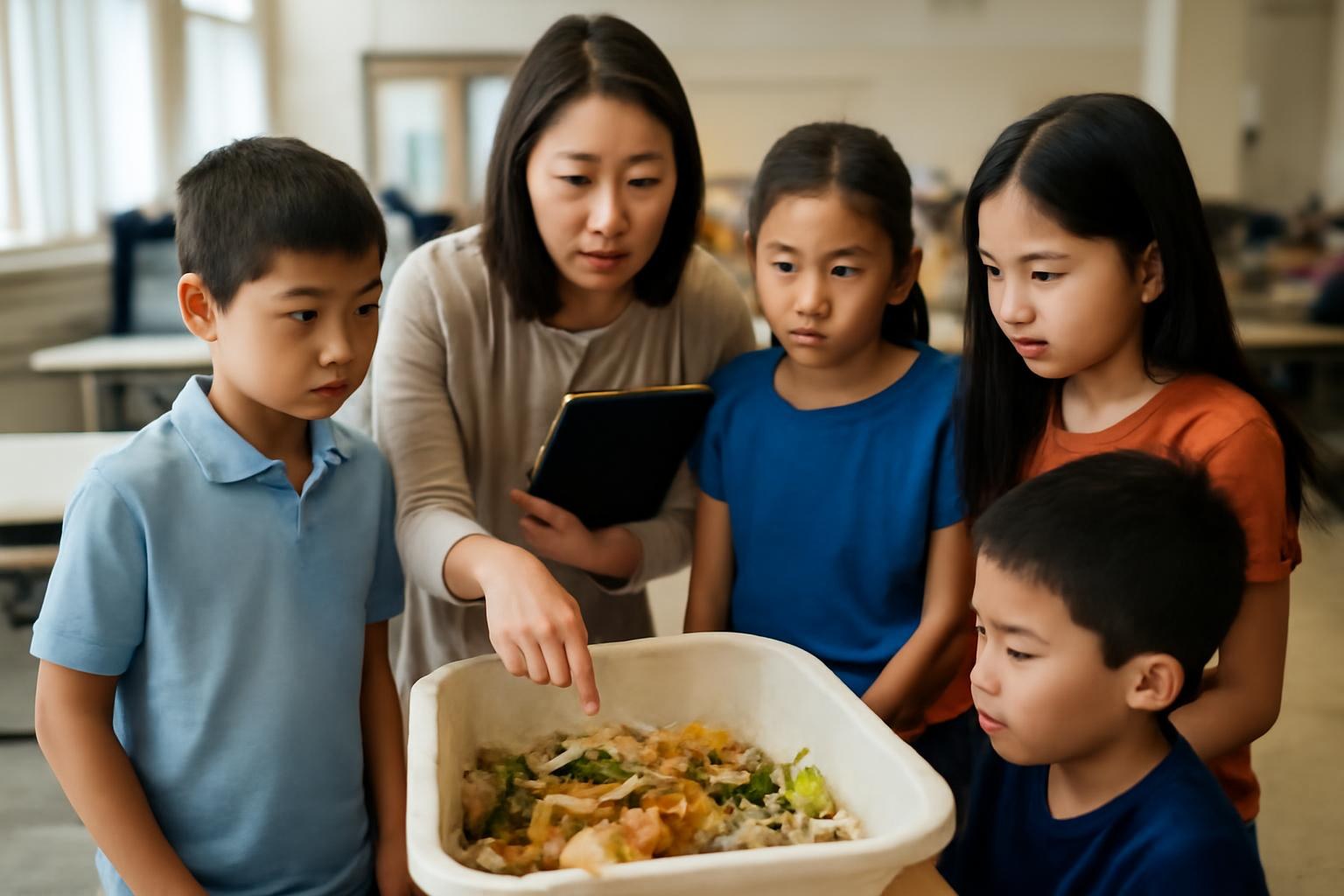
Every day after lunch, the students at Green Hill Junior High see many full plates in the trash. Some students take more food than they can eat. Some do not like a certain vegetable, and some eat too quickly before class. The large amount of food waste makes the students feel worried.

Ms. Lin asks her class to study the problem for one week. The students count the number of leftover boxes and write down the food they see. They learn that rice and vegetables are wasted most often. They also learn that food uses water, land, energy, and people’s time before it reaches the table.

Then the class makes a simple plan with the lunch staff. Students can ask for a small portion first and get more food later if they are still hungry. They can also share unopened fruit with classmates. A food chart on the wall helps everyone see how much waste the school makes each day.

After one month, the school throws away much less food. Students talk about taking only what they need and finishing their meals. They still have some leftovers, but they do not give up. By saving food at school, they save resources too and practice a better way of living.

中文翻译

每天午餐后,绿山国中的学生都会看到许多几乎没吃过的餐盘被丢进垃圾桶。有些学生拿了超过自己能吃的食物,有些不喜欢某种蔬菜,还有人为了赶在上课前回教室而吃得太快。大量的剩食让学生感到担心。

林老师请全班花一周研究这个问题。学生数出剩食盒的数量,并记下他们看到的食物。他们发现米饭和蔬菜最常被浪费,也了解到食物在送到餐桌前会使用水、土地、能源和人们的时间。

接着,班级和午餐工作人员一起制定简单的计划。学生可以先要求少量的食物,如果还饿再多拿一些。他们也可以和同学分享未拆封的水果。墙上的食物图表帮助大家看见学校每天制造多少浪费。

一个月后,学校丢掉的食物少了许多。学生讨论只拿需要的分量,并把餐点吃完。他们仍然会有一些剩食,但没有放弃。通过在学校节省食物,他们也节省了资源,并练习更好的生活方式。

04

Key Words

重点词汇词组
5 个
05

Expressions

惯用句
5 则
06

Practice

课后测验
12 题 +讨论 3 题
0 /0 题

1 What do students see after lunch?
答对了! 答错了,正确答案以绿色标示。
2 What food is wasted most often?
答对了! 答错了,正确答案以绿色标示。
3 How long do students study the problem at first?
答对了! 答错了,正确答案以绿色标示。
4 What can students do if they are still hungry?
答对了! 答错了,正确答案以绿色标示。
5 What happens after one month?
答对了! 答错了,正确答案以绿色标示。
6 The students count the number of boxes.
答对了! 答错了,正确答案以绿色标示。
7 The large amount of food makes the students worried.
答对了! 答错了,正确答案以绿色标示。
8 Students can ask for a small .
答对了! 答错了,正确答案以绿色标示。
9 They practice their meals.
答对了! 答错了,正确答案以绿色标示。
10 Students can get more food if they are still hungry.
答对了! 答错了,正确答案以绿色标示。
11 Food uses water and energy it reaches the table.
答对了! 答错了,正确答案以绿色标示。
12 The students do not when they still have some leftovers.
答对了! 答错了,正确答案以绿色标示。

Discussion

问题与讨论
3 题

以下问题没有标准答案,请试着用英文说出自己的想法,一题讲三到五句话。

  1. 1 What food is often wasted at your school, and why?
  2. 2 How can students take the right portion of food?
  3. 3 Why is saving food also a way to save resources?