
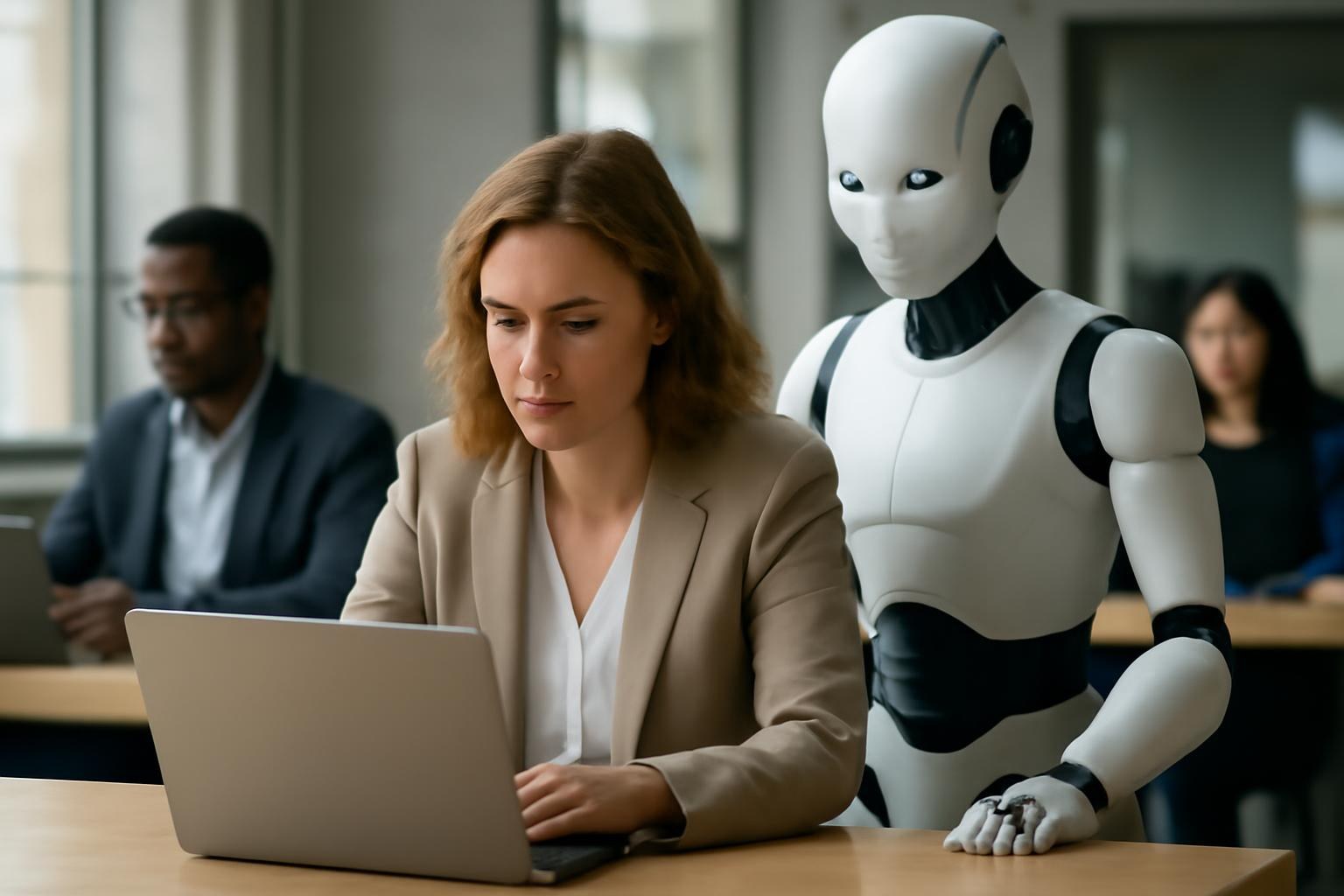
Artificial intelligence, or AI, is becoming part of many workplaces. It can read large amounts of information, answer simple questions, and find patterns in data. Some companies use AI to help with customer service, scheduling, translation, and technical support. These tools can complete certain tasks quickly and give workers more time for other responsibilities.
AI is especially useful for repetitive work. For example, a computer program can organize thousands of records or check a document for common mistakes. A factory robot can perform the same action many times without becoming tired. However, AI does not understand every situation as well as a human, and its answers may contain errors.
For this reason, people must check important information before using it. A worker may ask AI to write a report, but the worker still needs to confirm the facts and choose the right message for the audience. Doctors, teachers, and managers also need to consider human feelings and special situations. Good judgment is not always something a machine can provide.
The growth of AI may change some jobs and create others. Workers who learn to use new tools may become more productive, while people with outdated skills may face difficulties. Schools and companies can offer training in technology, communication, and problem solving. Learning throughout life will become more important as the workplace continues to change.
AI should be viewed as a tool, not a complete replacement for people. The best results often come from cooperation between human workers and intelligent systems. Machines can handle large amounts of data, while people can bring creativity, responsibility, and empathy. If we use AI carefully and fairly, it can support better work without removing the human side of working.