
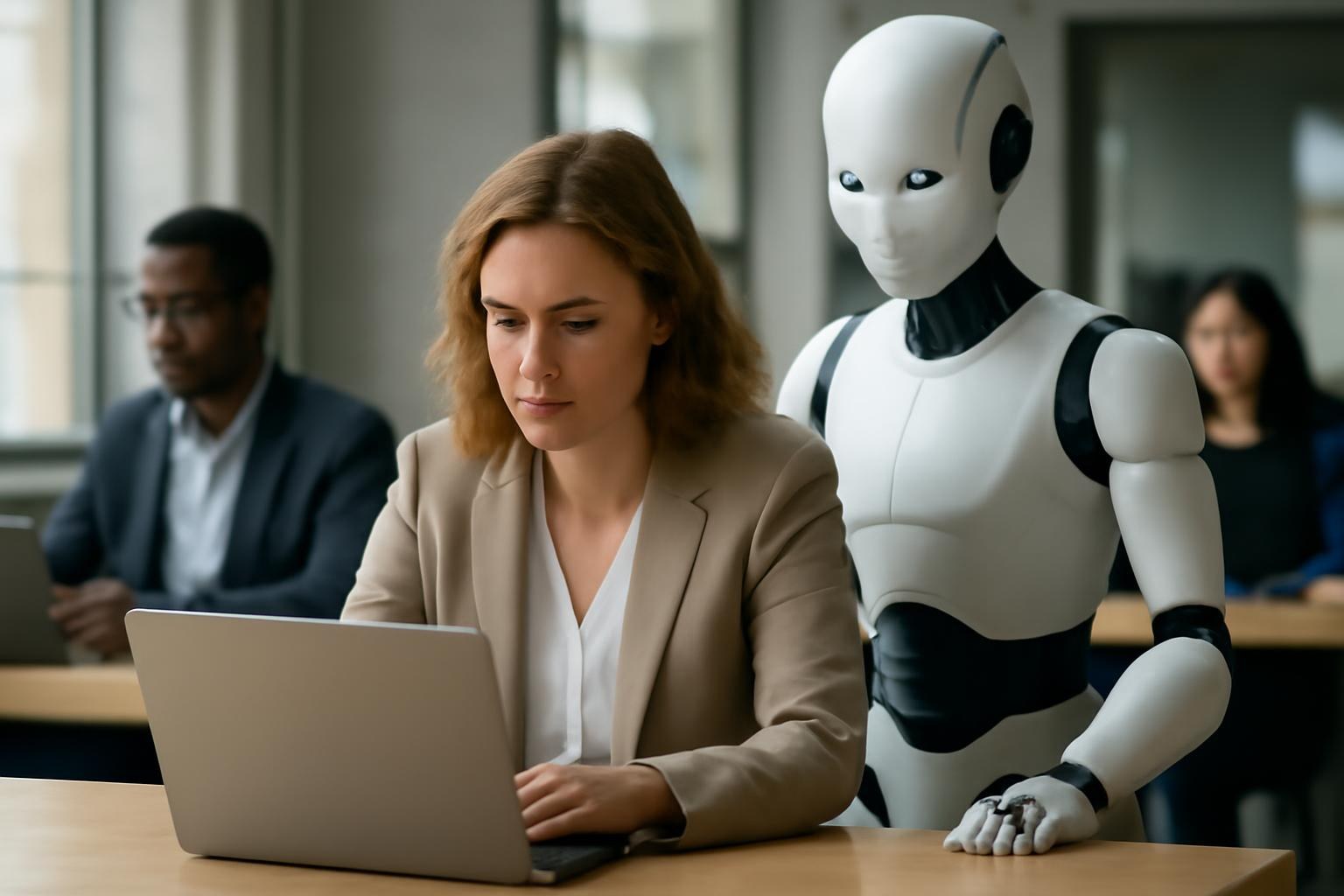
AI는 우리가 일하는 방식을 바꾸고 있다

게시일:2026-09-02 國中英語篇 Level 2
AI는 우리가 일하는 방식을 바꾸고 있다
01

About This Article

이 기사에 대하여
배경
인공지능은 방대한 데이터를 분석하고, 텍스트를 이해하며, 업무 수행을 지원할 수 있기 때문에 고객 서비스, 의료, 교육 및 사무실 업무에 활용되고 있습니다. AI는 일부 업무를 대신할 수 있지만 새로운 업무 내용도 만들어 내므로, 사람들은 더 많이 배우고 협력해야 합니다.
  • 인공지능은 많은 직장에 들어와 있다
  • AI는 데이터와 반복적인 업무를 처리할 수 있다
  • 인간에게는 여전히 판단력, 창의성, 공감 능력이 필요하다
  • 새로운 기술을 배우는 것은 직장 변화에 적응하는 데 도움이 된다
02

Listen First

먼저 듣기
00:00 / 00:00
03

Reading

기사 읽기
English

Artificial intelligence, or AI, is becoming part of many workplaces. It can read large amounts of information, answer simple questions, and find patterns in data. Some companies use AI to help with customer service, scheduling, translation, and technical support. These tools can complete certain tasks quickly and give workers more time for other responsibilities.

AI is especially useful for repetitive work. For example, a computer program can organize thousands of records or check a document for common mistakes. A factory robot can perform the same action many times without becoming tired. However, AI does not understand every situation as well as a human, and its answers may contain errors.

For this reason, people must check important information before using it. A worker may ask AI to write a report, but the worker still needs to confirm the facts and choose the right message for the audience. Doctors, teachers, and managers also need to consider human feelings and special situations. Good judgment is not always something a machine can provide.

The growth of AI may change some jobs and create others. Workers who learn to use new tools may become more productive, while people with outdated skills may face difficulties. Schools and companies can offer training in technology, communication, and problem solving. Learning throughout life will become more important as the workplace continues to change.

AI should be viewed as a tool, not a complete replacement for people. The best results often come from cooperation between human workers and intelligent systems. Machines can handle large amounts of data, while people can bring creativity, responsibility, and empathy. If we use AI carefully and fairly, it can support better work without removing the human side of working.

한국어 번역

인공지능, 즉 AI는 많은 직장의 일부가 되고 있습니다. AI는 방대한 양의 정보를 읽고, 간단한 질문에 답하며, 데이터에서 패턴을 찾을 수 있습니다. 일부 기업은 고객 서비스, 일정 관리, 번역 및 기술 지원을 돕기 위해 AI를 사용합니다. 이러한 도구는 특정 업무를 신속하게 처리하여 근로자들이 다른 책임에 더 많은 시간을 쓸 수 있게 해 줍니다.

AI는 특히 반복적인 업무에 유용합니다. 예를 들어, 컴퓨터 프로그램은 수천 개의 기록을 정리하거나 문서에서 흔히 발생하는 오류를 확인할 수 있습니다. 공장 로봇은 피로를 느끼지 않고 같은 동작을 여러 번 수행할 수 있습니다. 그러나 AI는 모든 상황을 인간만큼 잘 이해하지 못하며, AI의 답변에는 오류가 포함될 수도 있습니다.

이러한 이유로 사람들은 중요한 정보를 사용하기 전에 반드시 확인해야 합니다. 근로자는 AI에게 보고서를 작성해 달라고 요청할 수 있지만, 여전히 사실을 확인하고 독자에게 맞는 메시지를 선택해야 합니다. 의사, 교사, 관리자 역시 사람의 감정과 특별한 상황을 고려해야 합니다. 좋은 판단력이 언제나 기계가 제공할 수 있는 것은 아닙니다.

AI의 발전은 일부 직업을 변화시키고 다른 직업을 만들어 낼 수 있습니다. 새로운 도구를 사용하는 법을 배운 근로자는 더 생산적으로 일할 수 있지만, 기술이 outdated된 사람들은 어려움을 겪을 수 있습니다. 학교와 기업은 기술, 의사소통 및 문제 해결에 관한 교육을 제공할 수 있습니다. 직장이 계속 변화함에 따라 평생 학습은 더욱 중요해질 것입니다.

AI는 사람을 완전히 대체하는 것이 아니라 도구로 보아야 합니다. 최고의 결과는 대개 인간 근로자와 지능형 시스템의 협력에서 나옵니다. 기계는 방대한 양의 데이터를 처리할 수 있고, 사람은 창의성, 책임감 및 공감 능력을 발휘할 수 있습니다. 우리가 AI를 신중하고 공정하게 사용한다면, 일의 인간적인 측면을 없애지 않으면서 더 나은 업무를 지원할 수 있습니다.

04

Key Words

핵심 단어·구
3 개
05

Expressions

관용 표현
3 개
06

Practice

이해도 테스트
9 문항 +토론 3문항
0 /0문항

1 What can AI do in many workplaces?
정답입니다. 오답입니다. 정답은 초록색으로 표시했습니다.
2 Why should workers check information from AI?
정답입니다. 오답입니다. 정답은 초록색으로 표시했습니다.
3 What can people bring to cooperation with AI?
정답입니다. 오답입니다. 정답은 초록색으로 표시했습니다.
4 AI is especially useful for work.
정답입니다. 오답입니다. 정답은 초록색으로 표시했습니다.
5 Workers who learn new tools may become more .
정답입니다. 오답입니다. 정답은 초록색으로 표시했습니다.
6 People can bring creativity, responsibility, and to work.
정답입니다. 오답입니다. 정답은 초록색으로 표시했습니다.
7 AI is becoming part many workplaces.
정답입니다. 오답입니다. 정답은 초록색으로 표시했습니다.
8 A worker may ask AI write a report.
정답입니다. 오답입니다. 정답은 초록색으로 표시했습니다.
9 AI should be viewed a tool.
정답입니다. 오답입니다. 정답은 초록색으로 표시했습니다.

Discussion

질문과 토론
3 문항

아래 질문에는 정답이 없습니다. 영어로 자신의 생각을 한 문항당 3~5문장으로 말해 보세요.

  1. 1 What tasks would you like AI to help you with at school or work, and why?
  2. 2 What human skills do you think machines cannot easily replace?
  3. 3 How should schools prepare students for workplaces that use more AI?