
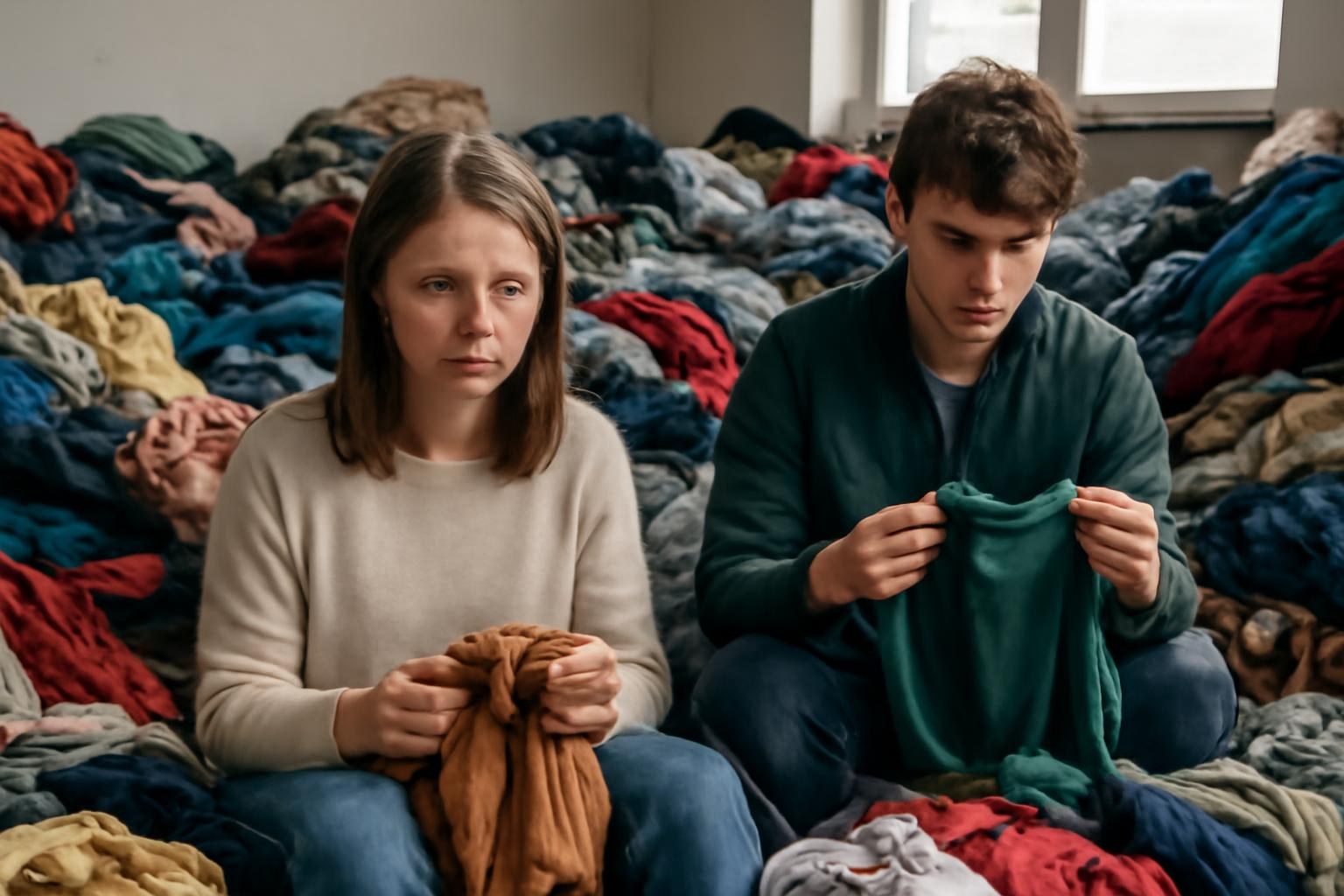
衣服が多すぎるという世界的な問題

公開日:2026-09-02 國中英語篇 Level 2
衣服が多すぎるという世界的な問題
01

About This Article

この記事について
背景
ファストファッションは、低価格と次々に変わるデザインで消費者を引きつけます。しかし、衣服の生産、輸送、廃棄には資源が消費されます。衣料産業が環境に与える負担を知ることで、消費者は購入や手入れ、寄付などを通して無駄を減らせます。
  • ファストファッションによって衣服の生産と購入の速度が上がっている
  • 衣服の製造には水とエネルギーが消費される
  • 大量の衣服が最終的にごみになる
  • 衣服を長く使うことで環境への影響を減らせる
02

Listen First

まず聞く
00:00 / 00:00
03

Reading

記事を読む
English

Clothing is an important part of daily life, but the world now produces and buys more clothes than ever before. Fast fashion companies release new styles very quickly and sell them at low prices. These prices make it easy for customers to buy something they may wear only a few times. When the next style appears, the old clothing is often forgotten.

Making clothes uses large amounts of water, energy, and raw materials. Cotton needs water to grow, while factories need electricity to turn fibers into cloth and cloth into shirts or pants. Clothing must then be transported between countries before it reaches a store. Each step can create pollution and greenhouse gas emissions.

The problem continues after people stop wearing an item. Some clothes are donated, but donation centers cannot accept everything. Unwanted clothing may be sent to another country, placed in a landfill, or burned. Synthetic fabrics can release tiny fibers when they are washed, and these fibers may enter rivers and oceans.

Consumers can make a difference by changing their habits. Before buying something, they can ask whether they really need it and whether it will match clothes they already own. Choosing strong, comfortable items can reduce the need for frequent replacement. Repairing a loose button or changing the style of an old shirt can also extend its useful life.

Companies and governments have responsibilities too. Businesses can use safer materials, provide clear information about production, and design clothes that last longer. Governments can support recycling programs and set rules for waste. The goal is not to stop people from enjoying fashion, but to create a system in which clothes are used longer and fewer resources are wasted.

日本語訳

衣服は日常生活の重要な一部ですが、現在、世界ではこれまでになく多くの衣服が生産され、購入されています。ファストファッション企業は新しいデザインを非常に速く発表し、低価格で販売します。こうした価格のため、消費者は数回しか着ないかもしれないものでも簡単に買うことができます。次のデザインが登場すると、古い衣服は忘れられてしまうことがよくあります。

衣服を作るには、大量の水、エネルギー、原材料が必要です。綿花を育てるには水が必要で、工場では繊維を布に、布をシャツやズボンに加工するために電力が使われます。その後、衣服は店に届くまでに国から国へ輸送されなければなりません。一つ一つの段階で、汚染や温室効果ガスの排出が生じる可能性があります。

人々が衣服を着なくなった後も、問題は続きます。衣服の中には寄付されるものもありますが、寄付センターはすべてを受け入れられるわけではありません。不要になった衣服は、別の国へ送られたり、埋め立て地に運ばれたり、焼却されたりすることがあります。合成繊維は洗濯の際に小さな繊維を放出する可能性があり、それらが川や海に流れ込むこともあります。

消費者は、習慣を変えることで状況を改善できます。何かを買う前に、本当に必要なのか、すでに持っている衣服と合うのかを考えることができます。丈夫で着心地のよいものを選べば、頻繁に買い替える必要を減らせます。取れかけたボタンを直したり、古いシャツのデザインを変えたりすることも、衣服を役立てられる期間を延ばします。

企業や政府にも責任があります。企業はより安全な素材を使い、生産についての明確な情報を提供し、より長持ちする衣服をデザインできます。政府はリサイクルの取り組みを支援し、廃棄物に関する規則を定めることができます。目標は、人々がファッションを楽しむのをやめさせることではなく、衣服をより長く使い、資源の無駄を減らせる仕組みを作ることです。

04

Key Words

重要単語・フレーズ
3 件
05

Expressions

慣用表現
3 件
06

Practice

理解度テスト
9 問 +ディスカッション 3 問
0 /0 問

1 Why do people often buy many fast fashion items?
正解です。 不正解です。正解は緑色で示しています。
2 What may happen to unwanted clothing?
正解です。 不正解です。正解は緑色で示しています。
3 How can consumers extend the useful life of clothes?
正解です。 不正解です。正解は緑色で示しています。
4 Strong, comfortable items reduce the need for replacement.
正解です。 不正解です。正解は緑色で示しています。
5 fabrics may release tiny fibers when washed.
正解です。 不正解です。正解は緑色で示しています。
6 Repairing an old shirt can its useful life.
正解です。 不正解です。正解は緑色で示しています。
7 These prices make it easy customers to buy something.
正解です。 不正解です。正解は緑色で示しています。
8 Some clothes are made cotton and synthetic fibers.
正解です。 不正解です。正解は緑色で示しています。
9 Before something, consumers can ask whether they need it.
正解です。 不正解です。正解は緑色で示しています。

Discussion

質問とディスカッション
3 問

以下の問いに正解はありません。英語で自分の考えを、1 問につき 3〜5 文で話してみましょう。

  1. 1 How often do you buy new clothes, and what influences your choices?
  2. 2 What can people do with clothes they no longer want to wear?
  3. 3 Should clothing companies be required to make products that last longer? Explain your opinion.