
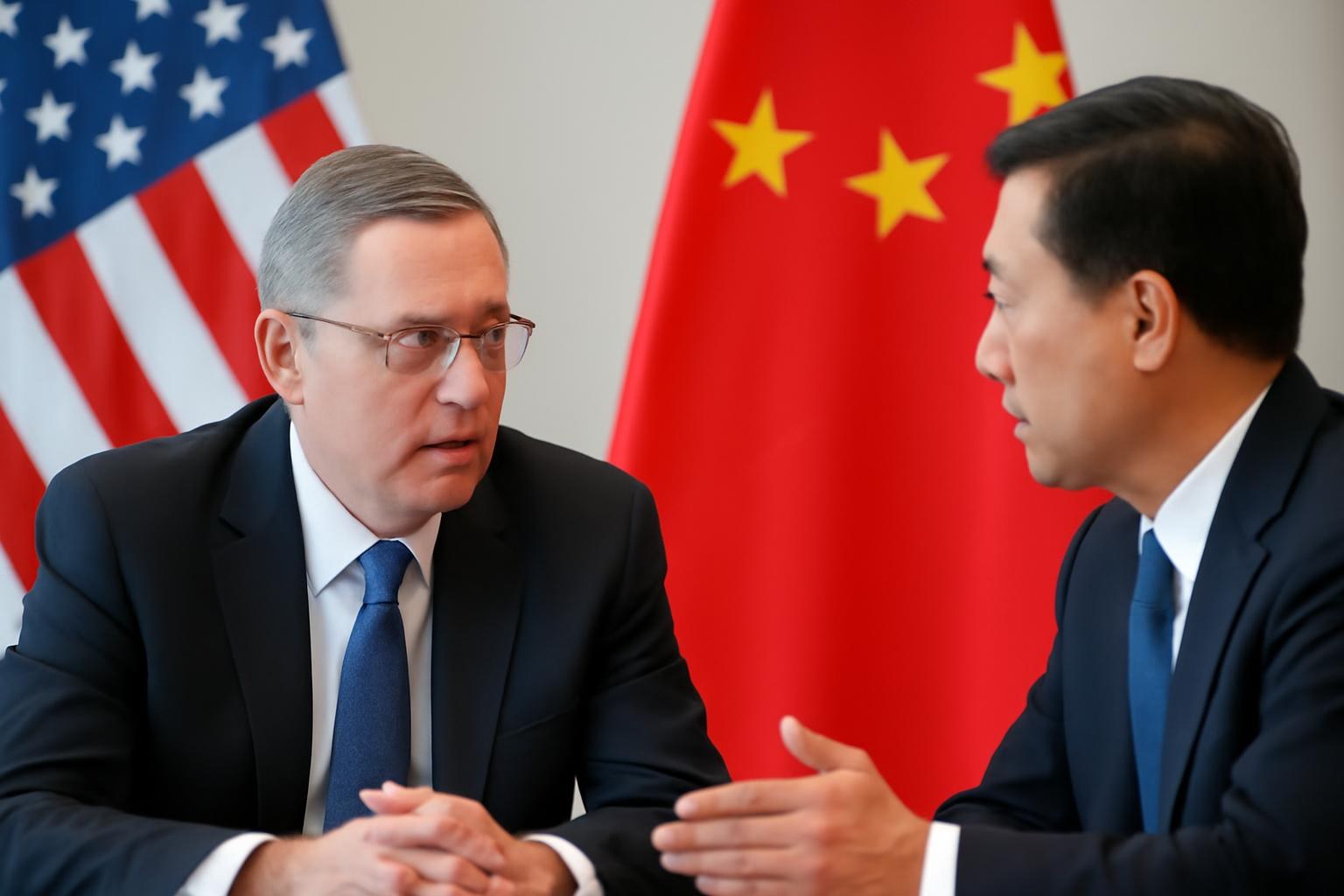
The United States and China are facing new trade tensions. The two countries have strong economic ties, but they disagree about technology, national security, and fair competition. Changes in trade rules can affect companies far beyond the two countries.
In recent years, the United States has placed controls on some advanced computer chips and equipment connected with chip production. Washington says these steps can protect national security and slow the spread of sensitive technology. China has criticized the controls and has taken its own actions on selected products and materials.
Tariffs are another source of disagreement. The United States has kept or increased duties on several Chinese products, including electric vehicles, batteries, and some technology goods. American officials say these measures respond to unfair competition and large state support for some Chinese industries.
China says the U.S. policy damages normal trade and increases costs for businesses. Chinese companies may find it harder to enter the American market, while U.S. companies may face limits when selling technology or building factories in China. Both sides still need trade with each other, which makes the relationship difficult to manage.
Other countries are watching the dispute carefully. Many businesses are trying to reduce risk by adding suppliers in places such as Southeast Asia, India, or Mexico. This process cannot happen quickly because factories, workers, and transportation systems take time to build. The future relationship will depend on negotiations, security concerns, and how much economic cooperation both governments still want.