
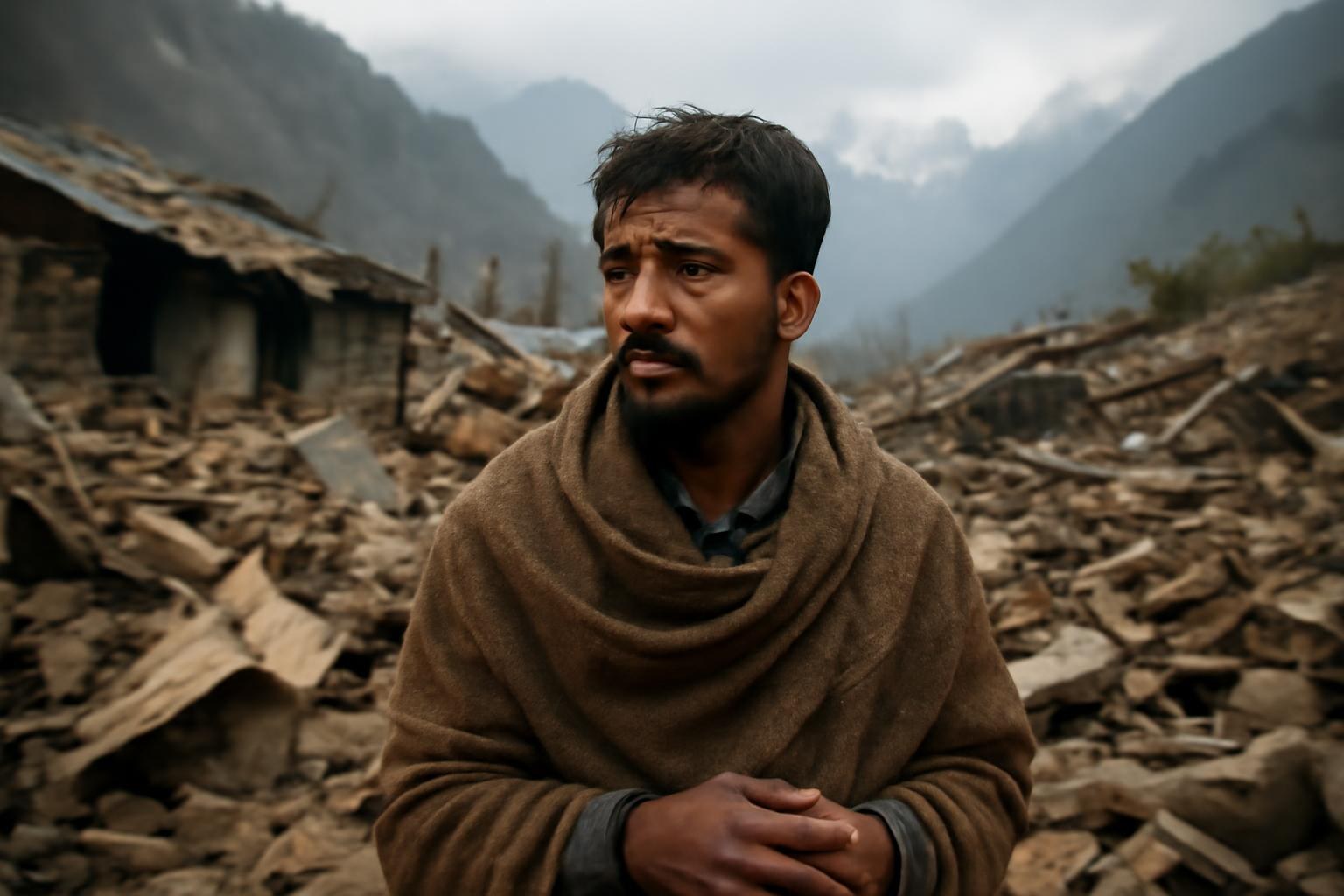
A disaster reported in Nepal in 2026 has drawn attention to the growing risks faced by communities in the Himalayas. The region is naturally exposed to earthquakes, landslides, floods, and avalanches because of its steep terrain and active geology. Climate change is adding another layer of uncertainty by affecting rainfall, snow, and glacier conditions. A single event can therefore trigger several hazards at the same time.
Mountain settlements are especially difficult to protect. Many villages are located far from major roads, hospitals, and communication centers, while narrow valleys can limit the movement of rescue teams. Heavy rain may wash away bridges or block roads with mud and rocks. When electricity and mobile networks fail, families may have trouble receiving warnings or contacting relatives.
The effects of a disaster are not limited to immediate injuries. Farmers can lose crops, animals, irrigation channels, and access to markets. Children may be unable to attend school, and health workers may struggle to deliver medicine to isolated communities. Small businesses often need months to recover because customers, supplies, and transportation routes have all been disrupted.
Recent events have also increased attention on the relationship between climate change and high-mountain hazards. Warmer temperatures can accelerate glacier melt and alter the timing of water flows, although the precise risk differs from valley to valley. Scientists are improving satellite monitoring, weather forecasts, and early-warning systems. Such tools are most useful when local residents understand the alerts and know what action to take.
Experts say resilience must be built before the next emergency. Safer schools, stronger bridges, emergency shelters, and trained local response teams can save lives when outside assistance is delayed. Development projects should also consider slope stability and changing weather instead of focusing only on short-term access. Nepal’s experience is a warning that protecting mountain communities requires cooperation among governments, scientists, aid groups, and residents themselves.