
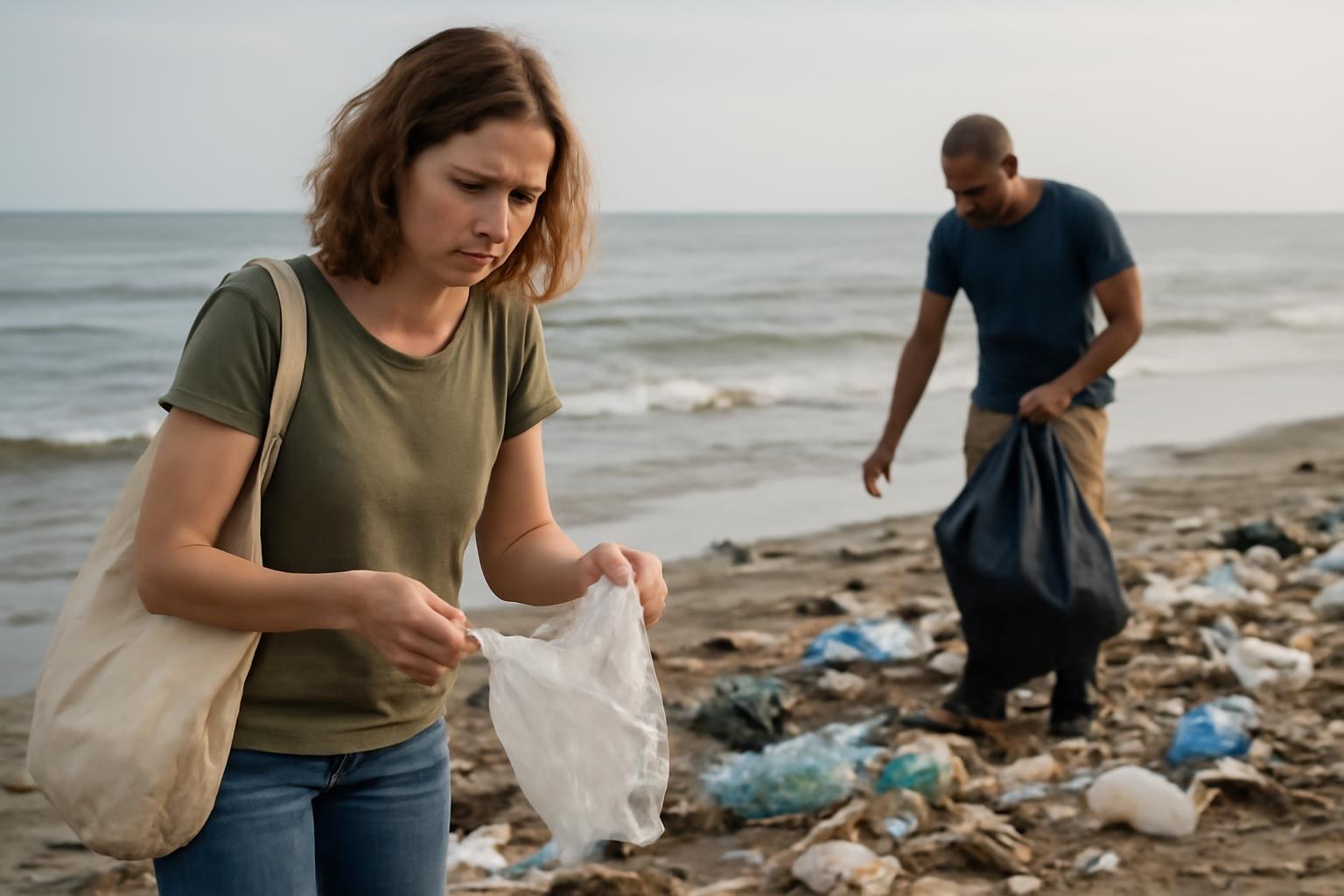
Plastic is useful, cheap, and light, so people use it for bottles, bags, food packages, and many other products. The problem begins when these products are thrown away after a short time. Some plastic is placed in trash cans, but some is left on streets, beaches, or near rivers. Rain and wind can carry this waste into streams and eventually into the ocean.
Plastic also reaches the sea from fishing and shipping. Lost nets, ropes, and other equipment can float for years. Sea turtles may mistake plastic bags for food, and birds can become trapped in small pieces. Fish and other animals may eat tiny plastic particles, which can move through the food chain.
Many people believe recycling can solve the problem, but recycling has limits. Different kinds of plastic must be collected and processed in different ways. Some dirty or mixed materials are difficult to recycle, and not every area has a good recycling system. As a result, a large amount of plastic still goes to landfills, is burned, or enters the natural environment.
Governments and companies can reduce the amount of waste by changing how products are made and sold. They can design packages that use less material and create systems for returning bottles. Cities can provide more public bins and improve trash collection near rivers and beaches. Strong rules can also encourage businesses to take responsibility for the waste they produce.
Individuals have an important role as well. People can carry reusable bags and cups, refuse unnecessary straws, and choose products with less packaging. Cleaning a beach is helpful, but preventing waste is even better. The ocean will become healthier only when our daily choices, business practices, and public policies begin to work together.